

I remember, some years ago, my dear friend, Dave, coming back from a leadership training course. We met to reflect together on what he had gleaned and one thing has stuck with me ever since. They had been studying the story of Jonah and had asked a different question to that which most of ask when engaging in this tale of the reluctant prophet. They were asked not “what is your Nineveh?”, that familiar prompt about the place you would rather not go, but instead, “what is your Tarshish?”, the fantasy you reach for to justify your avoidance.
I can’t remember how Dave, personally, responded to that question but I do remember, in the course of our conversation, him turning to me and, in the way only close friends can, saying, “Ned, your Tarshish is academic monasticism.” It hit me hard and I continue to carry those words with me. It was said with knowledge and love and I knew, immediately, there was deep truth in it. I do find myself in times of pressure and uncertainty, retreating to a world of books, ideas and ordered thought. This imagined place is where I dream of complexity being contained, rather than encountered.
I am in such a season at the moment in ministry where the demands are increasing, and the metaphorical plates are wobbling. My everyday experience is of managing experienced chaos and change. I have also been helping to induct a new Dean whilst we continue to navigate staff departures, shifting responsibilities and the quiet accumulation of strain that comes when there are too few people to carry too much. We are, at present, feeling a certain amount of fragility with that sense that what is being held together is being held by attention, goodwill and, at times, sheer endurance.
It is in that context, I found myself in a conversation with my new colleague about my own sense of vocation. We, inevitably spoke about theology and its place within the life of the Church. A suggestion that I have heard before was to consider whether theological education is what God is calling me to. My response, slightly rehearsed, was dismissive: I have been burnt by rejection for such roles in the past and then, Dave’s comment surfaced again. Is this ‘fit’ and personal desire, Tarshish? I also am noting the return of the impulse to pursue doctoral studies. This seems foolish when my life is so full of the necessary duties of holding a community and organisation at this time.
And finally, I found myself sitting with a friend who is part of an informal group called Café Theology. We meet at times to ‘geek out’ about theology. It is a group of people who have either done or are engaged in doctoral studies and for whom conversations on a more academic subject is pleasing and encouraging. On this occasion he had called a meeting at the request of a bishop who wanted to reflect on the theology at the heart of a practical challenge in the diocese. In the course of the conversation I found myself asking, perhaps, a deeper question: what is theological work for, in a cathedral, in a diocese or in the Church that often feels as though it no longer quite knows how to make space for it?
I have been reading the Pastoral Rule of Gregory I. It’s striking, reading it through the lens of a season like this, how little sympathy Gregory has for the idea that one might simply step away. He writes as one who knows both the attraction of withdrawal and the cost of responsibility and refuses to allow either to become absolute.
The pastor, he insists, must be ‘near to all in sympathy’ and yet ‘lifted above all in contemplation’. The tension is not a problem to be solved but a vocation to be inhabited. Gregory is acutely aware of the temptation to choose one side at the expense of the other. There are those, like me, he suggests, who long for the quiet of contemplation not because they are necessarily called to it but because they wish to avoid ‘the burden of others’. Equally, however, there are those who are so immersed in activity that they lose any sense of God, in whose name they act. The danger lies not simply in withdrawal or not, but in the imbalance between the two. To flee into the cell can be avoidance; to remain endlessly in the crowd can be another form of it.
What Gregory refuses, therefore, is the clean distinction I find myself wanting to make. The question is not whether I am called to Nineveh or to Tarshish, but whether either can become a way of evading a deeper call to be stretched between attention to God and the service with and for others. And yet, alongside Gregory’s resistance, there sits another voice, for me. It is quieter, more interior but no less demanding and it’s in the opening of the Proslogion by Anselm of Canterbury.
Come now, insignificant man [sic.], leave behind for a time your pre-occupations; seclude yourself for a while from your disquieting thoughts… Attend for a while to God and rest for a time in him. Enter the inner chamber of your mind and shut out all else except God…
Anselm of Canterbury, Proslogion, in Hopkins, J. and Richardson, H.W. (trans.), Anselm of Canterbury, vol.1 (London: SCM Press, 1974) p.91
It is difficult to read those words without feeling the invitation to do something that sounds, at first, dangerously like Tarshish. In a context of institutional fragility and accumulated demand, the invitation to step away, to shut the door and to seek God in the ‘inner chamber of the mind’, feels less like temptation and more like necessity. Anselm does not apologise for this movement inward. He insists upon it. There is, he suggests, a kind of attention to God that cannot be sustained in the noise of constant activity.
But even here the movement is more complex than it first appears. Anselm’s ‘escape’ is not a destination but a discipline. It is bounded, ‘for a time’, ‘for a while’. It is ordered towards a return, not a permanent, sustained removal. The one who withdraws does so, not to abandon the world, but to re-enter it more truthfully, more attentively and more capable of love. The inner chamber may not be a refuge from vocation but a condition for it.
The difficulty, of course, is that the line between discipline and desire is rarely clear. What begins as a necessary withdrawal can become a preferred one. The space in which we seek God can slowly become the place in which we hide from everything else. And so Dave’s question lingers, uncomfortably. When I imagine a life of study, reading and theological depth, am I responding to a call or constructing an escapist fantasy?
Perhaps the more unsettling possibility is that the categories themselves have become unstable. If Gregory is right, then neither action nor contemplation can stand alone. If Anselm is right, then without some form of withdrawal, even our action becomes disordered. Which leaves the question not simply of what I should do, but of where such a life is meant to be held. What kind of ecclesial space could sustain both the inward attentiveness Anselm demands and the outward responsibility Gregory refuses to relinquish? And, more pressingly, do our current structures make that kind of life possible or do they quietly force us to choose between them?
It is worth returning, at this point, to that small but significant moment with my friend from Café Theology. When faced with a practical challenge in the shared life of the diocese, a bishop responded to the suggestion that we did not begin with strategy, policy, or management frameworks, but with the theology at the heart of issue and asked for my friend to “assemble the avengers” (direct quote from the bishop!) There is, in the request, something both deeply traditional and quietly radical. It gestures toward a vision of the Church in which theology is not an optional extra, nor a specialist pursuit for the few but the very medium through which we discern, decide, and act together.
And yet, the fact that this request felt noteworthy is itself revealing to me. It suggests, again, how unusual it has become to expect theological reflection to sit at the centre of our common life rather than on its margins. In previous posts, I have found myself circling this absence: the way in which theological seriousness can feel fragile within our ecclesial structures; the way cathedrals, in particular, risk becoming places of aesthetic excellence, liturgical provision, or cultural engagement but not sustained sites of theological rigour. It’s not that we have abandoned theology, exactly, but we have, perhaps, lost confidence in where it properly belongs.
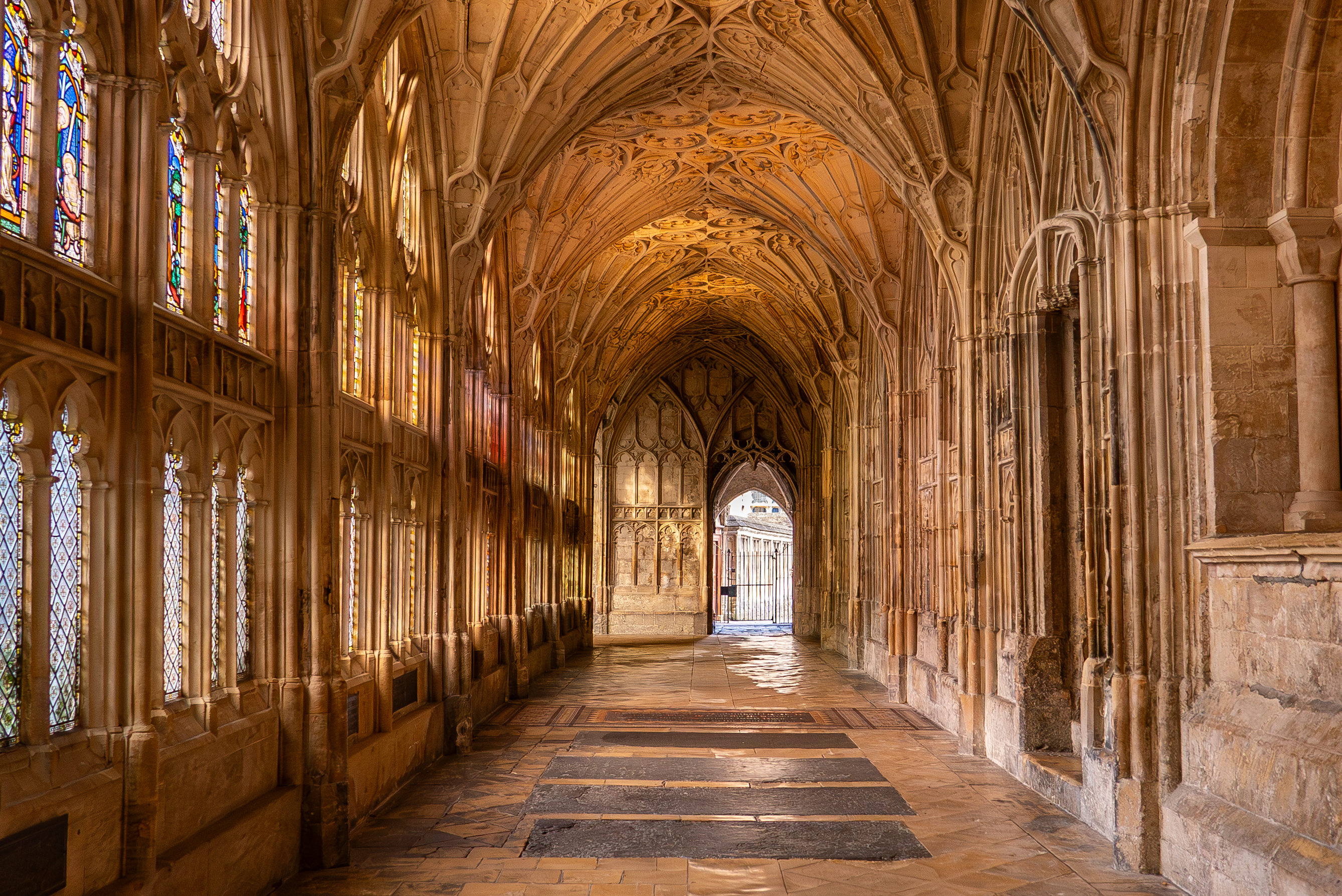
Historically, of course, the answer was, perhaps, clearer. The cathedral is not simply a large, symbolic church. It is the cathedra; the seat of the bishop’s teaching ministry. It is, or ought to be, the place where the Church’s thinking life is gathered, tested, and offered back, not in abstraction from its realities, but with deep engagement with them. A bishop should teach not only through personal pronouncements, but through a community, a body of clergy and laity, who can attend to Scripture, tradition and context with patience, depth and imagination.
Which raises a possibility that feels, at once, obvious and strangely neglected: what if our cathedrals were more intentionally configured as centres of theological reflection for diocesan life? What if Deans and Residentiary Canons were recognised, not simply as senior administrators, liturgists, or public figures, but as theological reflectors within the life of the Church? Not producing theology at a distance, but engaging the lived questions of the diocese with seriousness, time, and disciplined attention.
I have, in quieter moments, tried to name something like this before. In my last Ministerial Development Review, I found myself tentatively suggesting that part of my vocation might lie in precisely this space of holding together pastoral responsibility, liturgical life, and sustained theological work for the sake of the wider Church. The response, though not entirely dismissive, was marked more by scepticism than curiosity. It did not quite fit the current, available categories. There was, it seemed, little sense that such a role could, or even should, be intentionally shaped.
Perhaps that is the deeper issue: without recognised spaces in which theology and ministry are held together, the tension Gregory names and Anselm qualifies does not disappear; it simply becomes privatised. It is pushed back onto the individual who must decide whether to carve out time for study (at the risk of appearing disengaged) or to surrender it entirely (at the cost of theological depth). In such a context, it is hardly surprising that doctoral study begins to look like, for me, Tarshish, but what if that is a failure not of my individual discernment but of ecclesial imagination? What if the question is why the Church finds it so difficult to sustain thinking within its own life? The bishop’s keenness to begin with theology suggests that the desire has not totally disappeared. The question now is whether we have, or can create, the forms, the habits and the shared commitments to make that instinct something more than occasional.
If Gregory is right, then the Church needs ministers who can live between contemplation and action. If Anselm is right, then such a life requires disciplined spaces of withdrawal and attention. The challenge then is not simply personal, but structural. The task is to imagine communities in which this tension is not borne alone but held in common. It may be that the cathedral, properly understood and re-configured, remains one of the few places where such an imagination could begin to take shape.
If that imagination is to take shape, however, it cannot remain at the level of aspiration. Organisational re-structuring won’t hold it, nor will titles generate it. Even a renewed vision of a cathedral as a centre of theological reflection will falter if it is not sustained by something more ordinary, more demanding and more easily resisted: a shared pattern or Rule of Life.
This is not a new idea, as many long time readers of my blog, or readers of my book (self promotion: Ash Water Oil: why the Church needs a new form of monasticism) should know by now. Historically, the very word canon gestures toward it. The residentiary clergy of cathedrals were not originally just office-holders. They were those who lived according to a canon/rule. My own academic work on Hugh of St Victor and the Augustinian Rule has only deepened my awareness of this inheritance and shaped my own vision of clergy who inhabit a shared rhythm of prayer, study and common life, in which theology is not an occasional activity but a habitual way of being. More recently, I have found myself drawn to the life of the Oratory of Saint Philip Neri: a community without vows, yet bound by a shared commitment to prayer, conversation, and intellectual seriousness held within friendship.
It is, perhaps, telling that I find myself looking at these resources because in the present moment such a life is rarely named or lived. In the absence of a shared rule at Bradford Cathedral, I’ve begun (tentatively and imperfectly) to articulate something like a personal Rule for Theological Living. I shaped it to structure my life to ensure the demands of ministry don’t crowd out those things that keep me connected to God in the way in which I tend to encounter him.
At its heart is a simple conviction that theology is not something I occasionally do but, rather, something I am called to live. That every sermon, conversation, meeting and moment of study participates, however partially, in the Church’s ongoing attempt to think truthfully about God and to do so in a way that builds communion rather than fragments it. That conviction, however, requires form if it is to survive contact with reality and so the Rule attempts to name, in deliberately modest ways, a set of commitments and rhythms.
The Rule seeks to name a set of virtues that are less about intellectual capacity and more about posture: humility, in recognising the provisional nature of all our speech about God; clarity, in refusing to hide behind unnecessary complexity; hospitality, in making space for others to think and speak; and courage, in naming what needs to be named, even when it unsettles. These are, I feel, the difference between theology that builds up and theology that merely performs.
Perhaps most practically (and most challengingly) the Rule attempts to establish daily, weekly and monthly rhythms that carve out space for sustained attention. There is an invitation, at the start of each day, to a short period of prayer and reading. Then there is a more extended engagement, again, each day, of study and writing. There’s a weekly period of deeper focus and, finally, a monthly act of public reflection (these blog posts currently act as those!). None of this is meant to be heroic. All of it is fragile but it is an attempt to resist the slow erosion of theological attentiveness under the pressure of immediate demands.
As part of Bradford Cathedral’s vision, we began to explore the possibility of a more intentional shared rule of life among the residentiary clergy. We didn’t want a strict monastic way of life that was inaccessible to others who didn’t live on site but some common pattern of prayer, study, conversation and rest that might encourage discipleship across our community. What might it mean to hold one another to account not only for outputs and responsibilities but for attentiveness to God and to the Church’s thinking life? To create, together, spaces in which Anselm’s “inner chamber” is not an individual escape, but a shared discipline and in which Gregory’s call to remain “near to all” is sustained, rather than eroded, by that attentiveness?

If such a life were even partially realised, it would begin to shift the questions with which I started and to my friend, Dave’s probing discernment which still unsettles me.
At this moment in time, the thought of doctoral study and a more ordered intellectual life feels like a relief I desire more than anything. It is an imaginative place where the noise quietens and the demands are, if not fewer, then at least more containable and I cannot pretend that this is not, at times, a form of Tarshish. I am less convinced than I once was, though, that the answer lies in simply refusing it. The deeper question I find myself asking is not whether I should go to Nineveh or flee to Tarshish, but why the journey feels so starkly divided in the first place.
If the reflections of Gregory the Great and Anselm of Canterbury are to be taken seriously, then the problem is not the tension itself, but our inability to hold it well. If that is the case, then the answer cannot be found in individual acts of discernment alone (important though they are) but in the kinds of communities we are able and willing to form.
At present, I suspect our structures do, more often than not, quietly force the choice. We reward activity and sideline attentiveness or we isolate theological study in ways that remove it from the shared life of the Church. The Church seems to perpetuate the binary that makes Nineveh relentless and Tarshish alluring and, in so doing, leave many of us attempting to hold together, alone, what was never meant to be borne individually.
This faint outline of another possibility has begun to emerge of a cathedral that is not only a place of worship and welcome but also a community of theological attention. A community that lives, however imperfectly, by a shared rule in which thinking, praying, and acting are not separated but sustained together. In such a place, the journey to the “inner chamber” would not be an escape from responsibility, but a shared discipline that deepens it.
In that kind of life, the caution Dave gave me still remains but it no longer is, “where am I escaping to?” but “how are we learning to stay, together?”



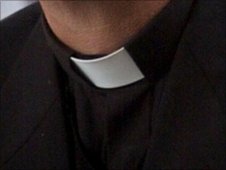
 Cassock Alb: Is a white garment that goes over clothes. This symbolises a clothing of the wearer in heavenly glory. This is about identifying the role of the leader of worship and not the person wearing it. The leader of worship is an expression of the character of the whole company of worshippers; they are to be the spokesperson of the collective voice of the congregation. By draping them in white it is a draping of all the people in that resurrection glory.
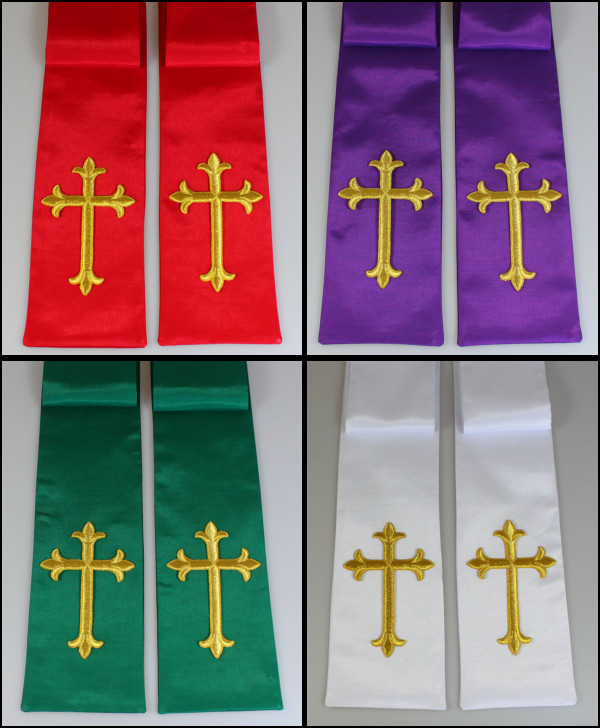
 Cassock: Is a black garment similar to that of the Cassock Alb. At the reformation the Cassock Alb was seen as a symbolism of the abuses of clericalism where the clergy and those ordained were seen as being elevated beyond the reach of the laity. The reformers were keen to bring the work of the Church to the people and so they removed the symbolism. This reformation was focussed on the words used in the Church, hence the translation of the Bible into the common tongue. The reformation replaced the priest with the scholar, those who could read and interpret the Scriptures and the Cassock hints at the origins of being like the university gowns or the preaching monks (of which Calvin and Luther were).