For the past nine months, amongst other things, I have been holding the traditional Canon Precentor’s portfolio; overseeing the liturgical logistics and the quiet choreography that, together, go into creating the invisible landscape that leads people into worship. As I sat, therefore, in a gathering of Canon Precentors from all the Cathedrals in England and Wales, I felt entirely capable of following the conversation, I could track the discussion, I could contribute and I could even anticipate where some of the pressure points would surface.
It had been a privilege to be invited to join my colleagues and friends. The invitation, in my current situation, however, carried a certain ambiguity, however, because during the introductions the Chair referred to me, kindly and casually, as “our non-Precentor canon.” It landed with a double sensation: recognition and dislocation arriving at the same time. For a moment, if I am honest, it felt faintly like an insult, but I know it wasn’t intended as such. I realised later, reflecting on that repeated sensation throughout the day, that competence and belonging are not always the same thing. I can learn the patterns of a role, I can carry its weight for a season, I can even begin to speak the language with some fluency, but that doesn’t mean the same thing as vocation.
What I felt in that moment was not exclusion. It was something more subtle and, if I am honest, more theologically interesting. I was both inside the conversation and slightly adjacent to it. Trusted to contribute but named as other. Which, as it turns out, is not a bad place from which to begin thinking about a larger question that has been quietly gathering weight over the past year for me at Bradford Cathedral: what happens when your ministry becomes defined by the things you are temporarily holding together? Or, perhaps more precisely, how do you remember what you feel called to when the institution quite genuinely needs you to be several other things first?
To understand the question properly, you should know something more of the current context I’m inhabiting at Bradford Cathedral.
This has been, by any reasonable measure, a stretched season: the inevitable frustrations as organisational cultural and strategic change is further embedded, staffing transitions and, on top of that, UK City of Culture year. All of this is the ordinary, unspectacular fragility that institutions can carry more visibly in some years than in others. Aside for the City of Culture, all of these pressures and strains are not unique to us and many cathedrals will recognise the pattern with perhaps more intense financial challenges than we have.
In the space of change, roles begin to behave differently. Over recent months I have found myself covering various significant aspects of leadership in the Cathedral. In addition to inhabiting much of the operational and liturgical responsibility of the Canon Precentor, I have been supporting parts of the events management space, working closely alongside vergers and operations to keep the daily life of the cathedral moving with some degree of grace, and in the last month or so, covering aspects of the Dean’s portfolio.
None of this has felt inappropriate. Still less has it felt unwelcome. There is something deeply proper about stepping into the gaps that inevitably appear in any living institution. Cathedrals, perhaps more than most ecclesial bodies, run on a kind of invisible elasticity. People stretch. Roles flex. Goodwill does a remarkable amount of heavy lifting. If you have spent any time in cathedral life, you will know this instinctively. Job descriptions are worked from, not to and the reality is a web of relationships and responsive adjustments, but elasticity, if sustained indefinitely, begins to carry its own cost. The real danger, in times like this is vocational amnesia.
There comes a point (and it rarely announces itself loudly) when the necessary act of holding things together begins quietly to reshape how you are perceived, and eventually how you perceive yourself. What began as provisional cover starts to solidify into assumed identity.
I have become increasingly aware that the inherited model of residentiary canon roles presumes a level of boundary clarity that contemporary cathedral life does not always permit. The assumption is that it is possible to have distinct portfolios, relatively stable domains of responsibility and a certain institutional tidiness. I have found that it is much more porous than that and porous leadership is not, in itself, a problem. In fact, there is something ecclesiologically healthy about a clergy team that can flex, respond, and redistribute energy where it is most needed. The Body of Christ is always spoken of organically and not in mechanistic terms; it was never meant to operate as a set of sealed compartments.
But…
Porous must not become formless. Without some intentional attentiveness, flexibility can slide into diffusion and responsiveness can become reactive drift. Individuals who are temperamentally inclined to say “yes” (and I include myself in that category) can wake up to discover that their ministry has slowly reorganised itself around institutional necessity rather than a vocational centre.
Augustine, who has become a regular companion in my own thinking, is helpfully perceptive at precisely this point. One of his most enduring contributions to Christian moral theology is the idea often summarised as the ordo amoris (the ordering of loves). He developed this idea most clearly in his De Doctrina Christiana and within his vast argument of The City of God. The idea is deceptively simple. The problem with human beings, he suggests, is not usually that we love bad things outright. It is that we love good things in the wrong order, with the wrong weight and/or with an urgency that quietly displaces what should properly come first.
For Augustine, wisdom is not primarily about intensity of devotion but about proportion. We are created to love God above all and to love our neighbour rightly. Created goods are to be received gratefully, but not allowed to occupy the centre of our attention. Disorder creeps in not only through obvious vice but through subtle misalignment of what we prioritise.
It is disarmingly searching when I apply it to what I have been doing over the past nine months. Supporting colleagues, sustaining worship, ensuring the cathedral’s daily life continues to function with integrity; there is nothing here that Augustine would want to rebuke. In fact, much of it is, in itself, unquestionably good and yet the Augustinian question presses gently but persistently: what happens when everything becomes equally urgent, every portfolio feels temporarily necessary and when the immediate institutional need begins to flatten the hierarchy of attention?
Borrowed responsibility, if we are not careful, can begin subtly to dis-order calling. Not dramatically, and not through any obvious failure of faithfulness, but through a slow recalibration of where energy, imagination and identity are most consistently invested.
There is another layer here which intersects with what I have elsewhere called inclusive othering. In that moment in the Precentors’ Conference, I was inhabiting a curious vocational liminality. I was fully engaged in the work but not fully located within the identity being named around the table. I was both participant and, gently, an outsider. The temptation at such moments is usually to resolve the tension too quickly. Either to insist on full belonging or to withdraw into defensive distance. Neither move feels particularly right to me.
Cathedral life, it seems to me, increasingly requires the capacity to remain present within such tensions. Many of us residentiary canons are operating in spaces that are neither entirely ours nor entirely alien. The institutional map no longer corresponds neatly to the portfolio shaped assumption of previous generations. Which is where, again, provisionality becomes not just descriptive but theological.
Bradford, at present, is living through a genuinely provisional season (I have begun to argue that we will always be doing so). Decisions are being made with partial information and structures are being held lightly enough to adapt. There is, if we are honest, a fair amount of holy improvisation taking place, which, for me, is great. Improvisation, however, still requires a key signature.
The Church, at it’s best, has always known how to live provisionally. The danger comes when the provisional quietly hardens into the assumed, or when the temporary becomes so extended that we forget it was ever meant to be temporary at all.
It would be easier, at this point, to resolve the tension neatly. To say either, “this is simply the season we are in; get on with it,” or, “this drift must be corrected immediately; redraw the lines.” The truth, as usual, is less obligingly tidy.
I am deeply grateful for the trust that has been extended to me over this past year. There has been real joy in some of the work. Real satisfaction in helping to steady parts of the cathedral’s life during a time of transition. I have learned things I would not otherwise have learned. Seen the institution from angles that have sharpened rather than diminished my affection for it. None of that is to be forgotten or remain unsaid. Yet, alongside the gratitude there is a slowly growing awareness, not quite resentment but of gravitational drift. There is a quiet sense that the centre of my ministerial energy has shifted, almost imperceptibly over time, and will continue to do so if it is not occasionally re-examined.
The truth is, I can do many things, but competence is not vocation.
I have found myself recently returning to an idea from Jostein Gaarder’s The Christmas Mystery. He suggests ‘there are two ways of becoming wise.’
One way is to travel out into the world and to see as much as possible of God’s creation. The other is to put down roots in one spot and to study everything that happens there in as much detail as you can. The trouble is that it’s impossible to do both at the same time.
Jostein Gaarder, The Christmas Mystery (London: Phoenix, 2004) p.55
I suspect part of what I have been feeling at Bradford is not simply the pressure of workload but the quiet pull between these two wisdoms. Over the past nine months my ministry has necessarily leaned toward the second mode: staying, tending, stabilising, noticing the fine grain of how the cathedral’s daily life actually holds together. There is real grace in that work but, if I am honest, much of the energy that has historically animated my priesthood lives closer to Gaarder’s first path. I am most alive when I’m learning something new, finding new connections between ideas, mining different disciplines of thought for ‘the theory of everything’. Which is another way of saying: I can inhabit the rooted work for a season. I am less convinced I am called to live there indefinitely.
What has been slowly surfacing for me over these months is not the discovery of a new vocation but the reappearance of a very old one. Every few months it seems to return, usually when institutional life has required me to settle more fully into maintenance mode than I instinctively inhabit. At first it comes as a mild restlessness, then as a question I cannot quite silence and eventually, if I am paying attention, as a recognition.
I have been here before.
Over the years I have reached for different images to name that vocational nudge, each one catching part of the truth but never quite exhausting it. Sometimes it has felt like standing on the walls as a watchman, scanning the horizon not because danger is certain but because someone needs to pay attention to what is coming into view. This is the language of the prophet, not in any grand or dramatic sense, but in a quieter, more uncomfortable calling to notice what others might prefer to step around.
At other times the image is less dignified and more like a mountain goat picking its way across harsh and uncertain terrain while, somewhere below, the sheep graze contentedly in the lush fields. It is not that the fields are wrong, still less that the sheep are foolish. It’s only that I seem constitutionally drawn to the challenging environments where the air is thinner and the footing less secure.
Then there remains in my imagination something of the pioneer, repeatedly finding myself drawn toward spaces where something new is trying to emerge and where the path, if there is one, is not yet clearly marked. If that particular image risks sounding like a love affair with novelty, then that needs correcting. My instinct has never been toward the new simply because it is new. Nor am I interested in dismantling what is old in order to feel prophetic. The tension I experience is not between stability and adventure but between different forms of fidelity.
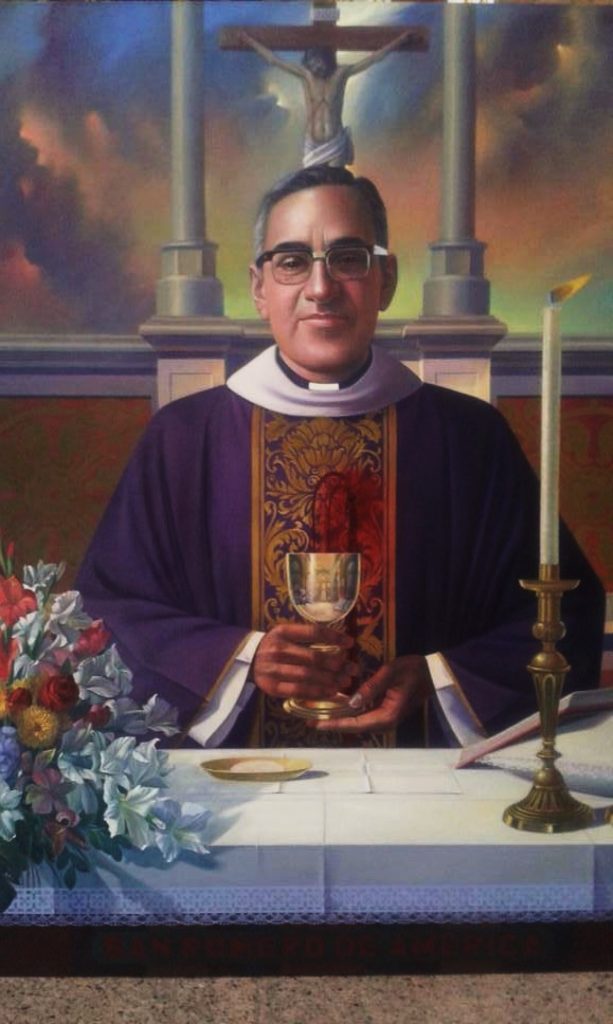
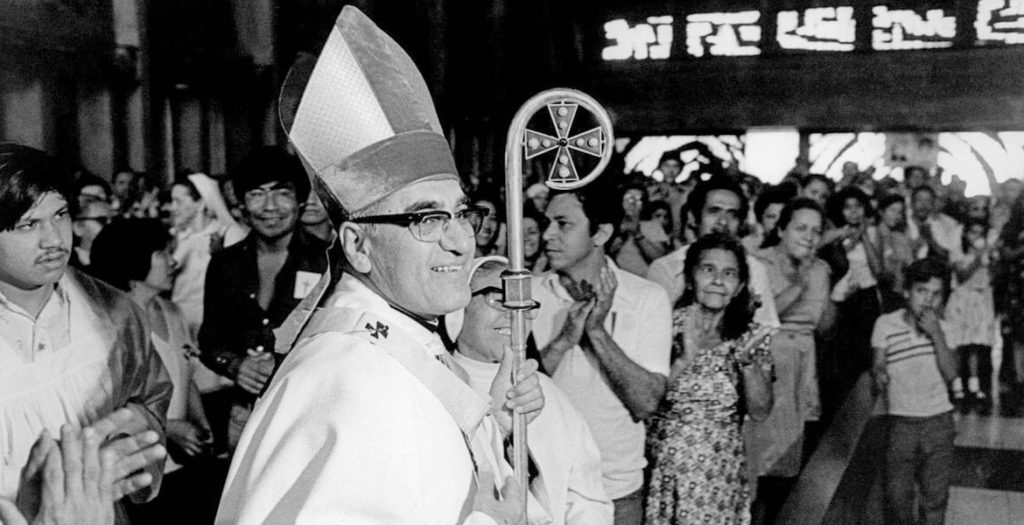
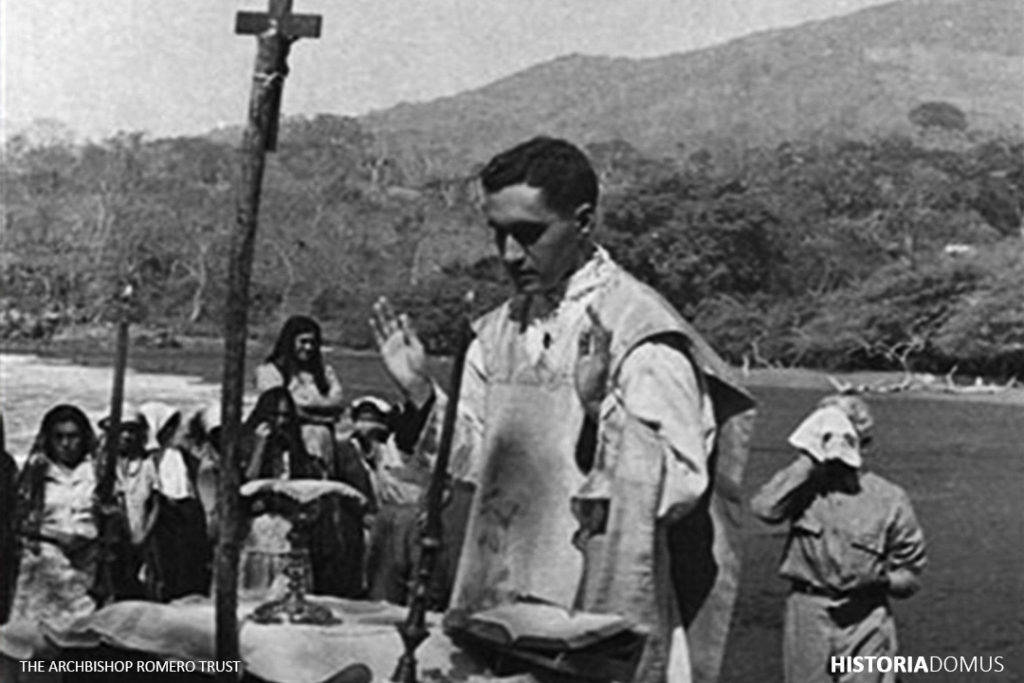
I find myself returning, again and again, to the words of Oscar Romero, who warned that unconditional attachment to what is old can hamper the Church’s progress and restrict its catholicity, while an unbounded spirit of novelty becomes an impudent exploration of what is uncertain and a betrayal of the Church’s rich inheritance. His conclusion was neither reactionary nor reckless: “think with the Church.”
That phrase has always mattered to me. To think with the Church is not to freeze it in time, nor drag it impatiently into whatever appears fashionable. It means to love it enough to help it renew itself from within. Which means that the watchman image is not about abandoning the city but guarding it. The mountain goat is not scorning the lush field below but navigating terrain the flock will one day need to cross. The pioneer, if that word is to be used at all, is not founding a rival settlement but clearing space so that the old settlement can breathe again.
This is why the tension in this season feels more complex than a simple pull towards adventure in opposition to staying put. My passion for the intellectual and strategic exploration has always been inseparable from a desire for institutional reformation and detailed correction.
It is not accidental that many of the Church’s reforming figures that I have been drawn to lived precisely at this intersection. Augustine did not set out to invent a new Christianity; he wrestled to recalibrate inherited faith in a moment of crisis. Martin Luther did not begin by founding a new ecclesial body; he began by calling the existing one to account. In different centuries and under very different pressures, both stood uncomfortably close to the centre while also refusing to ignore what they saw on the horizon. Reform is rarely born from detachment or abandonment but emerges from those who love the institution enough to risk standing at its fault lines.

If these reflections were simply about my personal internal bandwidth or external capacity it would not be worth a whole blog post. What I suspect may resonate beyond my own ministerial balance is the larger ecclesial as well as the nuanced vocational questions that sit underneath my current lived experience.
What if residentiary roles in cathedrals were shaped more explicitly around charism rather than merely function? What if cathedral chapters became more intentional about naming when elasticity is a short-term grace and when it is quietly becoming a long-term distortion?
None of this requires a retreat into rigid role protection. That would be neither realistic nor particularly faithful to the collaborative instincts of cathedral life at its best. It might, however, require a more deliberate attentiveness to the difference between the roles we can faithfully cover and the vocations we are actually called to inhabit over time.
The question before me, at least, is not whether I am called to the edge or to the centre, but how to inhabit the edge in order to serve the centre faithfully.
Bradford, for all its current pressures, has often shown a willingness to experiment in this kind of space. There is room here, I think, for some careful, hopeful reimagining of what residentiary life might look like in a more fluid ecclesial landscape. Perhaps something more consciously aligned with the particular gifts that each canon brings into the shared life of the cathedral.
I find myself returning, as I close, to that conference room moment and the phrase that has lingered longer than I expected: “our non-Precentor canon.” There was no need to resist the description; in a straightforward sense, it was true, but the more interesting question is not whether I am or am not a Precentor. It is whether, in this stretched and searching moment, we might learn again how to recognise the difference between the responsibilities we faithfully hold for a time and the vocations we are actually being called to remember.
Some priesthoods are shaped primarily in the centre of the field. Mine, it seems, keeps being led back to the edges of the hill not to abandon the flock, but to help the whole landscape breathe again.