Tag Archives: improvisation

Into Culture: From Platform to Presence

At the beginning of this month I stood on the same stage in the Cathedral for two different events both framed as a platform for interfaith encounter: one I was hosting the first public ‘Re:Imagine’ events looking at faith conversations with Baroness Sayeeda Warsi and Bishop Toby Howarth, the other, I was compering the annual ‘Sacred Music’ event for Bradford Literature Festival. Both events were billed as moments of dialogue, creativity, and shared spiritual insight: civic faith at its best.

Both events were curated with care. Both featured thoughtful, experienced voices. And yet, as the applause faded and the doors closed behind the final guests of that weekend, I felt a distinct and unsettling ache but not from hostility or controversy, but of absence: the absence of risk, the absence of surprise, the absence of the kind of uncomfortable, necessary tension that makes real conversation not only possible but transformative. Both had a sense that we were speaking around each other, not with each other. For all the talk of openness, diversity, and dialogue, what I experienced was not encounter but choreography.

Despite the warm words and generous presence of our contributors, neither evening managed to break the deadlock of public discourse. Neither truly modelled the innovative approach to intercultural engagement I had hoped for; something deeper than polite pluralism or liberal tolerance, something bolder than a curated diversity of views. What do we do when faith conversations, however well-intentioned, merely reinforce the safest, most performative version of themselves?

If Re:Imagine is to live up to its name, if sacred music is to do more than soothe, then we need more than curated coexistence. We need a new grammar for faith conversation, and public debate in general, that is something less about making space, and more about inhabiting tension. 

We must confront the following questions head-on: what needs to be unlearned in the way we currently gather across difference? And what might it take to birth something new; something not just novel, but necessary?


One of the things I’ve been reflecting on over the last few weeks is the inevitability of performance, especially when events take place on a stage. As soon as we put people in front of an audience, in a structured setting, particularly under the vaulted ceilings of a cathedral, we are not just enabling speech; we are framing it. Whether we realise it or not, we are inviting a performance.

This isn’t a criticism. It’s simply a sociological fact. In his seminal work The Presentation of Self in Everyday Life, Erving Goffman argued that social life is fundamentally theatrical. Each of us, he claimed, is always managing impressions; performing a version of ourselves that is shaped by context, audience, and expected norms. The ‘front stage’ is where roles are consciously curated; the ‘backstage’ is where we are less guarded, less polished, more uncertain. But Goffman’s point is that even our backstage is not fully free from performance; we are always somewhere on the spectrum of managing perception.

This framework helps explain why the platform changes things, even when the conversation is genuine. I tried to make Re:Imagine feel less like a panel discussion and more like an invitation to be present, unguarded, vulnerable. But the stage itself had its own logic. The lights, the audience, the publicity, all of it subtly nudged us into a mode of presentation. And once there, it was hard to improvise. When Baroness Warsi and Bishop Toby spoke, they were never really going to be able to simply share personal reflections. In hindsight, the temptation to enact identities was always going to be hard to resist. Warsi, a high-profile Muslim political figure, had to navigate all the projections, expectations, and contestations that come with that role. Bishop Toby, a Church of England bishop in a city like Bradford, was similarly constrained, not by lack of sincerity, but by the complexity of occupying an ecclesial role that is both spiritual and civic, pastoral and political. Both were, in a sense, ‘on stage’ before they even opened their mouths.

And yet I do not believe performance is always false. In fact, I’ve long thought that performance can be deeply true; perhaps even sacred but only when it moves beyond control into vulnerability. My background in theatre taught me that risk is the currency of authentic performance. It is not about getting it right but about stepping into the unknown with others. That kind of improvisational performance isn’t about projecting an image but revealing a self. For that to happen, the platform must allow for rupture and the inevitable mess to be held.

This is what I hoped Re:Imagine might enable. And while both our contributors gestured toward that vulnerability with grace and honesty, the structure around them hindered and blocked their improvisation. The conversation stayed within the boundaries of what the audience could already process. The performances were sincere. But they were still bounded.

What might it take to make a different kind of space?

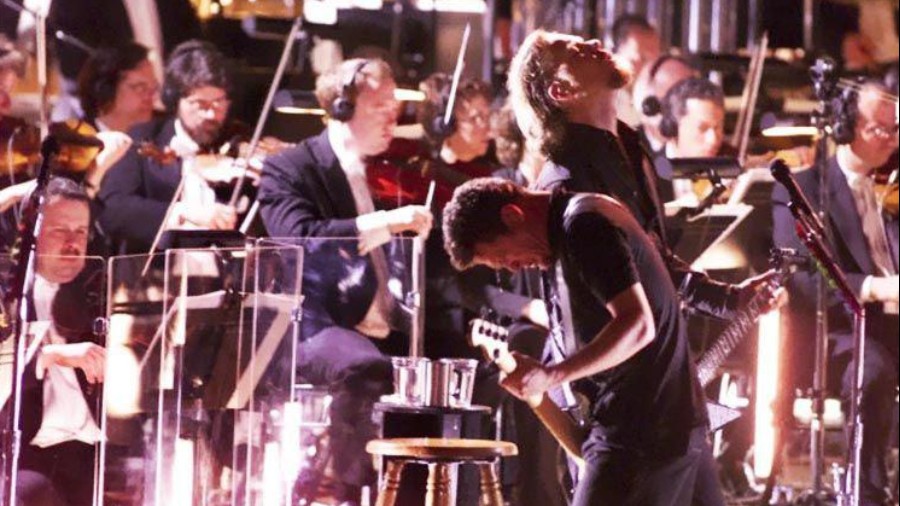
This question surfaced again the next evening. I had hoped to co-produce this year’s Sacred Music event with Bradford Literature Festival. I’d proposed a shift in format: rather than sequential performances by artists from different traditions, what if we invited musicians to improvise and collaborate to create something new in real time, across the boundaries of tradition? Faith in motion. Difference in dialogue.

The conversations were encouraging but, in the end, the final event returned to the familiar: artists from different faith backgrounds performing one after another in respectful sequence. Beautiful but ultimately predictable. We honoured coexistence, but did not risk co-creation.

And this is where I believe we are stuck.

In many public conversations about faith and other contested issues we find ourselves in one of two places. Either we veer toward conflict: oppositional voices debating from fixed positions. Or we avoid it altogether: showcasing diversity in a way that flattens its tension. The former breeds fatigue and defensiveness; the latter, polite stagnation. Both forms are governed by what I want to call curated coexistence. It’s the idea that if we simply gather different people in the same space, a deeper understanding will naturally emerge. But that’s not how real encounter works. Not in theology. Not in art. Not in life. Encounter requires not just proximity, but vulnerability. Not just expression, but interruption… and interruption is risky.

This is why I’ve been returning to my ongoing reflection on inclusive othering; a framework which seeks to hold deep difference not as a problem to be solved, but as a place to dwell. I have been drawn to the idea that genuine unity comes not through flattening difference, but by learning to desire the good of the other precisely as ‘other’, as different.

Inclusive othering is not about everyone feeling comfortable. In fact, it’s about learning to sit in that uncomfortable ‘no man’s land’ between views, identities, and traditions and allowing that space to shape us.

No Man’s Land by Magdalena Mudlaff

What, then, might this mean for the Re:Imagine series moving forward as a platform for reimagining all kinds of contentious and complex topics: global diplomacy, AI and ethics, environmental activism, migration?

Firstly, I believe we need to experiment with form. What if the structure of our events is not just a means of delivery, but a form of witness? Drawing from performance theory and social improvisation, I am increasingly convinced that our formats encode our assumptions. If our structure assumes performance, then transformation will remain secondary. If the structure of our encounter is built to invite surprise, co-dependence, and change, then our content may finally have room to breathe. This means, therefore, more than changing the seating arrangements. It means actively disrupting the expectation that ideas must be defended or performed. What would it look like to invite guests not to explain themselves, but to ask each other questions they have never dared ask? What if every event required a confession—of failure, of misunderstanding, of being surprised by the other? What if participants weren’t experts, but witnesses?

Secondly, I want to explore the role of embodied practices in public conversations; silence, lament, artistic improvisation, shared meals, symbolic gestures. These are not just aesthetic flourishes. They are facilitated interventions. They disarm the impulse to perform and invite a mode of engagement that speaks to the whole person—not just their views, but their lived and vulnerable selves.

Thirdly, we must reckon honestly with power and representation. One audience member felt, after the Re:Imagine event, discomfort that a powerful political figure, Sayeeda Warsi, was given an uncontested platform who could say things without a firm response. What I found most interesting about that expressed opinion was what it revealed about audience expectation: namely, that public spaces are understood as a kind of battleground. What if we reimagined and restructured it as a sanctuary for disarmed curiosity? What if our role as curators of public space is not to ensure balance, but to nurture trust in order to create containers where difference is neither erased nor exploited and tension is embraced as an uncomfortable but necessary catalyst to creativity. As Miroslav Volf suggests to embrace is to open one’s arms, wait, and then close them around the other; not to absorb, but to hold the other. Too often, our public events keep the arms open but never move toward that vulnerable embrace.

Finally, we must accept that not all fruitful conversations are public. I am still wrestling with whether these events should happen on stage at all. Yet I worry that if we retreat entirely into the private realm, we abandon the possibility of redeeming the public one. The challenge is this: how do we make public spaces more porous, more reflective of the quiet transformation we know happens in private? Risk, after all, needs aftercare. Surprise requires structure. Vulnerability must be held. To reimagine means not only saying new things, but saying them in new ways and allowing our forms to speak before our words ever do.
So what now?

I remain grateful to Baroness Warsi and Bishop Toby. They showed up. They offered themselves. They attempted to be vulnerable. My disappointment is not in them, but in the format that could not sustain the possibility of surprise. The same is true of the artists and the people at Bradford Literature Festival curating the Sacred Music event.

We do need new formats for public moments and encounters. We need creative risks. We need voices willing not just to speak, but to listen and then acknowledge the possibility of change. We need events where musicians and thinkers improvise across difference, where politicians weep, where migrants and fearful indigenous peoples meet each other, personally over a meal and share stories.

Because if faith, and public life, are to mean anything in this fractured age, they must do more than speak. They must listen. They must risk. They must dwell in the gaps.

That weekend in the cathedral did not go as I had hoped. But perhaps that’s the point. Hope is not about things going to plan. Hope is the refusal to give up on what could be, even when what was falls short.

It is time, once again, to reimagine.

Into Culture: Provisionality Defined

It has been a difficult month.

After months of planning, the intercultural conference I was organising was cancelled at the last minute due to a lack of funding. This wasn’t a minor event or distraction. I had invested a huge amount of energy and passion into it and had a great vision for it. It was meant to be a space where people from vastly different cultural backgrounds could come together to dream: a fragile but vital act in a world increasingly defined by division.

And yet, with a single email, the structure we had painstakingly built collapsed.

The cancellation wasn’t just an administrative setback; it felt like an indictment. Had I been naïve to believe this work mattered enough to secure funding? Was intercultural ministry just a well-meaning aspiration rather than a necessity? As I sat with the news, I felt the creeping temptation to retreat; to step back from the discomfort of advocating for something that, apparently, wasn’t a priority for everyone else.

But instead of stepping back, I found myself writing from the ruins.


With the conference gone, I turned to the academic journal article I had been meaning to write for months. What had previously felt like an abstract exercise, an attempt to articulate ideas that had been swirling in my mind, now became urgent. The cancellation forced me to confront the very questions I had been wrestling with: Why does intercultural ministry matter? Why does it so often feel like the latest fad? How do I articulate its significance, not as an optional endeavour but as a necessary gift to the Church of England?

Perhaps this was what I needed. The push to put into words what I had been struggling to articulate. The conference would have been an event, but writing would be an argument, a case that could not be as easily dismissed as a line in a budget.

And so, in the space where the conference should have been, I wrote.

Intercultural ministry inhabits no man’s land: the space between entrenched identities, where categories lose their certainty and encounter becomes possible. It is a place where cultural and theological boundaries are suspended just long enough for something new to emerge.

But it is not a comfortable space. The world prefers fortifications, fixed identities, clear allegiances, firm distinctions between inside and outside. Even within the Church, we too often treat diversity as a problem to be solved rather than a gift to be received.

Yet no man’s land is where transformation happens. It is where encounter moves beyond tolerance into something riskier: the possibility of being changed. It is a space that resists resolution, where we are required to remain, even when there are no clear answers.

Augustine’s corpus permixtum offers a theological vision of this space. The Church, he insists, is always mixed, unfinished, in pilgrimage, provisional until the eschaton. Against the Donatists, who sought a pure Church free from compromise, Augustine argued that any attempt to enforce purity before the final judgment was not just futile but theologically misguided. The wheat and tares must grow together. To be the Church is to inhabit that tension.

This is no man’s land as a theological reality. It is not an unfortunate byproduct of cultural difference but the very space where grace does its work. The impulse to resolve, to fix identity, to enforce certainty. These are the real dangers. Augustine understood that provisionality is not weakness but faithfulness: the refusal to collapse history into resolution, the willingness to dwell in the unfolding mystery of God’s work.

But if no man’s land is the necessary site of encounter, how do we remain there without being paralysed by uncertainty? How do we engage without defaulting to either avoidance or control?

Improvisation is what allows us to remain in no man land. It is not the absence of structure but the ability to shape meaning in real time. It is the posture of responsiveness, the refusal to impose a script onto an encounter before the other has had a chance to speak.

The instinct, in uncertain spaces, is either to withdraw or to dominate, to retreat to what we know or to force an outcome. But improvisation resists both. It assumes that truth unfolds in relationship, that we do not come to intercultural engagement with all the answers but discover them in the process.

Stanley Hauerwas speaks of Christian ethics as improvisation within a shared narrative. We do not act in a vacuum; we inherit a story but the story itself remains in motion. Kevin Vanhoozer extends this further, describing doctrine as improvisation in response to history as an ongoing engagement with God’s unfolding work in the world.

Improvisation allows us to stay in no man’s land when the temptation is to resolve the tension too quickly. It allows us to respond in the moment, to listen deeply, to shape meaning as we go. Improvisation without direction, however, can become either chaotic or manipulative. It requires an ethic as a way of ensuring that our engagement is neither passive nor coercive, but genuinely transformative.

If improvisation is the mode by which we remain in no man’s land, then inclusive othering is the ethic that ensures we do so faithfully.

Othering is often framed as exclusion, a way of defining oneself against another. Inclusive othering refuses this binary. It acknowledges difference without reducing it to opposition. It insists that engagement is possible without assimilation, that unity need not come at the cost of integrity.

Paul Ricoeur warns against two failures: the absolutisation of culture, where difference becomes impenetrable, and the erasure of culture, where distinctiveness is lost in the pursuit of sameness. Inclusive othering navigates between these extremes. It allows for mutual transformation without coercion.

This is not comfortable. It requires a commitment to remain in the tension of difference, to resist the easy exits of withdrawal or dominance. It asks us to trust that relationship itself is formative and that even when no agreement is reached, something vital is taking place.


And so, I return to the original question: Is intercultural ministry a necessity, or just a luxury?

Funding has not been secured, in part because the argument for intercultural ministry has not been persuasive. Writing forced me to clarify what I had already sensed: this work is not peripheral. It is the only viable way forward.

Without it, we entrench division. Without it, we mistake tolerance for engagement, proximity for relationship. Without it, the Church risks irrelevance, offering certainty when the world cries out for wisdom.

The Church of England finds itself caught between conflicting pressures: a fractured institution seeking coherence, a shifting society demanding relevance, a cultural landscape marked by division and distrust. It is tempting to respond to these crises with control, to seek definitive solutions, to shore up institutional identity in the face of decline.

What if the way forward is not resolution, but a deeper commitment to provisionality? What if, rather than retreating to entrenched positions, we learned to inhabit no man’s land? To lead not with fixed answers but with an openness to encounter? To rediscover the art of improvisation, responding to the Spirit’s movement in history rather than dictating the terms of engagement? To embrace inclusive othering, holding our convictions with integrity while remaining radically open to the transformation that only relationship can bring?

This is not weakness. It is faithfulness.

The Church is being called, once again, into the risk of relationship; not to dictate, but to dwell; not to dominate, but to discern.

Intercultural ministry is the work of inhabiting no man’s land, of improvising faithfully in the face of uncertainty, of othering in a way that does not exclude but transforms.

If the Church of England is serious about its future, it must learn to stand in this space. Not as a concession, but as a calling.

Improvisation remains. No man’s land remains. And that is precisely where we must learn to stand.

Into Culture: Inclusive Othering

This month, I had the privilege of sitting on a panel at the Rosa Park Symposium at the University of Bradford. The theme of the day was “Creating a Reimagined Sense of Inclusion through Arts and Culture,” and our panel explored “Growing Inclusion: Leveraging the Transformative Power of the Creative Sector.” The whole day was an enriching and challenging series of presentations and conversation, filled with optimism, bold visions, and creative energy. Yet, I found myself experiencing an inner conflict.

As I listened, I heard familiar slogans advocating inclusion, framed in language that, though well-meaning, often felt either too idealistic or too reductive to capture the complexities of our fractured world. The rhetoric often felt tired, rehearsed, or, at times, naïve. If inclusion is so straightforward why do we remain so frustratingly stuck? What troubled me more, however, was my own response. While I felt critical of some ideas, I realised I had little to offer as an alternative: a constructive, fresh lens through which to view the challenge of inclusion.

Due to time constraints I was unable, during our panel discussion at the end of the day, to unpack a nascent concept I’ve been developing: inclusive othering. This meant it was not given its opportunity to be discussed and honed as I had hoped it might. Inclusive Othering is a framework born of my own wrestling with difference and unity, inspired by a blend of theological reflection, improvisational practice, and the work of thinkers like St Augustine, Stanley Hauerwas, and Nelson Mandela. But before I explore it here (still relatively unworked), I want to pause and reflect on the impasse in today’s inclusion conversations that became so evident during the symposium.


Conversations about inclusion often stumble over an inherent tension: inclusion implies openness, but in practice, it often involves boundary-drawing. What is included is, by its very nature, defined in opposition to what is excluded. This paradox becomes particularly sharp in progressive spaces, where the desire to create inclusive environments sometimes leads to the exclusion of those who do not align with the values or ideologies of inclusion.

At the heart of this dynamic is the concept of ‘othering’. Othering is the process by which we define and treat certain individuals or groups as fundamentally different from ourselves. It often involves reducing the ‘other’ to a set of characteristics that justify their marginalisation or exclusion. Historically, othering has been a tool of oppression, reinforcing social hierarchies and justifying injustice. However, in contemporary conversations about inclusion, othering takes on a new, more subtle form. Progressive spaces may unintentionally ‘other’ those who resist or critique the dominant narrative of inclusion, labelling them as obstacles rather than participants in the process.

This ironic exclusion mirrors the very dynamics these spaces seek to dismantle. It often reinforces binary distinctions between the “enlightened” and the “ignorant,” the “tolerant” and the “bigoted.” While boundaries can be necessary to protect marginalised groups, they risk creating their own forms of exclusion, perpetuating division rather than healing it.

Philosophically, this tension plays out in debates between universalist and particularist approaches to inclusion. Universalist perspectives emphasise shared human values and the flattening of differences to create common ground (“we are all essentially the same”). Particularist perspectives, by contrast, insist on the importance of honouring specific identities and histories, even if that creates friction (think identity politics). Both approaches have merit, but both also risk perpetuating exclusion in different ways: universalism by erasing difference, particularism by entrenching it.

This impasse creates a troubling stalemate. How can we move beyond it? How can we embrace the richness of difference without turning it into a weapon? How can we create spaces where inclusion doesn’t come at the cost of exclusion?

Inclusive othering seeks to chart a path through this tension. Rather than resolving the paradox of inclusion by choosing either the universalist or particularist perspective, it hopes to reframe the conversation entirely. It begins, like the particularists’ approach, with an acknowledgment of difference. Instead of treating difference as fixed or ontological, however, it adopts an improvisational perspective: differences are seen as temporary and dynamic, inviting exploration of how shared spaces can be constructed. This approach resonates with Vincent Donovan’s reflections on mission: 

…the unpredictable process of evangelization, [is] a process leading to that new place where none of us has ever been before. When the gospel reaches a people where they are, their response to that gospel is the church in a new place, and the song they will sing is that new, unsung song, that unwritten melody that haunts all of us. What we have to be involved in is not the revival of the church or the reform of the church. It has to be nothing less than what Paul and the Fathers of the Council of Jerusalem were involved in for their time – the refounding of the Catholic church for our age.

(Vincent Donovan, Christianity Rediscovered (London: SCM Press, 2009) p.xix)

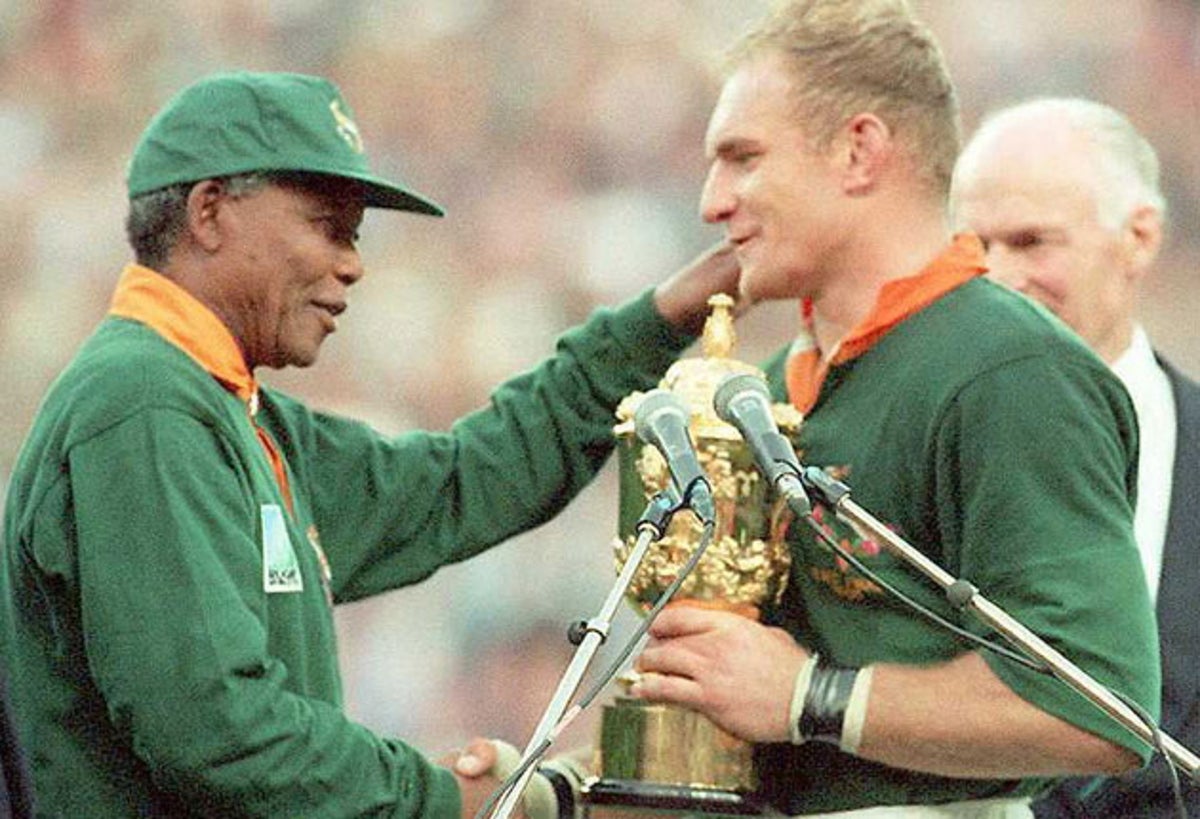
Similarly, Nelson Mandela exemplified this ethos in his leadership. He recognised the deep divisions within South Africa but refused to let these define its future. Instead, he practiced a form of inclusive othering by inviting former adversaries into a shared project of reconciliation, rooted in mutual respect and the belief that difference could be a creative force rather than a barrier.

Inspired by St Augustine’s understanding of our communal identity, inclusive othering invites us to see the ‘other’ not as a threat but as a partner. For Augustine, we are most ourselves not in isolation but in community. In this view, unity is not the absence of difference nor is it the attempted version of tolerance; ‘good disagreement’. Inclusive othering is a process of mutual engagement, where difference is not erased but embraced as essential to the work of building a shared life. It resists the urge to flatten differences into sameness or to let them become walls that divide. Instead, it invites us to hold the tension between unity and diversity, seeing the other not as a threat but as a learning partner.

Improvisation provides the practical basis for engaging in difference and good improvisation begins with the discipline of listening, and commitment to risk-taking and results in co-creation.

Firstly then, to listen deeply is to be obedient. 

The very word obedience has a treasure hidden in its history. If you unpack it, ob audiere, to listen intently is the language of love. When you really love, you listen intently to know what the one you love wants to happen.

(Columba Cary-Elwes, Work and Prayer: The Rule of St. Benedict for Lay People (London: Burn & Oates, 1992) p.182)

Improvisation requires that you ‘love’ your fellow performer. This is often an act of will and an intentional posture you must take on. What I mean by ‘love’, in this case, is to decide to trust the other and to listen intently to not just what they say but how they say it and what they don’t say. Before I make any offer on stage I watch, listen; obey my scene partner/s. This form of improvisational listening involves humility and an openness and expectation to being changed by what we hear. I could bring in the ethical ideas of Stanley Hauerwas here but it will be enough to offer this insight for reflection.

Being disciplined in obedience is perhaps the key virtue of a good and faithful performer. This is a skill that can be acquired only in communities that foster an “ecology of hope,” what Nicholas Lash calls “schools of stillness, of attentiveness; of courtesy, respect and reverence; academies of contemplativity.”

(Stanley Hauerwas, Performing the Faith: Bonhoeffer and the Practice of Nonviolence (London: SPCK, 2004) p.100)

Once an improviser has begun to learn and inhabit this posture of love, humility and obedience, they must then layer on the commitment to risk taking. Once they’ve listened, they must offer something back; their perspective, their story, a gift. This requires vulnerability and trust only built by the first step. This is where we return to the notion of love. Love is not love if it doesn’t risk loss, abandonment, dare I say, abuse. the most meaningful and transformative relationships are the ones that ask you to risk being hurt. Improvisation, like all relationships, assumes a willingness to risk relational failure, trusting that grace can emerge even in the messiness of human interaction.

Finally, once the pattern of gift exchange is established within improvisation, an improviser then must resist the desire to “win” the interaction but to create something new; a shared narrative, a collaborative work, or, in the case of inclusive othering: a reimagined community.


Inclusive othering is not without its tensions. The balance between unity and difference is fraught. Too often, calls for unity silence marginalised voices in the name of harmony, while particularism risks entrenching division. Unity, in this new framework, is not about erasing difference but embracing it as a creative force. It sees relationships as dynamic, unfolding, and co-creative; resisting static notions of inclusion that demand conformity, instead inviting us to engage in a process of mutual transformation.

Moreover, the improvisational nature of inclusive othering may feel unsettling to those who crave certainty. It demands a willingness to step into the unknown, to embrace relational tension, and to trust that grace can emerge even in failure. Yet, these challenges are also its strengths. Inclusive othering will only thrive on humility, curiosity, and adaptability.

Imagine a community workshop, for example, where participants from diverse backgrounds share their stories through improvisational exercises, stepping into each other’s shoes and perspectives. Imagine a policymaking process that centres marginalised voices through iterative feedback loops. Imagine a church service where liturgy becomes a co-creation, weaving together the cultural symbols of all participants. These are some potential practical experiments in inclusive othering. They embody the belief that difference is not a problem to solve but a catalyst for building something new and truly shared.

Into Culture: Improvisational Leadership

This month I have been blessed to perform twice in York; once with my wonderful long-form improvisation comedy troupe, Fool(ish), and the other as a regular at the monthly Right Here Right Now at Friargate Theatre. In preparation for the Fool(ish) show Not Gonna Lie at York Theatre Royal we had an intensive run of weekly rehearsals which meant I had to drive across to York from my home in Bradford. These creative outlets/escapes from everyday life and ministry are an absolute lifeline to my wellbeing and I love the community that exists with my fellow performers.

I have also been reading Tony Blair’s new book, On Leadership, and I have found myself drawn to his concept of a leader’s ‘hinterland’. Blair suggests that behind every great leader is a rich personal depth, a hinterland filled with passions, interests, and creative pursuits that feed their inner life. It’s a reminder that leadership isn’t just about what you do on the public stage; it’s about who you are behind the scenes, the broader life you cultivate outside the demands of your role. This interaction between the public performance and the private ‘rehearsal’ space has meant I have been reinvestigating my own leadership and drawing learning from my knowledge and experience of improvisation.


Improvisation, at its core, revolves around trust and generosity. On stage, without a script, the story is built through the free and generous exchange of offers—gifts between performers. This demands immense trust in your fellow actors to receive and build on what you offer, rather than rejecting or blocking it. In improvisation, accepting offers leads to a process of reimagination, where the unexpected becomes an opportunity to explore new narratives and ideas. Therefore, before going public on stage, groups must build that trust between performers. Without this the performances are stale and hard work. If you manage to build it, however, you experience the magic of co-creating ideas from nothing. In leadership, this same principle applies.

Generosity, in both performance and leadership, is about giving space to others; to let them contribute, fail, and grow. In Fool(ish) Improvisation, we practice a collaborative approach, not just in shows but also in how we run the company. Decisions about publicity, communication, and rehearsals are shared responsibilities. Although Paul Birch and I started Fool(ish), everyone’s contributions are equally valued, and we rely on each other to bring their best. Paul and I always hoped to build this culture of sacrificial generosity. We’re so glad to experience it and we know it is not easily built nor easily maintained, but it’s the heart of what we do.

At Bradford Cathedral, we are navigating a period of uncertainty and change, where trust can feel fragile. Financial pressures and organisational transitions have left people understandably cautious. In this context, rather than leaning into this improvisational spirit, embracing the unknown and trusting the process, I have found myself trying to control the narrative, inadvertently stifling the creativity and contributions of those around me. This instinct stems from a desire to ensure that everything runs smoothly, but it undermines the very principles of generosity and collaboration that I value. In my attempt to make a good public performance I have neglected the essential rehearsal process.

This has become a learning point for me. Blair’s hinterland concept challenges me to reconnect with my deeper self and rediscover my improvisational and ‘kenotic’ leadership style: one that embodies generosity and humility. Kenosis, the theological concept of self-emptying, invites me, as a leader, to prioritise the needs and voices of others, allowing space for their contributions to flourish. In the same way that kenosis calls for a letting go of one’s own control, improvisation requires a performer to relinquish their need to dictate the outcome. Instead, the focus shifts toward co-creating a shared experience, trusting others to contribute, fail, and grow.

In improvisation, the most powerful moments come when you step back, allowing others to take the spotlight, and trust that their offers will move the scene forward. This self-emptying, this kenotic release, is not passive but actively generous, making space for the unknown to emerge. In leadership, the same principle applies: a kenotic leader, much like an improviser, seeks not to dominate but to empower others. This mindset of releasing control, whether on stage or in community, fosters an environment where collective creativity can thrive.

In both improvisation and leadership, kenosis demands vulnerability. By prioritising the success of others over your own needs, you create the conditions for something greater to emerge, whether it’s a compelling improvisational scene or a thriving community. The leader, like the improviser, is called to a posture of generosity, making space for the voices around them to shape the collective narrative.

A hinterland is not just about reminding the leader that there is a life outside of their role; it also ensures they remain rooted in trusting relationships with people who interact with them out of role. A leader with these important, grounding, personal communities draws from their own reserves, giving to others who are hesitant the trust they have experienced in their hinterland. This requires patience and courage. It is not just about expecting people to meet us halfway; it’s about leading from a place of abundance. When we cultivate our own personal depth—our hinterland—through passions, creativity, and reflective practice, we can give without expecting immediate reciprocity.

In both theatre and ministry, trust and generosity are foundational to building a strong community. Theologically, these concepts are grounded in grace—leading with an open heart, offering yourself and your leadership freely without demanding anything in return. Christ’s leadership, rooted in self-giving love, provides a profound model for leading through times of uncertainty. Even when his disciples doubted and faltered, Christ trusted them, allowing space for them to grow.

However, in today’s political landscape, we are witnessing an increase of polarisation and a pervasive sense of mistrust and, just as individuals in the political sphere feel disillusioned, the same sense of disenchantment can emerge when trust is fragile within our own circles. The erosion of trust, whether in politics or community leadership, undermines the foundations of collaboration and shared purpose.

In improvisation, when trust breaks down, we return to the principles of generosity and collaboration to rebuild the creative process. This same return to first principles is essential in leadership, whether navigating smaller communities or a broader social context. When political discourse becomes transactional rather than relational, and when leadership focuses on control rather than trust, we risk losing the very bonds that hold communities together. In this sense, improvisational practices offer a model for rebuilding societal cohesion: just as a scene is co-created through shared trust on stage, so too must we foster collaboration and openness in leadership, both in our communities and beyond.

The creative space of theatre, like the one I find in Fool(ish) and Right Here Right Now, offers a counter-narrative to this political disillusionment. In our life together both the private rehearsals and the public performances, we seek to model a different way of being together; where ideas are shared generously, where vulnerability is celebrated, and where each person’s contribution is lovingly handled and grown. This stands in stark contrast to the often adversarial nature of contemporary political and social dialogue. By embodying these principles of trust and generosity, we not only enhance our performances but also create a microcosm of what is possible in the wider world.

An improvisational approach to leadership at Bradford Cathedral could significantly influence our communal life and contribute positively to our broader social context. By fostering an environment where creativity thrives and every voice, generously offered, is heard within a trusting community, we could encourage collaboration within our community. This will help us navigate the uncertainties we face, inviting others to take part in co-creating solutions rather than merely following directives.

This spirit of reimagination underpins a new series of events, Re:Imagine, at Bradford Cathedral. These events are designed to ignite our collective imagination and envision a different future for our community, drawing on the rich entrepreneurial spirit that has shaped our beautiful city. Each event will be unique, but they will share a commitment to fostering creativity, innovation, and collaboration—principles deeply rooted in the practices of improvisation.

By intentionally integrating improvisational principles into Re:Imagine, we aim to create a collaborative atmosphere where participants feel empowered to share their ideas freely, knowing that their contributions will be valued. Just as in improvisation, where every performer’s input shapes the narrative, these events will prioritize the process of co-creation, encouraging attendees to build upon one another’s contributions without the fear of rejection. Each session will begin with open-ended prompts that invite participants to explore topics from multiple perspectives, mirroring the improvisational practice of “yes, and…” a technique that fosters a culture of acceptance and expansion. In this way, we hope to cultivate an environment where trust can flourish, allowing diverse voices to be heard and new ideas to emerge organically. I have been experimenting with this improvisational approach since starting at the cathedral. You can read about it here and, in more explicitly ways in my published article, “Improvisation As Intercultural Practice

I’ve come to realise that the principles of trust, generosity, and collaboration are essential practices for me and can transform communities and society in general. Reflecting on my experiences in both improvisation and ministry, I recognise the importance of my hinterland, not just how it helps me to lead effectively but also how it roots me in a community that nurtures creativity and trust. I’m learning again to lean into my hinterland: a place of curiosity, joy and silliness where my people, foolish people, ground me, trust me and are abundantly generous to me. My visits to this place remind me of the person and leader I want to be. I hope to be a patient, trusting, and generous leader, believing that together, my community can co-create, out of nothing, something greater than any one of us could achieve alone. I want to encourage my colleagues to join me in cultivating an environment where every voice is heard and valued, where we can co-create a future filled with possibility. Though we face uncertainties, I am hopeful that by embracing an improvisational approach to leadership, we can navigate these challenges together and create a vibrant, trusting community. Ultimately, my commitment to embodying trust and generosity is not just about my role as a leader; it is about fostering a culture where creativity can flourish, and where together, we can craft narratives that reflect the richness of our shared experiences.