
I had the pleasure this month to spend time with two people who have served Bradford for decades in its public life. They had the frustration of people who have seen what our city can do when it pulls together and who, also, worry that the conditions which made that possible in the past are becoming harder to find in the present. They acknowledged that there are still people with experience, ideas and commitment and that our institutions still have some resources, influence and capacity to make things happen. The challenge, they diagnosed, was that the connections between people and institutions seem too often to fall short of what the city needs. What they want to see is more opportunities for people to gather around something that matters, to build the trust to overcome differences and to turn shared concern into positive collective action.
I was still pondering that conversation when I attended an event at which the new Vice-Chancellor of the University of Bradford set out her broad vision for the University’s future. As she spoke, I found myself recognising her aspirations because much of what she described sounded remarkably like the future we’ve been imagining at Bradford Cathedral: institutions rooted in their place, open to the people around them and ambitious for the flourishing of the city beyond their own walls.
There was something heartening to hear that we shared the same ambition and, even, perhaps the same approach but it also left me with a question: if we, and others, are articulating such similar hopes, why is it so difficult to turn them into shared work?
I don’t think that Bradford lacks ambitious visions for the future, nor do we lack people willing to lead. The difficulty lies in the space between those visions and between the people and institutions that hold them. When the resources to realise our ambitions – funding, staff time, public attention and political influence – become scarce, it makes sense to hold tighter to what we have, to concentrate on what we can control and demonstrate what our own organisation is doing. Institutions are accountable for their own futures, yes, and leaders can’t simply disregard the responsibilities entrusted to them, but the more we feel pressure to secure our own future, the harder it becomes to build a future with others.
This is where a subtle contradiction can emerge. We can speak of collaboration because we recognise that the challenges facing Bradford exceed the capacity of any single group or institution; and we share the vision of a flourishing city, stronger communities and wider opportunity but when it comes to the decisions that matter, we still act as though another’s gain risks becoming our loss. We speak of partnerships while guarding our own priorities; invite others to contribute while retaining control; and work towards our common ambitions but through separate programmes, each competing for the resources needed to deliver them. Scarcity may make these responses understandable, but it also makes collaboration something we endorse in principle while our work frustrates it in practice.
The difficulty is that the very things we want to achieve together may depend on our willingness to risk working differently. There is a role for governance in the questions that are asked about whether something is affordable and what would it cost, who would benefit and how would success be measured. Those are necessary questions, but they can also narrow our field of vision. If each institution must be able to justify its own expenditure, demonstrate its own outcomes and account for its own return before committing to shared work, how do we invest in something whose greatest value may lie in what happens between us? If collaboration is conditional on each organisation being able to make a separate case for its own benefit, can it become anything more than a convenient arrangement between institutions that remain fundamentally autonomous? And what might become possible if we could look beyond what each of us can justify doing alone, towards what we might create together that none of us could achieve alone?
All of this has been resonating with what I’ve been reading in Gordon Brown’s latest book, The Future Starts With Us. One of the things that has stood out to me has been Brown’s articulation of the connection between the fraying of local, civic life and the weakening of our capacity to respond to global challenges. This is something we have tried to express through our vision at the Cathedral and it was also one of the similarities I heard expressed by the University of Bradford’s new Vice-Chancellor. All three of us recognise that the flourishing of our city cannot be separated from the wider world. The local is not simply where we happen to live while global events unfold elsewhere. It’s the place where we learn how to live with difference, take responsibility for one another and develop the skills and capacity to address the challenges we face globally.
Brown’s concern is that the relationships and habits needed for this work are becoming harder to sustain, as participation in clubs, associations, faith communities and other shared institutions declines. The result is not simply that people become more isolated, but it becomes harder to imagine that we have a common future worth working towards or that we have any meaningful part to play in making it.
What I find particularly interesting and compelling is Brown’s emphasis on rediscovering ways of enabling people to become active participants in shaping the places where they live. Brown’s proposals are like those of Andy Burnham as he seeks to devolve more power so that decisions can be made closer to the people affected by them. They both are proposing to create practical opportunities for communities to influence how resources are spent and, although Burnham hasn’t yet articulated how, they both want to show support for the associations and local forums through which people encounter one another and to give young people meaningful ways to contribute to the common good. All this also begins with something less grand but no less important: the invitation to take part and the experience of discovering that your contribution matters.
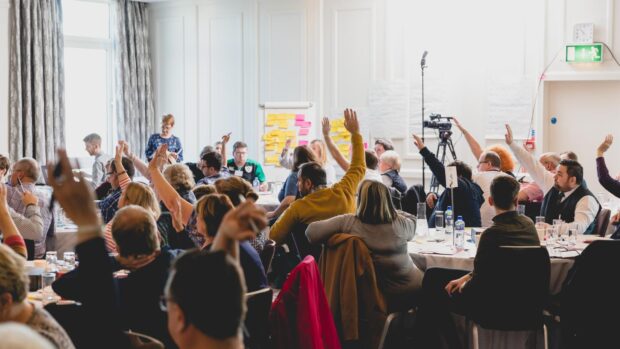
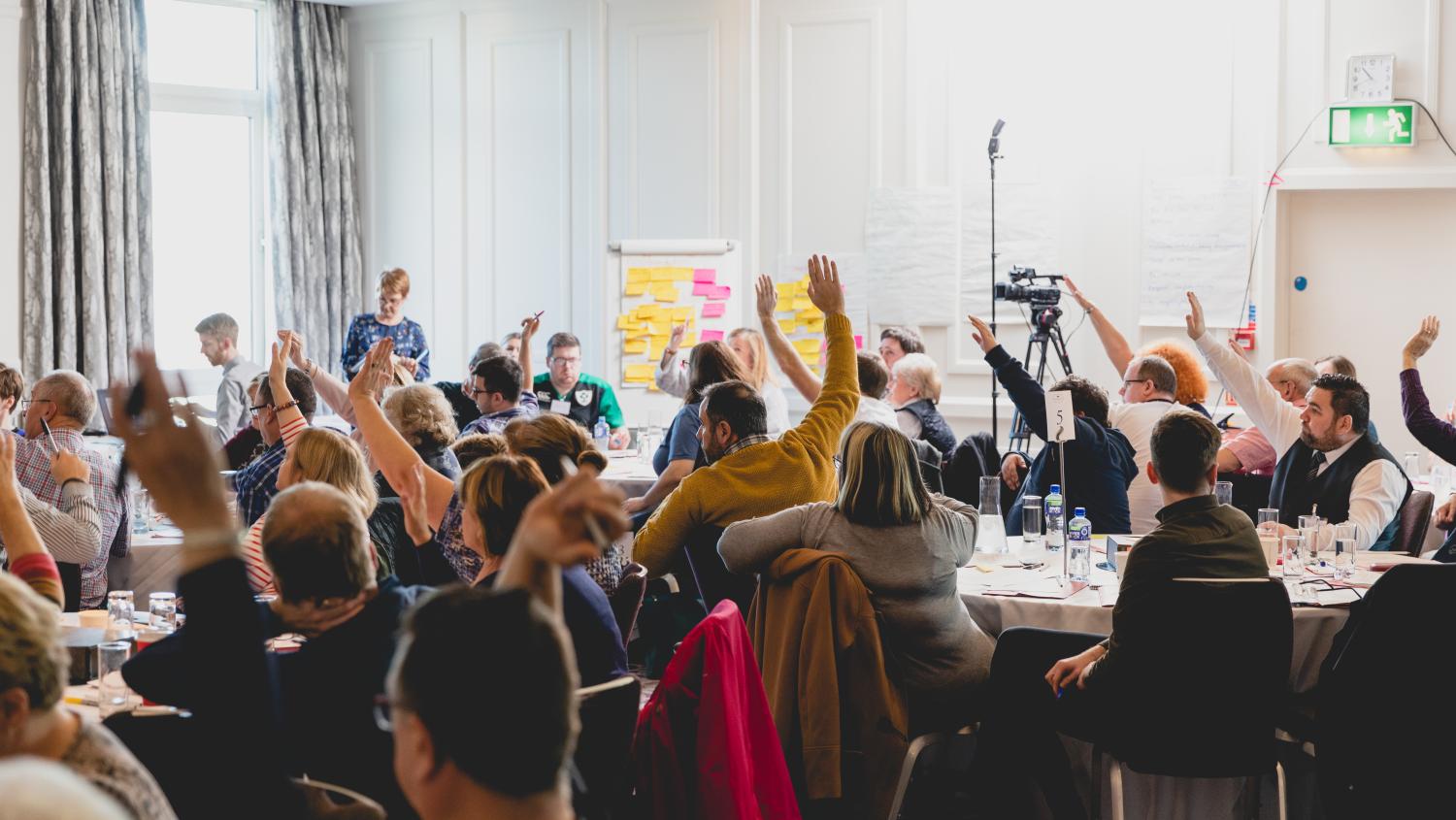
As we conclude a consultation at Bradford Cathedral as we seek to shape a renewed strategy I have been thinking a lot about the difference between asking people to support a vision and enabling them to share in making it real. An invitation to a consultation may give people a voice but can easily fall short of giving them any real influence on the outcome. Likewise, a partnership may bring organisations around the same table but never changes who sets the agenda, controls the resources or makes the final decision. Even a genuinely shared ambition can leave people as spectators if the work of delivering it remains in the hands of a few. Brown’s challenge, as I read it, is to move beyond participation as something institutions offer and towards participation as a way of organising our common life.
That raises a further question for Bradford: whose experience actually shapes decisions about the city’s future and whose contributions remain overlooked? I continue to get requests from different ethnic and cultural communities asking about their involvement in civic life. We, as Bradford Cathedral, play our part in giving representation to many but we are not the gate-keepers (yet!). The city’s diversity, however, is not yet fully reflected in the rooms where priorities are set or resources allocated. Smaller faith communities and minorities within minorities, for example, remain, at times, overlooked and access to influential networks and recognition as a credible voice aren’t always equally distributed. Bringing people together is not enough if some voices carry more weight than others.
The reality, of course, is that we can’t hear every voice or wait until everyone is represented before acting. The challenge is to recognise whose perspectives are missing, be honest about the limits of what we know and remain willing to change direction when needed. Participation becomes meaningful, not when everyone has been consulted, but when people have a genuine opportunity to influence what happens next, including the decisions that have already begun to take shape.
This brings me back to the conversation over dinner. The question was not whether Bradford has enough ideas, committed people or statements of intent, but whether we can create the conditions in which these become collective agency. That requires more than convening people when a particular project needs support. It means building relationships that endure beyond individual initiatives, creating ways for people to shape decisions rather than simply respond to them, and accepting that the outcome of working together may not be entirely under any one institution’s control.
Brown has also helped me name the zero-sum thinking that seems to always obstruct this work. As I have said, when we feel insecure it’s easy to see the world as a contest in which one group’s gain must come at another’s expense. The same logic can take hold between institutions when funding secured by one is funding unavailable to another; when attention given to one is attention diverted from a different one. Some of these constraints are real, and no amount of goodwill can make a finite budget infinite, but if we respond to scarcity only by defending our own share, we risk overlooking the value that might be created by pooling resources, sharing authority and pursuing something together that none of us could deliver alone.
For me, this is where Brown’s argument opens up a question beyond the need to restore civic participation. What if the purpose of working together is not simply to distribute scarce resources more fairly, but to discover possibilities that remain invisible when we act separately? What if the relationships we build are not an optional extra to the work but part of what makes the work possible?
We often speak about discovering the abundance of God, at Bradford Cathedral, even within the real scarcities of resources of the world. It’s an aspiration I continue to believe in, but I’ve begun to wonder whether we have fully reckoned with what it asks of us. It’d be easy to read this language as an encouragement to do more with less: to be imaginative, resourceful and resilient when money is tight. There’s, obviously, truth in that, but that’s not radical or unique to Christian thought. I’d want to push the concept further and say, if abundance is something we discover, rather than simply something we manufacture, then it’s not just how we make limited resources go further but it’s also about the cultural mindsets and social habits which limit us from seeing it.
When resources are scarce, we naturally count what we have. We count money, staff hours, buildings, audiences, influence and time available. These things matter and I’m not proposing to pretend that we can easily fix structural deficits with a change of thinking or that goodwill can compensate indefinitely for exhausted people and inadequate resources. I’m suggesting that a way of seeing, shaped entirely by what can be counted, risks overlooking what can be created through relationship: trust that makes a difficult conversation possible; a building, skill or network made available to a wider purpose; an idea transformed by encountering a perspective it could not have generated alone. I’m also not naïve to think that sometimes there really are competing needs, difficult choices and losses that cannot be avoided but we can become so occupied with securing our own resources that we fail to notice the possibilities that might emerge if we shared them, or the greater value we might create by allowing others to shape what we are doing.
In Christian theology, this touches on something more fundamental about how we understand the life we have received. Our story doesn’t begin with isolated individuals negotiating how to divide a limited supply of goods but with a God who gives life, calls a people into being and draws strangers into relationship. The Church isn’t a collection of people who happen to share the same building or beliefs but, rather, a body whose members receive their life in relation to one another, bringing different gifts into a common life. This doesn’t mean that difference disappears or that agreement must precede belonging but that some goods only become possible between us. We each bring something to an encounter but none of us can know in advance exactly what might emerge from it.
There’s something here, again, we can draw from improvisation. When improvising one comes prepared with skills, instincts and ideas of our own, but we can’t determine in advance what the scene will become. We must always attend to what others offer, take it seriously enough to respond and allow their contribution to change what we thought was happening. The discipline lies not in abandoning intentions but holding them lightly enough to make something possible together. We don’t simply impose our own preferred ending and call it collaboration but neither do we sit back and wait for something remarkable to happen without us. We’re still required to contribute, take risks but all the time remain attentive to what is emerging between us.
The question for us in Bradford, therefore, isn’t simply how we persuade people to collaborate more often or how we distribute scarce resources more fairly but whether we can cultivate forms of common life in which we become capable of seeing and creating value beyond our own immediate interests. That means sharing something of our agency: allowing others genuinely to influence our priorities, accepting that not every outcome can be controlled in advance and recognising that the flourishing of another need not diminish our own. It also means creating the conditions in which people can participate meaningfully, rather than asking them to improvise around decisions that have already been made for them.
The abundance, as presented in the Cathedral’s vision document, may not lie in having more than we currently possess but may begin when we bring what we have into relationship with what others bring and thus discover that together we can make something none of us could have planned alone. The challenge is that we can’t guarantee what that will be but I think that’s my point.

If we take this seriously, it changes what we might ask of our leaders and institutions. The test of a vision is not only whether it is compelling or whether you can demonstrate that it can/has delivered what you promised. It’s also whether that vision makes others more capable of shaping a shared future. Leadership matters, of course, but not only because it gives direction or secures results but because it creates the conditions in which other people discover their own capacity to act and in which different institutions become capable of doing something together that none could have achieved alone.
That is a more demanding understanding of collaboration than simply bringing people around a table. It asks who sets the agenda, who controls the resources, who gets to make decisions and whose contribution is allowed to change the outcome. It asks whether we are prepared to commit to work whose value cannot be attributed neatly to one organisation or whose eventual shape cannot be fully specified at the outset. Maybe more significantly, it asks whether we can build relationships that survive disagreement, setbacks and the inevitable moments when working together feels less efficient than doing things ourselves.
None of this should undermine the need for careful planning, financial accountability or clear responsibility. Good improvisers prepare; they develop their craft, learn to pay attention and take responsibility for what they bring into the room, but preparation is not the same as deciding in advance what everyone else must contribute. The point is to be ready to respond when something happens that none of us anticipated. I am increasingly convinced that institutions need something of that discipline: not less clarity about their responsibilities but a greater willingness to let their plans be changed by the people and possibilities they encounter.
So I go back to that conversation over dinner and also to the striking similarities between the aspirations I heard at the University of Bradford and in our own vision at the Cathedral. We seem to be past the question of how to persuade Bradford’s institutions to develop a common vision; the harder question is what are we prepared to do differently because our ground is shared.
What if we began, not by asking how a new initiative could serve each institution’s existing priorities, but what Bradford needs that we could only achieve by working together? Who else might need to be part of that conversation? What resources, relationships and authority would we have to bring into the work? And what would it mean to give those involved enough freedom to discover an outcome that none of us could have designed alone?
I don’t know what that looks like or what would emerge from it but that’s not a reason to avoid the work. In fact, it’s what makes it necessary. We can’t discover the abundance that might exist between us if we continue to insist that we know in advance what it must look like or that its value must be returned to each of us separately. We will have to offer what we have, make room for what others bring and be prepared to be changed in the encounter.
The future starts between us. The question is whether we are prepared to begin.