Last month I wrote about some indirect criticisms I received following my appearance on the BBC Christmas service from Bradford Cathedral (here). Many have since felt the need to jump to my defence and, in doing so, have fallen foul of the very danger I was trying to name in that reflection. In navigating the conversation that followed, and in trying to attend carefully to the kind of posture I am attempting to cultivate in polarised public debate, I have found myself returning to an earlier, more controversial post on the Anglican Communion.
In that post I explored my sense that the Anglican Communion has lost sight of the need for theological rationale to its polity. That idea was entirely overlooked by some readers and critics due to my, admittedly, sloppy framing of the argument, with an under-researched statement about Archbishop Sarah Mullally. Debate became fixated on my perceived position on gender and cultural and political alignment, rather than on the question I was actually trying to raise.
What I still find interesting (and revealing) is not simply that the argument was missed, but why. Why was the conversation so quickly drawn toward identity, representation, and position, and so reluctant to engage the deeper claim? Might it be because there is already a widespread and often unexamined acceptance that the Church of England has, as several critics of my Christmas Day appearance put it, “lost its way”? And might it be that we are not yet ready to reflect on the theological anaemia that makes such loss possible?
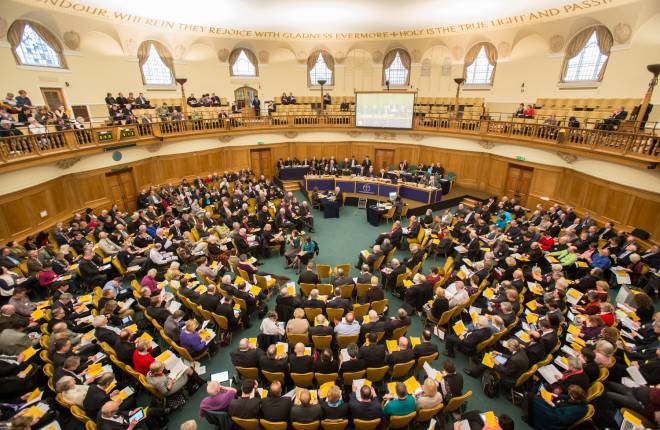
These questions were reignited when I recently watched a video in which a General Synod member for the Diocese of London was strongly defending the view, ‘as an elected member of General Synod’ (as though that gives a person moral authority), that abortion is not the killing of a human being. When the interviewer asked the member of Synod whether they believed that Jesus was fully human in the womb and from the moment of conception, the responder faltered. There was a stutter and then silence.
The interviewer went on to outline, theologically, the argument against the Nestorian heresy, and why the moral position of the person defending abortion as not the killing of a human being might be problematic. The silence that followed was painful to watch. What struck me was the confidence with which election to General Synod was invoked, and the apparent belief that the political process to the privileged position in the conciliar life of the Church of England automatically granted them authority to shape its doctrine without any corresponding sense that theology might interrupt, challenge, or even judge what is being said.
It is this same lack of confidence in theological rigour among those discerning and debating the doctrine, faith, and order of the Church of England, and in a lesser way the Anglican Communion, that lay at the heart of the post that became more about the person of Sarah Mullally rather than about the deeper principle I was trying to name: theology is no longer even assumed to be a necessary consideration when appointing, or authorising, those who shape the life of the Church.
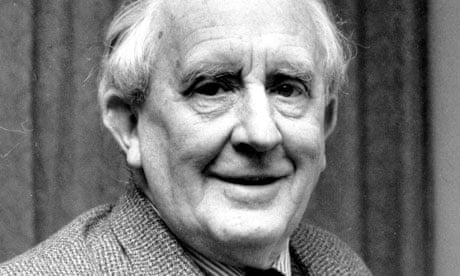
I have wanted to read Holly Ordway’s Tolkien’s Faith since listening to her podcast interview back in 2024. At the start of this month, I finally managed to get round to delving into this unique biography of a man whose literary output has inspired me in multiple ways. This biography is not a recitation of the chronology of his life nor a decoding of his fictional Middle Earth and its characters. It is, instead, a search for the spirituality of Tolkien and how that was expressed, yes, in his fictional writing, but more insistently in his letters, relationships and decisions.
Halfway through reading this 480-page book I began to feel a growing unease and dissatisfaction. Tolkien’s own approach, his seriousness, towards his Catholic faith and how that informed his academic work, as well as his literary writing, stirred something in me. It enlivened a deep, perhaps slightly romantic, longing for a form of academic life where theology is not an optional add on but is unapologetically a governing discipline. It was the people and saints that Tolkien lauded and was inspired by, however, that really touched a nerve. Figures such as John Henry Newman, in particular, whose theology and spirituality have long resonated with me. These were not simply historical influences for Tolkien; they were living interlocutors that shaped his moral imagination and intellectual posture. For someone who was once Catholic and later became Anglican, such figures have also given shape to my own ecumenical instincts
The unease began to formulate into a question to myself, “Why do so many Anglicans, ‘cross the Tiber’ and become Roman Catholic?”
Now there are lots of obvious reasons why, particularly in Tolkien’s time, this has been common: Anglican cultural dominance and Catholic social martyrdom that lead to a quiet heroism of dissent, etc. As someone who has travelled against the stream the other way, I did find myself wondering whether I had made a mistake. Which Anglican ancestors do I look too who made a similar choice to move away from the Magisterium and historic centre of gravity of the Church, towards the Anglican polity and (I do believe there is one) theology?
This is why, in part, I followed my reading of Tolkien’s Faith with Paul Avis’ The Identity of Anglicanism. I am thankful, as ever, for Avis’ writing and passion. This book grounded me back in the church I intentionally chose and continue to choose, despite the weakening of its self-confidence or self-understanding.
And yet, reading Avis alongside Ordway, I was still left with some troubling questions: does Anglicanism possesses theological depth and coherence? Does it have the resources to sustain seriousness of doctrine, faith, and order and why does it so often speak of itself as though it does not? Why is confidence in Anglican theology so fragile, so quickly displaced by process, representation, or political legitimacy? And why, when theological questions press most urgently, do we so often reach first for mechanisms of governance rather than habits of thought?
There is one piece of analysis that Avis offers that particularly chimed with me: Anglicans are prone to describe their own tradition as incoherent, provisional, or as a pragmatic result of history. Proponents of this view (some of which I hold in high regard, like Michael Ramsay) often offer this self-deprecation as a mark of humility, or even generosity. But, like Avis, I am not convinced that either is true.
In the preface of my book, Ash Water Oil, I wrote,
The curses spoken over the Bride of Christ have been so constant that it is rare to hear her speak positively of herself. She has become so self-critical that she has begun to talk only of a complete make-over akin to surgical enhancements and distortions.
Ned Lunn, Ash Water Oil: why the Church needs a new form of monasticism (Sheffield: Society of the Holy Trinity, 2020) p. xv)
This habitual tendency of the Church of England, in particular, reveals, to my mind, a lack of confidence in, and a reluctance to speak clearly about, doctrine. Avis reminds his reader that when the debate around the ordination of women was had in the 1980s, ‘the Doctrine Commission was not put to work on any doctrinal implications; the Faith and Order Advisory Group was not consulted about the ecclesiological and ecumenical aspects; and the General Synod did not take the opportunity to set up a commission of all the talents that could have examined the theological, ecumenical and pastoral arguments for and against.’ He then goes on to say that when it came to the debate on women’s ordination to the episcopate, on the other hand, there were theological resources produced, but the process and use of these resources was ‘half hearted’ (Paul Avis, The Identity of Anglicanism (London: T&T Clark, 2007) p.119).
This is why the video of the General Synod member begins to feel less like an isolated moment and more like a symptom of something larger. What was striking was not the position being defended, nor even the faltering silence that followed the interviewer’s Christological question. It was the apparent assumption that election itself conferred to them an authority to speak decisively on matters that are, at their heart, doctrinal. That a political process within the Church could grant moral standing without any corresponding obligation to theological coherence, was the question I was trying to raise in my poorly framed post on the Anglican Communion.
When theology as a guiding discipline is no longer trusted to carry authority, something else must inevitably takes its place. What we now seem to rely on are the mechanisms of governance: election, representation, process, public opinion and mandate. These are not wrong or unimportant; they are necessary to any social order, but they cannot bear the weight we are increasingly asking them to carry. When procedural legitimacy is allowed to stand in for theological judgement, the Church risks confusing how decisions are made with whether those decisions are right or true.
This helps me to understand why my earlier post was so readily reframed as a comment on gender or cultural and political alignment. Those are the categories we have learned to reach for; they are familiar and seemingly more intelligible. Theology, by contrast, is slower, more demanding, and far less easily mobilised. To engage it seriously would require us to admit that not all questions can be resolved by process alone, and that some forms of authority are not conferred but received.
I agree wholeheartedly with the view that a strength in Anglicanism is its provisionality. Where I disagree with those who use it to underplay the need for theology to become a governing discipline of our life together, is in what areas we can claim, with confidence, that provisionality. The disagreement is not, therefore, about whether Anglicanism is provisional, but about what provisionality is for.
They have described it as incomplete, temporary and destined to lose itself in a greater whole. This sounds rather noble and altruistic until we ask whether there are, in fact, any extant expressions of the Church that should not be regarded as provisional but as final and permanent.
Avis, The identity of Anglicanism, p.156
Augustine’s use of the concept of provisionality is different to the one outlined in Avis’ characterisation of his opponents. Provisionality, for Augustine, is not an excuse to fall into a state of impasse or uncertainty. Rather, it is the opposite. It is the reason to keep striving towards greater understanding and into deeper communion with the mystery at the heart of our faith.
I guess we all have a tendency to be selective as to what we want to resolve and what we’re happy to remain open and curious about. I acknowledge that I’m more ready to pursue the complexity and sit with it longer than most when it comes to philosophy and theology (as explored in Pursuing Mystery). At the same time, I also admit that when uncertainty touches more relationally or personally I push for definition and resolution.
What I felt reading Ordway’s description of the Tolkien’s faith and the wider Catholic Church in his day, was a deep and sustained seriousness about the primacy of coherent and historically rooted theology that can hold throughout the ebbs and flows of public opinion and cultural change. The reason, however, that I left the Roman Catholic Church was its tendency to be too inflexible to reason and ressourcement. Anglican theological methodology sings when it ‘tries neither to be centralized nor fragmented, neither authoritarian nor anarchic. It is comprehensive without being relativistic.’ (Avis, The identity of Anglicanism, p.169)

Our current social media-driven world demands quick certainty. Positions and statements are better than ongoing dialogue, relational discernment and deeper appreciation of the beauty of mystery. It is my hunger for a life centred on the experience of communal and ecclesial discovery that inspires me about Tolkien and his influences. What keeps me Anglican, however, is the conviction that its tradition still carries resources we have not finished using, questions we have not finished asking, and a seriousness we have not yet relearned how to inhabit. The question is not simply why some Anglicans leave, but whether those who remain are prepared to do the work that staying now requires.
To remain Anglican at this moment, then, is not an act of complacency but of labour. It requires resisting the temptation either to apologise for the tradition or to abandon it in search of firmer ground elsewhere. It asks something harder: the willingness to stay and to insist, gently but persistently, that theology matters: not as ornament, but as orientation.
That work will not be accomplished by louder processes or more efficient governance. It will require the slow recovery of theological confidence. Not certainty, not rigidity, but the confidence to allow doctrine to interrupt us, to judge us, and, at times, to leave us momentarily silent for the right reasons.