Tag Archives: performance

Into Culture: Between Humours

On Christmas morning I stood in the Cathedral and read the Gospel. I did not simply read it aloud; I ‘performed’ it. I moved between voices, I was an angel, I had a small rod puppet shepherd, and then there was the holy family. I was conscious that this story is not an abstract text but a narrative meant to be heard and inhabited.

There was a moment, brief and intentional, where the oddness of the scene was acknowledged: I, a bearded man, had to embody a pregnant Mary. The biblical text stated it, twice. Rather than pretending otherwise, I named it. People laughed, gently. The laughter was not the point; what followed was. The room relaxed. The congregation listened. In that moment something unspoken was shared: a trust that we were listening together, not auditioning one another for ideological purity.

For many in the room and, indeed, some familial viewers at home, my reading was a highlight; a focal point around which the rest of the service hung. I had worked with the BBC to ensure that it was the gateway to the liturgy, the sermon and the music.

Later that morning, on my phone, I encountered a different reception of the same moment.

On social media, particularly on X, the Gospel reading was redescribed in language I barely recognised. It became “prancing”. It became “a man pretending to be pregnant”, as though I were making a pro-trans statement. It became evidence that the Church had “lost its way”. One comment suggested that people like me were “mentally ill” and should not be given a platform on Christmas morning. Others contrasted the service with a more solemn broadcast elsewhere, as though Christianity were a consumer choice between aesthetic packages.

I was not especially hurt by this (maybe a little!). What struck me more was how quickly the moment was absorbed into a wider narrative that had already decided what it was seeing.

Why did this particular reading of the Gospel become a flashpoint? Why was humour interpreted as mockery rather than hospitality? And why did Christmas, once again, become the moment when Christianity was enlisted into cultural battle lines that long pre-dated the service itself?


I want to be clear about my intention here. I want to avoid simply justifying myself, but because intention and reception are now so rarely allowed to meet, I want instead to explore how our culture, shaped by the speed and incentives of social media, has become so individualised that any sense of sociality is quietly eroding. Grace, space, and curiosity are skipped over in favour of statement and performed certainty.

The humour in that Gospel reading was not there to provoke or to undermine reverence. It was there because I know how people listen. I know how easily attention can become trapped by surface strangeness, by the question of why this is happening rather than what is being said. By naming the oddness up front, I was trying to release the congregation from it. The humour functioned as a pastoral gesture; it said: you do not need to fixate on this, you can stay with the story.

In the room, that is what happened.

Online, the gesture was read very differently, either deliberately or through a lack of imaginative practice. What had been an attempt to open space became, in some accounts, evidence of contempt. The humour was not simply missed; it was reinterpreted as threat.

This is where social media culture becomes significant. Humour depends on trust, shared presence, and a willingness to be vulnerable together; it assumes a mutual commitment not to rush to the most hostile possible reading. These are precisely the things platforms are least able to sustain. Online, context collapses, intention is flattened, and the most suspicious interpretation is often the most rewarded.

It would be easy to attribute this simply to bad faith or a lack of imagination. But something more structural is at work. We are increasingly shaped by environments that discourage curiosity and train us to interpret quickly, defensively, and alone.

The reaction to the Bradford service did not occur in a vacuum. It came amid an ongoing argument about Christianity, nationalism, and belonging, sharpened recently by the controversy surrounding a carol service associated with Tommy Robinson.

Some Church of England clergy were quick to condemn that service, framing it as a distortion of Christianity and a capitulation to racism or extremism. In response, others accused the Church of despising the working class, of sneering at Reform voters, of aligning itself with a liberal elite that no longer understands national loyalty or cultural loss.

What struck me was how quickly both sides reached for caricature.

On one side, supporters of Robinson were reduced to racists or reactionaries, their fears dismissed as morally illegitimate. On the other, clergy and institutions were portrayed as decadent, faithless, and contemptuous of “ordinary people”. In both cases, the same move was made: complex human motivations were collapsed into moral shorthand, and with that collapse came the withdrawal of any obligation to listen.

This is where I find myself increasingly unable to stand comfortably with either camp.

I have no interest in baptising nationalism, nor in pretending that Christianity belongs naturally to any ethnic or political identity. But neither am I convinced that the Church serves the Gospel well when it treats national feeling, cultural grief, or anger at social change as inherently suspect or morally inferior.

Both responses are animated by fear. Both seek clarity through exclusion. Both prefer the certainty of an enemy to the risk of uncomfortable understanding. In different ways, both sides step away from a shared responsibility to treat one another as participants in a common moral world, rather than as symbols to be managed or threats to be neutralised.

The tragedy is that each believes it is resisting precisely what it is mirroring.

Social media does not create these dynamics, but it dramatically intensifies them once they are fed into the system. Platforms reward certainty over curiosity. They reward speed over attentiveness. They reward moral performance over moral risk. Across ideological spaces the same pattern appears, though it wears different clothes. Progressive platforms reward denunciation dressed as justice. Conservative ones reward outrage framed as defence.

In both cases, distance is created quickly. People become avatars rather than neighbours. Disagreement becomes pathology. The language used against me, particularly the leap to mental illness, is not unique. It is a familiar tactic across ideological lines: to name something as sick is to absolve oneself of the obligation to listen.

What concerns me most is not the aggression itself, but how readily it is normalised, including by Christians. Well-meaning colleagues on the left, myself included at times, can assume that the right kind of moral clarity excuses a lack of charity. Those on the right, again including myself at times, can assume that defending tradition excuses a lack of self-examination. Social media offers both sides endless opportunities to reinforce their own virtue by refusing complexity.

It would be easy at this point to conclude that X is simply broken, that the loudest voices are marginal, and that nothing of value is being lost. But that conclusion feels too easy, and too costly.

The sadness is not that people were angry. It is that the informal agreements that make shared life possible, the habits of patience, generosity, and interpretive restraint, feel increasingly thin. To dismiss these exchanges as inevitable noise is to accept the erosion of a social contract we rarely name because it once felt so obvious: that we owe one another enough time, care, and attention for meaning to emerge at all. The loss is not merely of civility, but of a common life in which faith, disagreement, and imagination can still meet.
So where does this leave me?

It leaves me deliberately standing in a space that is uncomfortable and increasingly unpopular. A space between easy alliances. A space where difference is acknowledged without being weaponised, and unity is sought without pretending differences do not matter.

This is not neutrality. It is a commitment of a different kind.

It means refusing to dismiss those who reacted angrily to the service as simply bigoted or backward, while also refusing to allow anger and fear to define the boundaries of Christian faith. It means challenging colleagues on the ecclesial left when critique slips into contempt, just as it means challenging nationalist readings of Christianity that collapse the Gospel into cultural defence.

It also means continuing to take risks in worship, not as acts of provocation, but as acts of trust; small, embodied ways of repairing the fragile agreements that allow us to listen to one another at all. Trust that the Gospel can survive misunderstanding. Trust that the Church does not need to harden itself into a single cultural posture in order to remain faithful.

Christmas does not offer us control. It offers us presence.

Social media will continue to demand sides. It will continue to reward outrage and simplify complexity. But the Church still has choices to make: about how it speaks, how it listens, and where it is willing to remain when misunderstanding arises.

The Gospel suggests that God does not resolve conflict by choosing a faction, but by inhabiting the space between. Perhaps the task now is not to shout louder from one trench or another, nor to abandon the public square altogether, but to stay, patiently and vulnerably, in that difficult middle ground where listening is still possible, where shared responsibility has not yet been surrendered, and where incarnation, against all odds, continues to take place.

Into Culture: From Platform to Presence

At the beginning of this month I stood on the same stage in the Cathedral for two different events both framed as a platform for interfaith encounter: one I was hosting the first public ‘Re:Imagine’ events looking at faith conversations with Baroness Sayeeda Warsi and Bishop Toby Howarth, the other, I was compering the annual ‘Sacred Music’ event for Bradford Literature Festival. Both events were billed as moments of dialogue, creativity, and shared spiritual insight: civic faith at its best.

Both events were curated with care. Both featured thoughtful, experienced voices. And yet, as the applause faded and the doors closed behind the final guests of that weekend, I felt a distinct and unsettling ache but not from hostility or controversy, but of absence: the absence of risk, the absence of surprise, the absence of the kind of uncomfortable, necessary tension that makes real conversation not only possible but transformative. Both had a sense that we were speaking around each other, not with each other. For all the talk of openness, diversity, and dialogue, what I experienced was not encounter but choreography.

Despite the warm words and generous presence of our contributors, neither evening managed to break the deadlock of public discourse. Neither truly modelled the innovative approach to intercultural engagement I had hoped for; something deeper than polite pluralism or liberal tolerance, something bolder than a curated diversity of views. What do we do when faith conversations, however well-intentioned, merely reinforce the safest, most performative version of themselves?

If Re:Imagine is to live up to its name, if sacred music is to do more than soothe, then we need more than curated coexistence. We need a new grammar for faith conversation, and public debate in general, that is something less about making space, and more about inhabiting tension. 

We must confront the following questions head-on: what needs to be unlearned in the way we currently gather across difference? And what might it take to birth something new; something not just novel, but necessary?


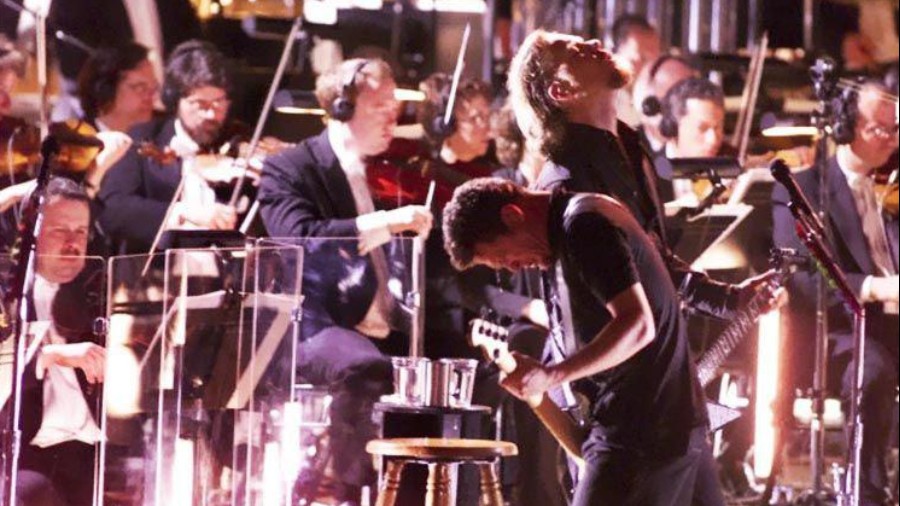
One of the things I’ve been reflecting on over the last few weeks is the inevitability of performance, especially when events take place on a stage. As soon as we put people in front of an audience, in a structured setting, particularly under the vaulted ceilings of a cathedral, we are not just enabling speech; we are framing it. Whether we realise it or not, we are inviting a performance.

This isn’t a criticism. It’s simply a sociological fact. In his seminal work The Presentation of Self in Everyday Life, Erving Goffman argued that social life is fundamentally theatrical. Each of us, he claimed, is always managing impressions; performing a version of ourselves that is shaped by context, audience, and expected norms. The ‘front stage’ is where roles are consciously curated; the ‘backstage’ is where we are less guarded, less polished, more uncertain. But Goffman’s point is that even our backstage is not fully free from performance; we are always somewhere on the spectrum of managing perception.

This framework helps explain why the platform changes things, even when the conversation is genuine. I tried to make Re:Imagine feel less like a panel discussion and more like an invitation to be present, unguarded, vulnerable. But the stage itself had its own logic. The lights, the audience, the publicity, all of it subtly nudged us into a mode of presentation. And once there, it was hard to improvise. When Baroness Warsi and Bishop Toby spoke, they were never really going to be able to simply share personal reflections. In hindsight, the temptation to enact identities was always going to be hard to resist. Warsi, a high-profile Muslim political figure, had to navigate all the projections, expectations, and contestations that come with that role. Bishop Toby, a Church of England bishop in a city like Bradford, was similarly constrained, not by lack of sincerity, but by the complexity of occupying an ecclesial role that is both spiritual and civic, pastoral and political. Both were, in a sense, ‘on stage’ before they even opened their mouths.

And yet I do not believe performance is always false. In fact, I’ve long thought that performance can be deeply true; perhaps even sacred but only when it moves beyond control into vulnerability. My background in theatre taught me that risk is the currency of authentic performance. It is not about getting it right but about stepping into the unknown with others. That kind of improvisational performance isn’t about projecting an image but revealing a self. For that to happen, the platform must allow for rupture and the inevitable mess to be held.

This is what I hoped Re:Imagine might enable. And while both our contributors gestured toward that vulnerability with grace and honesty, the structure around them hindered and blocked their improvisation. The conversation stayed within the boundaries of what the audience could already process. The performances were sincere. But they were still bounded.

What might it take to make a different kind of space?

This question surfaced again the next evening. I had hoped to co-produce this year’s Sacred Music event with Bradford Literature Festival. I’d proposed a shift in format: rather than sequential performances by artists from different traditions, what if we invited musicians to improvise and collaborate to create something new in real time, across the boundaries of tradition? Faith in motion. Difference in dialogue.

The conversations were encouraging but, in the end, the final event returned to the familiar: artists from different faith backgrounds performing one after another in respectful sequence. Beautiful but ultimately predictable. We honoured coexistence, but did not risk co-creation.

And this is where I believe we are stuck.

In many public conversations about faith and other contested issues we find ourselves in one of two places. Either we veer toward conflict: oppositional voices debating from fixed positions. Or we avoid it altogether: showcasing diversity in a way that flattens its tension. The former breeds fatigue and defensiveness; the latter, polite stagnation. Both forms are governed by what I want to call curated coexistence. It’s the idea that if we simply gather different people in the same space, a deeper understanding will naturally emerge. But that’s not how real encounter works. Not in theology. Not in art. Not in life. Encounter requires not just proximity, but vulnerability. Not just expression, but interruption… and interruption is risky.

This is why I’ve been returning to my ongoing reflection on inclusive othering; a framework which seeks to hold deep difference not as a problem to be solved, but as a place to dwell. I have been drawn to the idea that genuine unity comes not through flattening difference, but by learning to desire the good of the other precisely as ‘other’, as different.

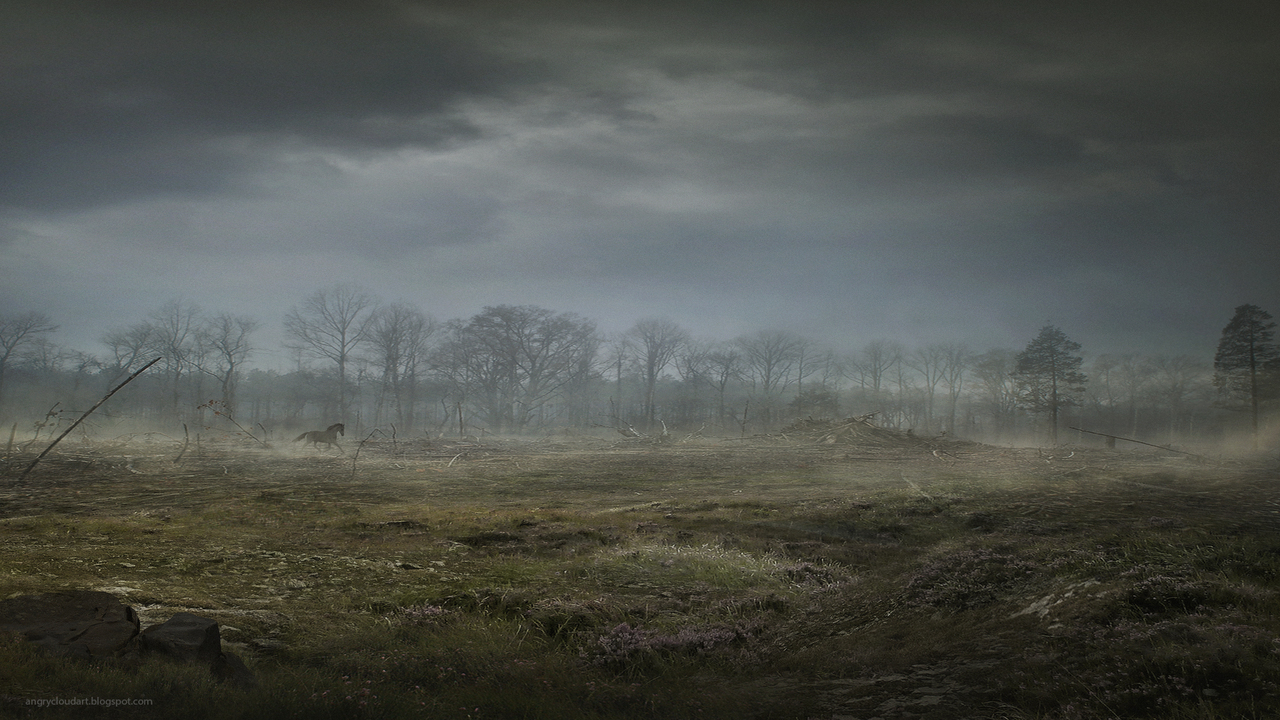
Inclusive othering is not about everyone feeling comfortable. In fact, it’s about learning to sit in that uncomfortable ‘no man’s land’ between views, identities, and traditions and allowing that space to shape us.

No Man’s Land by Magdalena Mudlaff

What, then, might this mean for the Re:Imagine series moving forward as a platform for reimagining all kinds of contentious and complex topics: global diplomacy, AI and ethics, environmental activism, migration?

Firstly, I believe we need to experiment with form. What if the structure of our events is not just a means of delivery, but a form of witness? Drawing from performance theory and social improvisation, I am increasingly convinced that our formats encode our assumptions. If our structure assumes performance, then transformation will remain secondary. If the structure of our encounter is built to invite surprise, co-dependence, and change, then our content may finally have room to breathe. This means, therefore, more than changing the seating arrangements. It means actively disrupting the expectation that ideas must be defended or performed. What would it look like to invite guests not to explain themselves, but to ask each other questions they have never dared ask? What if every event required a confession—of failure, of misunderstanding, of being surprised by the other? What if participants weren’t experts, but witnesses?

Secondly, I want to explore the role of embodied practices in public conversations; silence, lament, artistic improvisation, shared meals, symbolic gestures. These are not just aesthetic flourishes. They are facilitated interventions. They disarm the impulse to perform and invite a mode of engagement that speaks to the whole person—not just their views, but their lived and vulnerable selves.

Thirdly, we must reckon honestly with power and representation. One audience member felt, after the Re:Imagine event, discomfort that a powerful political figure, Sayeeda Warsi, was given an uncontested platform who could say things without a firm response. What I found most interesting about that expressed opinion was what it revealed about audience expectation: namely, that public spaces are understood as a kind of battleground. What if we reimagined and restructured it as a sanctuary for disarmed curiosity? What if our role as curators of public space is not to ensure balance, but to nurture trust in order to create containers where difference is neither erased nor exploited and tension is embraced as an uncomfortable but necessary catalyst to creativity. As Miroslav Volf suggests to embrace is to open one’s arms, wait, and then close them around the other; not to absorb, but to hold the other. Too often, our public events keep the arms open but never move toward that vulnerable embrace.

Finally, we must accept that not all fruitful conversations are public. I am still wrestling with whether these events should happen on stage at all. Yet I worry that if we retreat entirely into the private realm, we abandon the possibility of redeeming the public one. The challenge is this: how do we make public spaces more porous, more reflective of the quiet transformation we know happens in private? Risk, after all, needs aftercare. Surprise requires structure. Vulnerability must be held. To reimagine means not only saying new things, but saying them in new ways and allowing our forms to speak before our words ever do.

So what now?

I remain grateful to Baroness Warsi and Bishop Toby. They showed up. They offered themselves. They attempted to be vulnerable. My disappointment is not in them, but in the format that could not sustain the possibility of surprise. The same is true of the artists and the people at Bradford Literature Festival curating the Sacred Music event.

We do need new formats for public moments and encounters. We need creative risks. We need voices willing not just to speak, but to listen and then acknowledge the possibility of change. We need events where musicians and thinkers improvise across difference, where politicians weep, where migrants and fearful indigenous peoples meet each other, personally over a meal and share stories.

Because if faith, and public life, are to mean anything in this fractured age, they must do more than speak. They must listen. They must risk. They must dwell in the gaps.

That weekend in the cathedral did not go as I had hoped. But perhaps that’s the point. Hope is not about things going to plan. Hope is the refusal to give up on what could be, even when what was falls short.

It is time, once again, to reimagine.