
Tag Archives: interfaith

Into Culture: From Platform to Presence

At the beginning of this month I stood on the same stage in the Cathedral for two different events both framed as a platform for interfaith encounter: one I was hosting the first public ‘Re:Imagine’ events looking at faith conversations with Baroness Sayeeda Warsi and Bishop Toby Howarth, the other, I was compering the annual ‘Sacred Music’ event for Bradford Literature Festival. Both events were billed as moments of dialogue, creativity, and shared spiritual insight: civic faith at its best.

Both events were curated with care. Both featured thoughtful, experienced voices. And yet, as the applause faded and the doors closed behind the final guests of that weekend, I felt a distinct and unsettling ache but not from hostility or controversy, but of absence: the absence of risk, the absence of surprise, the absence of the kind of uncomfortable, necessary tension that makes real conversation not only possible but transformative. Both had a sense that we were speaking around each other, not with each other. For all the talk of openness, diversity, and dialogue, what I experienced was not encounter but choreography.

Despite the warm words and generous presence of our contributors, neither evening managed to break the deadlock of public discourse. Neither truly modelled the innovative approach to intercultural engagement I had hoped for; something deeper than polite pluralism or liberal tolerance, something bolder than a curated diversity of views. What do we do when faith conversations, however well-intentioned, merely reinforce the safest, most performative version of themselves?

If Re:Imagine is to live up to its name, if sacred music is to do more than soothe, then we need more than curated coexistence. We need a new grammar for faith conversation, and public debate in general, that is something less about making space, and more about inhabiting tension. 

We must confront the following questions head-on: what needs to be unlearned in the way we currently gather across difference? And what might it take to birth something new; something not just novel, but necessary?


One of the things I’ve been reflecting on over the last few weeks is the inevitability of performance, especially when events take place on a stage. As soon as we put people in front of an audience, in a structured setting, particularly under the vaulted ceilings of a cathedral, we are not just enabling speech; we are framing it. Whether we realise it or not, we are inviting a performance.

This isn’t a criticism. It’s simply a sociological fact. In his seminal work The Presentation of Self in Everyday Life, Erving Goffman argued that social life is fundamentally theatrical. Each of us, he claimed, is always managing impressions; performing a version of ourselves that is shaped by context, audience, and expected norms. The ‘front stage’ is where roles are consciously curated; the ‘backstage’ is where we are less guarded, less polished, more uncertain. But Goffman’s point is that even our backstage is not fully free from performance; we are always somewhere on the spectrum of managing perception.

This framework helps explain why the platform changes things, even when the conversation is genuine. I tried to make Re:Imagine feel less like a panel discussion and more like an invitation to be present, unguarded, vulnerable. But the stage itself had its own logic. The lights, the audience, the publicity, all of it subtly nudged us into a mode of presentation. And once there, it was hard to improvise. When Baroness Warsi and Bishop Toby spoke, they were never really going to be able to simply share personal reflections. In hindsight, the temptation to enact identities was always going to be hard to resist. Warsi, a high-profile Muslim political figure, had to navigate all the projections, expectations, and contestations that come with that role. Bishop Toby, a Church of England bishop in a city like Bradford, was similarly constrained, not by lack of sincerity, but by the complexity of occupying an ecclesial role that is both spiritual and civic, pastoral and political. Both were, in a sense, ‘on stage’ before they even opened their mouths.

And yet I do not believe performance is always false. In fact, I’ve long thought that performance can be deeply true; perhaps even sacred but only when it moves beyond control into vulnerability. My background in theatre taught me that risk is the currency of authentic performance. It is not about getting it right but about stepping into the unknown with others. That kind of improvisational performance isn’t about projecting an image but revealing a self. For that to happen, the platform must allow for rupture and the inevitable mess to be held.

This is what I hoped Re:Imagine might enable. And while both our contributors gestured toward that vulnerability with grace and honesty, the structure around them hindered and blocked their improvisation. The conversation stayed within the boundaries of what the audience could already process. The performances were sincere. But they were still bounded.

What might it take to make a different kind of space?

This question surfaced again the next evening. I had hoped to co-produce this year’s Sacred Music event with Bradford Literature Festival. I’d proposed a shift in format: rather than sequential performances by artists from different traditions, what if we invited musicians to improvise and collaborate to create something new in real time, across the boundaries of tradition? Faith in motion. Difference in dialogue.

The conversations were encouraging but, in the end, the final event returned to the familiar: artists from different faith backgrounds performing one after another in respectful sequence. Beautiful but ultimately predictable. We honoured coexistence, but did not risk co-creation.

And this is where I believe we are stuck.

In many public conversations about faith and other contested issues we find ourselves in one of two places. Either we veer toward conflict: oppositional voices debating from fixed positions. Or we avoid it altogether: showcasing diversity in a way that flattens its tension. The former breeds fatigue and defensiveness; the latter, polite stagnation. Both forms are governed by what I want to call curated coexistence. It’s the idea that if we simply gather different people in the same space, a deeper understanding will naturally emerge. But that’s not how real encounter works. Not in theology. Not in art. Not in life. Encounter requires not just proximity, but vulnerability. Not just expression, but interruption… and interruption is risky.

This is why I’ve been returning to my ongoing reflection on inclusive othering; a framework which seeks to hold deep difference not as a problem to be solved, but as a place to dwell. I have been drawn to the idea that genuine unity comes not through flattening difference, but by learning to desire the good of the other precisely as ‘other’, as different.

Inclusive othering is not about everyone feeling comfortable. In fact, it’s about learning to sit in that uncomfortable ‘no man’s land’ between views, identities, and traditions and allowing that space to shape us.
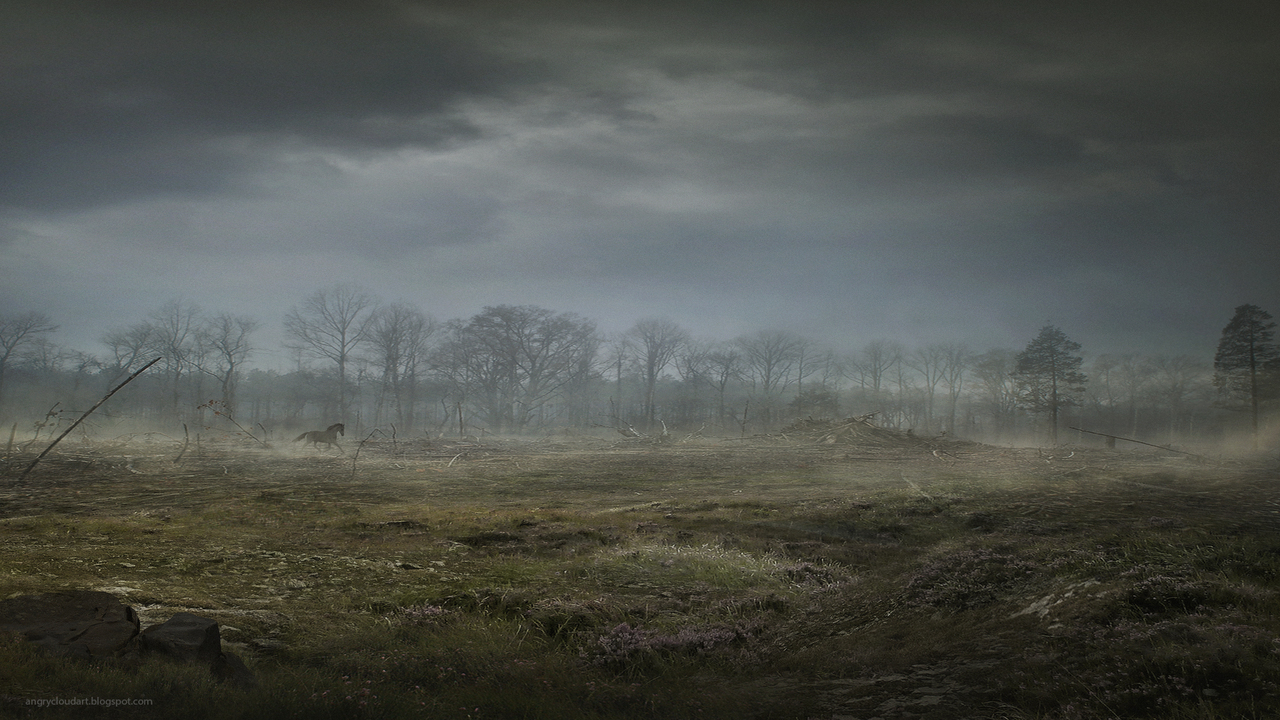
No Man’s Land by Magdalena Mudlaff

What, then, might this mean for the Re:Imagine series moving forward as a platform for reimagining all kinds of contentious and complex topics: global diplomacy, AI and ethics, environmental activism, migration?

Firstly, I believe we need to experiment with form. What if the structure of our events is not just a means of delivery, but a form of witness? Drawing from performance theory and social improvisation, I am increasingly convinced that our formats encode our assumptions. If our structure assumes performance, then transformation will remain secondary. If the structure of our encounter is built to invite surprise, co-dependence, and change, then our content may finally have room to breathe. This means, therefore, more than changing the seating arrangements. It means actively disrupting the expectation that ideas must be defended or performed. What would it look like to invite guests not to explain themselves, but to ask each other questions they have never dared ask? What if every event required a confession—of failure, of misunderstanding, of being surprised by the other? What if participants weren’t experts, but witnesses?

Secondly, I want to explore the role of embodied practices in public conversations; silence, lament, artistic improvisation, shared meals, symbolic gestures. These are not just aesthetic flourishes. They are facilitated interventions. They disarm the impulse to perform and invite a mode of engagement that speaks to the whole person—not just their views, but their lived and vulnerable selves.

Thirdly, we must reckon honestly with power and representation. One audience member felt, after the Re:Imagine event, discomfort that a powerful political figure, Sayeeda Warsi, was given an uncontested platform who could say things without a firm response. What I found most interesting about that expressed opinion was what it revealed about audience expectation: namely, that public spaces are understood as a kind of battleground. What if we reimagined and restructured it as a sanctuary for disarmed curiosity? What if our role as curators of public space is not to ensure balance, but to nurture trust in order to create containers where difference is neither erased nor exploited and tension is embraced as an uncomfortable but necessary catalyst to creativity. As Miroslav Volf suggests to embrace is to open one’s arms, wait, and then close them around the other; not to absorb, but to hold the other. Too often, our public events keep the arms open but never move toward that vulnerable embrace.

Finally, we must accept that not all fruitful conversations are public. I am still wrestling with whether these events should happen on stage at all. Yet I worry that if we retreat entirely into the private realm, we abandon the possibility of redeeming the public one. The challenge is this: how do we make public spaces more porous, more reflective of the quiet transformation we know happens in private? Risk, after all, needs aftercare. Surprise requires structure. Vulnerability must be held. To reimagine means not only saying new things, but saying them in new ways and allowing our forms to speak before our words ever do.
So what now?

I remain grateful to Baroness Warsi and Bishop Toby. They showed up. They offered themselves. They attempted to be vulnerable. My disappointment is not in them, but in the format that could not sustain the possibility of surprise. The same is true of the artists and the people at Bradford Literature Festival curating the Sacred Music event.

We do need new formats for public moments and encounters. We need creative risks. We need voices willing not just to speak, but to listen and then acknowledge the possibility of change. We need events where musicians and thinkers improvise across difference, where politicians weep, where migrants and fearful indigenous peoples meet each other, personally over a meal and share stories.

Because if faith, and public life, are to mean anything in this fractured age, they must do more than speak. They must listen. They must risk. They must dwell in the gaps.

That weekend in the cathedral did not go as I had hoped. But perhaps that’s the point. Hope is not about things going to plan. Hope is the refusal to give up on what could be, even when what was falls short.

It is time, once again, to reimagine.

Into Culture: Into Pakistan VI

We sit crossed legged in the courtyard of the mosque. He talks to me about his ‘philosophy’. It comes from the Sufi tradition of Islam.

“There is one Creator. We are all the same because there is one Creator.”

So far, we agree.

“The one Creator created the universe both outside of us and inside of us. We are all micro-universes.”

I understand the imagery and, have no immediate complaint.

“He is inside us all; this one Creator.”

Now the language becomes slippery. I don’t disagree, but the statement has multiple meanings and the ‘devil is in the detail’.

“There is a principle in Islam of dhikr; a remembrance, recitation of the Holy Quran. We empty ourselves of ego in order that the words of Allah can fill us. We can become like God; his hands, his eyes.”

As he speaks St Teresa of Avila’s words echo in my mind.

Christ has no body but yours,

No hands, no feet on earth but yours,

Yours are the eyes with which He looks

Compassion on this world,

Yours are the feet with which He walks to do good,

Yours are the hands, with which He blesses all the world.

Yours are the hands, yours are the feet,

Yours are the eyes, you are His body.

St Teresa of Avila, attributed

And at morning prayer the preacher had spoken of the same idea.

“Theosis is when we and God become one.”

I am inspired to speak of this teleological hope.

“Christians believe that we were created to reflect God in the world. We do not fully do this because of sin.”

“Satan is in the heart also.”

“Yes,” I say, “In heaven we will become perfect and be like him as we were meant to be.”

“But some can do this here on earth also.” He pre-empts my point.

“Yes. We can glimpse it in others and, God willing, we can experience it within ourselves. But how can we tell what is God-like and what only seems good but actually is not of God?”

“We cannot know God.” He postulates.

“That is where our religions differ. Why would God create us to reflect him and not tell us what that reflection looks like?”

“He has sent his prophets to tell us.”

“Amen and, dare I say this in this place? Christians, of course, believe that we have seen not the reflection but the image itself. This makes it easier for us to follow God’s will to be like him as we have seen what it is to live like God.”

“Isa was a prophet… You do not mind us talking like this? I am not a holy man. I tell you what I think and you tell me where I am right and where I am wrong. Let me tell you about a Sufi, Manur al Hallaj. He went around saying, “I am truth. I am truth.” He was killed for his belief. There are different strands of Islam and there are some who are authoritarian and do not allow this thinking. Then there is Sufiism which has this thought.”

“We call this idea ‘theosis’. It is our hope to become like Him on earth as we will be in heaven.”

“Enough. I am glad to talk about these things.”


We get up and continue our tour. He returns, at different times as we walk, to the subject of faith and stresses, again and again, his love of ‘interfaith harmony’. He points out in the Walled City of Lahore the different places of worship (most are historic sites, rather than living places of faith).

“See here a masjid and here, a few doors down: the star of David. The Jews and Muslims living side by side for a long time. This is what Pakistan is like.”

I recall seeing a large, disturbing banner on my way into the city. It had a photograph of Benjamin Netanyahu and underneath his face: ‘The blood-sucking killer of the oppressed’. Despite my companion’s emphasis on the desire of interfaith harmony I cannot match that with the banner. Is this down to cultural use of rhetoric/language? I decide not to raise this with him.

I also remember a conversation with another Muslim contact I had made. They had spoken about how they were seeking to find harmony between the different faiths. In Pakistan it seems the major dialogue is between Muslims and Sikhs. This is, obviously, due to the historic divisions between the two faiths. They are also, clearly, the most culturally impactful faiths in the region. My contact talked about how they had encouraged the Pakistani Authorities to pay for the restoration and conservation of holy sites of other faiths to encourage faith tourism.

“I have tried to persuade them about the untapped economic benefit of faith tourism.”

As part of the successful bid to UNESCO to name Lahore as City of Literature, the team produced educational material on the different holy sites in Lahore. The Pakistani Authorities originally rejected them and requested that they focus more on the heritage aspect of the sites. It is complicated for them to strike the right balance, as it is for all governments, between the extremes and the centre ground within their populations.

It seems to me that ‘ordinary Pakistanis’ are much like ‘ordinary Brits’, moderate and open minded. And yet, I sense a lingering suspicion in my own heart and I question their honesty. I am aware that I am being spoken to as a known Christian and a priest, a “holy man”. Culturally they want to offer deference to me. They want to show me honour and to receive honour from me. They would not desire to shame me and my faith. Does this lead them to say what they think I want to hear?

So where does this leave ‘interfaith harmony’?

There is something about prophecy that fascinates me within the dialogue between Islam and Christianity. Islam centres on the term ‘Prophet’.

When City of Culture was announced in Bradford and I spoke openly to many faith groups about being prophetic within the city and leading the culture towards things of virtue and righteousness (whatever we might mean by that). I was aware of the difficulty of using the word ‘prophetic’. How can we be prophets if Muhammed, to a Muslim, is the last prophet? There are different schools of Islamic thought on this. I wonder if the short conversation on this matter with my guide is a common ground to explore with Muslim neighbours. What does it mean to call someone a ‘prophet’? Can there be prophets today?

As for me. I have been a prophet today. I have lived out, in a small way, what it means to mirror the Divine. This is not the same as the historic martyred Sufi mystic who proclaimed that they have become the Divine. Jesus calls me to reflect the glory, truth and beauty of God not so I can be God but so that I can be truly human. I have been transformed as I tell, teach, treasure and tend to the person before me. I, therefore, am participating in mission; the combination of the five-fold ministry of the Church. I felt called to evanglise, to teach, to pastor and to be a kind of apostle through the gift of prophecy.

Prophecy is often depicted as antagonistic; a kind of railing against oppressive powers; ‘speaking truth to power.’ I have long felt uncomfortable about this vision of the prophetic. Ellen Davis, in her excellent book, ‘Biblical Prophecy’ talks about the more contemplative nature of the prophets of the Old Testament. The Old Testament prophets were those who knew God, who were friends of God, who sought after his presence. Prophecy becomes, in this understanding, more like mysticism.

My own experience of the prophetic is a painful but persistent unsettledness in this world. I do not wish to be antagonistic when I am compelled to speak the truth. This contemplative approach to prophecy is hard to argue with. If we are able to stand against injustice, without shouting, without aggression, but with a desire to, at the same time, to tell, to teach, to treasure and to tend then we will see the Spirit moving in the heart of the person with whom we relate.

I head home frantically scribbling notes in my notebook. After yesterday I feel more inspired and I thank God, for that.

Into Culture: Into Pakistan II

The night before I had sat with my generous host. He had worked all day with little sleep and had come late to be with me and share a cup of tea. Tea, in Pakistan, is as much a cultural icon as it is in England. There is, in parts of the country, a belief that you are not really befriended until you have shared three cups of tea with each other. Cup one and I am grateful for his hospitable heart towards me, a stranger.

We discussed the recent attacks on churches in Jaranwala. Attacks which had been a catalyst for me to come and visit. Attacks that opened my eyes to how fragile seeming tolerance between faith communities can be. Attacks which inspired the convening bishop, Azad Marshall, to be firm and gracious even at risk to his own life.

“How is it that many Pakistani Muslims in the UK rightly demand equality and freedom of religion and worship, and yet, once they have received it, do not offer the same courtesy to Christians back home?” my host had pondered.

The Jaranwala incident has clearly shaken the Pakistani Christian community. I know this as I have sat with brothers and sisters from Pakistan in Bradford and seen them wrestle with anger, fear and the desire to be faithful to Christ. Bishop Azad Marshall’s stance is clear: as Pakistani citizens, Christians want to know they are safe to live in their own land. This is resonant with other communities elsewhere across the globe. There is, however, not a call for revenge or retaliation in his communication. There is no bitterness towards the people who burnt their churches and Bibles and looted their homes. A simple but firm request for assurances that their lives are valuable.


I wake at 5am to a loud Friday morning adhan/azaan (the Muslim call to prayer) or it may be another liturgical proclamation. It is echoed across the city as muezzins seem to compete to be heard. I am thankful that my wife is not here and I calm my irritable tiredness and mutter my own devotions to God. I feel affinity with a neighbour in Bradford who in a moment of annoyance had complained that we rang our bell at the Cathedral at all hours of the day. I contemplate the challenge of contesting devotional practices in multicultural spaces and how interculturality should encourage a sharing of devotional rhythms whilst maintaining distinctive content to the worship. I drift back to sleep.

I wake again at 6.30am to loud bangs and rumbles. In the darkness I immediately assume it is gunfire and bombs. This same instinct is still present back home when unseasonal fireworks go off at odd times of the day. Here in Pakistan the possibility of warfare is slightly more plausible, and so I get up to investigate. It’s merely a much-needed thunderstorm which, rather than bringing death and destruction, brings lightness and the breaking of the dangerous toxic smog that has engulfed the east of the country. The Punjab region was put under a lockdown yesterday to protect further citizens contracting conjunctivitis from the polluted air. I thank God for his mercy and drop off to sleep again.

I jerk awake just before 9am cursing that my alarm was not set to go off on Fridays and I have missed morning prayer at 8am. I contemplate the consequences of this. No one is expecting me but how am I now to introduce myself to the college community in which I am staying? I acknowledge the irony of missing my own communal worship because the Muslim’s call to prayer had compounded my already disrupted body clock. I get dressed and decide to head to the chapel which doubles as classrooms and see what can be salvaged from the day.

I arrive to find people sitting in groups studying the Bible. I sit and ask God to direct me to a part of Scripture and I feel drawn to the book of Daniel. This is interesting bearing in mind last night’s discussions around interfaith relations with Muslims and reflections on being a minority faith amidst a majority population of a different creed. This is one of the aspects of my research on this trip: to explore what it feels like to be part of a minority faith community. In preparation for coming to Pakistan I jokingly added after telling people this is an area of study,

“…to prepare for the worst.”

My host had been realistic and disarming about the reality. Quoting Brother Andrew

“I was told that ‘one [man] and God is a majority.’”

I read in Daniel the story of a religious minority existing alongside people of different faith. Their witness to peaceable cohabitation whilst maintaining an integrity is freshly inspiring in relation to evangelism. I recall the same missionary approach by St Augustine of Canterbury. I return, again, to the conversation with my host.

What does it take to grow Christian communities in the context of being marginal and outliers? For my host it is focussing on discipleship, an intentional training of the small gathering of faithful people. When evangelism is denied (in the case of Pakistan, legally), a securing of the remnant is key and is seen in the story of Daniel in Babylon.

“Discipleship is always one on one, one by one.”

The stories told of the Pakistan Church facing a shocking lack of biblical literacy and doctrinal confidence is uncomfortably familiar.

“How are we to stand surrounded by a loud and popular religious culture if we are not tethered to our own conviction. This is why I start every conversation with Christians with one question, “Why have you chosen to follow Jesus?””

The use of the word ‘chosen’ is significant in Pakistan as the given religion is Islam. Is it so different in the UK? I have wrestled with this same instinct amongst the congregations I have served. What is discipleship without a choice to follow Jesus? This is not just in relation to the discussions around infant vs. adult baptism for the choice to follow Jesus must be daily. I long to have the mindset of these Pakistani Christians: to have to choose to be distinct and to hold firm to the belief in Jesus as the way of life, the truth of the world and the life to which I was made.

The response in Pakistan to the lack of basis of the faith has been to invest not in evangelistic mission but in teaching in order that wider mission can flow from it. I have long spoken of the UK not facing a missional crisis but a discipleship crisis. I now begin to think about how, in the wider, holsitic view of mission being the 5 marks of mission (tending, teaching, telling, treasuring and transforming) how slowly we have realised that teaching the faith is missional. Evangelists rightly call us to ‘tell’ and bemoan our lack of confidence to do so. There is something about Philip’s model of evangelism with the Ethiopean eunuch, which is both telling and teaching.

The General Synod of the Church of England will meet next week. I am suddenly grateful that I have limited access to the internet and will avoid the usual toxicity of Anglican social media. I contemplate on the state of my denomination. I pessimistically see the Pakistani Church as our future state and pray that, if we are called to be in real exile in our own land, I will be faithful and meet others one on one, one by one and be led by the Spirit to sure up the remnants of faith and tend to the needs of those I meet, tell them afresh the good news of Jesus Christ, teach them the faith as it has been historically handed down to me, treasure the gifts God has given to the Church and offers to them… but finally, I pray that I will, if called to do so, stand firm but graciously to see justice done; not as an act of subtle revenge on the perpetrators of injustice but to establish true justice. True justice being justice to both the oppressor and the oppressed.

I feel the shame of my lack of confidence to go and talk to others and sense their own reluctance to speak to me. The strangeness of social hierarchy baffles me afresh and I regret not asking for more formal introductions and structure to my visit. I sit in a class and pretend to follow. I notice recognisable words spoken.

“Taliban… masjid… Allah.”

If only I spoke Urdu better I could learn so much more from them.

Into Culture: No-Man’s Land

Back in 2012 I came across a gathering of people known as ‘Burning Fences’. It was a community (of sorts) that had come together through open mic nights in York and all of the participants/‘members’ were curious about faith, philosophy and art. A year after encountering this collective, and very much identifying myself as part of it, I wrote a reflection on my experience in a post called ‘Fleeing to No-Man’s Land’. In this reflection I spoke idealistically about the desire to be ‘organic’ and to refute the need for definition and boundary. This was 2014 and we were still in the first wave of the re-emergent deconstructionist movement that has now morphed into post-liberalism with all its uncertainty, linguistic quagmires and frustrations.

A mere four months later I wrote again about this community in a post called ‘Struggling with No-Man’s Land’. The title was deliberate and the post speaks of the experience of struggle with living into the initial dream and ideal which we longed to exist. I had, over four months, inevitably fallen or arrived at the trap or reality (depending on where you stood) that comes from these types of dreams. I encourage you to read this second post particularly as it gives a foundation to what I feel called to reflect on this month: that is, ‘contested space’.

I do not have space to regurgitate John Milbank’s and Rowan Williams’ profound explorations of the ‘public sphere’ wholesale and, again, I can only encourage you, dear reader, to read for yourself ‘Theology and Social Theory’ and ‘Faith in the Public Square’ as two better articulations of what I am re-examining in my role here in Bradford. These two books and the authors’ wider work have been much on my mind as I have faced some curious forces as I move around in public life.


Back in October when I was interviewed for my new role I was asked to preach a short homily on the day’s gospel reading: Luke 14:12-14. This short teaching of Jesus on the subject of acceptable behaviour in social settings is set within a scene of pure hospitality. The teaching seems pretty clear, “When this happens; do this. When the other thing happens; do this other thing.” Rules of etiquette clearly put down to abide by and do good. As I was interviewing to be the Canon for Intercultural Mission this seemed particularly pertinent as the role would require me to navigate complex cultural spaces. Bradford Cathedral also celebrates its value of hospitality and is proud of its welcome of people of all faiths and none in a multi-cultural city. A passage about hospitality in a place of hospitality for a role focussed on hospitality; what a gift!

I ended up reflecting on the overuse of ‘welcome’ and ‘hospitality’ in community identity. What do we mean by ‘welcome’? How do we express or judge ‘hospitality’? In the passage the ‘hosts’ are crticised by Jesus and then the ‘guests’. It seems that the culturally agreed system of manners and customs were wrong to Jesus. Most churches would want to be welcoming to all and yet many of them, despite their expressed aims, are judged to be unwelcoming, particularly to certain groups. People express an experience of feeling unwanted, ignored or, even worse, demonised. How does our desire to welcome go so badly wrong? How do we defend ourselves from being ‘unwelcoming’? Is it possible that those offering hospitality have a conflicting understanding of welcome to those who are looking to receive it from them? And who decides, anyway, what is culturally acceptable behaviour and polite?

The reality is that we work on the assumption that we all agree on what makes for good hospitality and welcome. My friend, Russ, came over to my house early on in our friendship. I welcomed him in and said, “Make yourself at home.” He and his wife sat on our sofa and we chatted. About half an hour passed by and Russ suddenly said, “Did I just hear the kettle go?” A more passive aggressive question I have not heard! His point though was made: I had not offered him a cup of tea nor had I made it for him. In my mind I had not been rude for I had stated, as he came into my home, that it was his home. If it was his home he would make himself a cup of tea if he wanted one. We had different expectations of what a welcome is. The same is true in community life and, indeed, in public life.

This is where my reflections on Burning Fences comes into focus. With any social encounter there are underlying power dynamics at work and different cultures negotiate that exchange in different ways. I am reminded of the HSBC advert some years ago where they promoted their banking services on the premise that they understood the cultural nuances and distinctives across the globe. This negotiation is the work of intercultural mission. We must be clear as to what we mean by hospitality, how to express it and what to do when that conflicts with a different cultural paradigm. This, however, has become so complex it might be now rendered impossible without causing offence. No man’s land can only ever be temporary before one side advances and colonises it. It is, as anarchist Hakim Bey once called it, a Temporary Autonomous Zone.


At the cathedral we welcome many different groups into our space and we often articulate it as the oldest shared spaces still being used in the city with a long 1400 year history of gathering people from different perspectives to share in the full gamut of life; sacred and mundane. This all sounds good in theory but in practice it is much more complicated. It sounds like we have ambition to create something of a no-man’s land but, of course, we’re not; not really. It will always be a sacred space owned by the Church. We, canons of the cathedral, as stewards and custodians of this historic building, have responsibilities for its upkeep so we can faithfully pass it on to the next generation of Bradford. We want, in some way, for the cathedral to feel like it is ‘your cathedral’, ‘their cathedral’ but, maybe more clearly, ‘our cathedral’. How do we achieve these powerful, beneficial elements of no-man’s land or Temporary Autonomous Zones whilst accepting that the space is possessed by one particular group, us? With that in mind, what does genuine hospitality look like, for example, when we accept the invitation to give room for communities of different faiths and none to break fast together at the the first Iftar of Ramadan? How far do we go to ensure those who do not share in our faith might feel welcome in the cathedral space? Do we allow the conflicting cultural expressions and rules take precedence in a space designated as inheritance of a wholly/holy other culture? When we hire out our space to corporate events and conferences I am struggling to balance the rules of who is host and who is guest and what rules are in play during that time. How does this space keep its integrity and not just become a hollow venue for any to make their own and go against the architectural purpose, before we even begin to talk about the spiritual purpose? What rules of hospitality do we require for guests to follow and what are they expecting from us as host?

On the hand I continue to navigate the public, secular square as a Christian working alongside people of other faiths and none. I am struck daily by the unspoken rules of social etiquette and how inconsistent those rules are applied. Again, my neuro-diversity does not help me in this but I am acutely aware on how un-neutral the secular space is. For all our culture’s explicit desires to be welcoming to all and equal and diverse, it is feeling less and less true. Secularists want us all to believe that they oversee a neutral sharing of all voices of society but that facade no longer stands the test of truth. The public square is always contested. What is happening now is that the rules of the contest are changing and we have no means of agreeing on those rules. Democracy is revealing its darker side in our days and there is no escaping an ever advancing cultural narrative of intolerance. There is some truth in the call that we are seeing a new form of puritanism in the public sphere with media and cultural organisations claiming diversity and inclusion but at the expense of selected groups and voices. The perceived no-man’s land of the public square where we all can speak and participate is being colonised; it’s just no one has won and we have no agreed way of knowing when it can be over.

If Burning Fences dreamt of creating a clearing where no one group held power then I am now at the realisation that that was always doomed to fail because power is always present. Power is what drives change and creates action. It is better to build a clearing where the power is clearly named and acknowledged and then rightly shared and is mutually beneficial for all. The power should be dynamic and not rest too long on one individual or group. Above all in that clearing, whether it is Bradford Cathedral or the public square, the rules of hospitality must be clearly stated; if there is no such thing as uncontested space, then we should at least know how we are to contest without us all killing each other or living in the polarised state as we do now.

Back to Luke 14.

Throughout the gospel accounts Jesus seems to pass through contested space with ease. He is both at home and not. He is both host and guest. Consider the story of the wedding at Cana; clearly a guest and yet he works behind the scenes to make the party happen. Jesus never claims ownership of space and yet he influences everywhere he goes. In the public square I will continue to try and be salt (distinct and set apart offering an alternative vision of society and the world) and light (illuminating, prophetically, where darkness conceals truth and confuses with lies or mistruths). In Bradford Cathedral I want to welcome people genuinely into ‘our space’, meaning, whoever I am speaking to, that we share ownership of it but, if we are going to share the space, we must share the rules of the space. There will be negotiations and, as such, mistakes to learn from, but I don’t want to become a mere gatekeeper who has to decide who is welcome and what behaviours are acceptable or not. For I am not the host. I am a fellow guest invited and welcomed by the one true host: Jesus. Now the question is: What are his rules of hospitality? It seems to me not our business to know in advance we are merely told to go and invite all into the banquet of the kingdom. He will discern if people enter in without respect and send them away.

I’ll leave you with this quote from D.T. Niles,

Christianity is one beggar telling another beggar where he found bread.

D.T. Niles,The New York Times, May 11, 1986, Section 6, p.38