When the announcement came that Rt Revd Sarah Mullally is to become the next Archbishop of Canterbury, I must admit, I felt deflated. Not because of her gender (I’ve long supported women in episcopal ministry) but because of her theological formation: a diploma. That was it. In a moment when the Church of England so desperately needs a leader who can think with depth, speak with nuance, and defend the faith in the public square, we appointed another administrator. Bring back Rowan Williams, I muttered, half in jest, half in longing.
My wife’s response? Disappointment. The reason for that? Her answer surprised me. She said.
Because she’s a woman.
My wife is ordained so that was obviously not out of opposition to women’s ministry! She explained that what she meant was what it (sadly) meant for the Anglican Communion. “It will lead to further division,” she said quietly.
Her instinct was relational; mine was theological. These two instincts named, together, the twin wounds of the Anglican Church: a loss of theological depth and a loss of relational trust. One names the mind, the other the heart; both reveal a body stretched thin, a Church caught between trenches, where administration has replaced contemplation and isolationism has replaced communion.
Joshua Penduck, in his critique of the Living in Love and Faith process, describes how the episcopate’s calling to hold the Church in unity was compromised by the demand to “show leadership.” Bishops, he argues, were drawn into activism or taking sides. Bishops, who should stand as a sign of unity across difference, were pressured into becoming campaigners within it, choosing visibility over presence, statement over symbol. It wasn’t personal failure so much as a symptom of our culture’s logic: we must be seen to stand somewhere.
And I recognise that same pull within cathedral life. We, too, live under our culture’s pressure to pick a side, to speak out, to declare our alignment. That’s just the air we breathe: a world that equates silence with complicity and visibility with virtue. We want to be known as good, relevant, righteous. And so, we raise our flags above the trenches, often before we have knelt to pray.
But cathedrals, like bishops, are called to something harder. We are meant to inhabit the space between the trenches: that costly, grace-filled No Man’s Land where relationship is risked and reconciliation remains possible. Yet our culture pulls us elsewhere. It rewards clarity over compassion, performance over presence.
This is not an accusation, but a confession. The temptation to posture rather than to pray, to curate identity rather than to cultivate encounter, touches us all. It is the logic of an anxious age that has forgotten how to wait, how to listen, how to hold.
So when the announcement of a new Archbishop came, our disappointment was not about Sarah, who has been called to take on an unenviable role, but about the Church’s captivity to trench-thinking. One of us lamented the loss of theological rigour, the other the loss of communion; but both named the same drift. We will honour her election, support her ministry, and pray for grace in the immense task she now shoulders. Our reactions were not rejections of her, not at all, but lament for a Church that has become adept at speaking from its dugouts and reluctant to step into the space between.
This is not a new situation for the Anglican Communion. We are not strangers to fracture and threats of fracture. This does feel, however, like a new threshold. The appointment of Sarah Mullally as Archbishop of Canterbury has accelerated what was already a painful unraveling.
The Nairobi–Cairo Proposals, published last Advent, were intended as a last attempt to hold the Communion together. They were meant to be a vision of differentiation-in-communion, where churches/provinces might disagree without disowning one another. It was a document written in the spirit of hope, but, more significantly, born from exhaustion.
Then, this October, GAFCON issued a statement declaring that Canterbury had “forfeited moral authority.” They would, they said, “walk apart for the sake of truth.” That phrase ‘for the sake of truth’ has an ancient ring to it. It is the same reasoning that tore Christ’s seamless robe into denominational rags. It sounds noble, but it so easily sanctifies separation rather than purifies community.
And yet, GAFCON’s protest reveals something genuine: a fear that the Church has lost confidence in her own faith. Their anger exposes an ecclesial malaise and the sense that what once bound us theologically has been replaced by managerial diplomacy. Beneath all of it though, lies a deeper disagreement: what kind of unity the Church is called to embody.
GAFCON’s theology is, in its own way, apophatic. It defines faithfulness by what it cannot affirm. Truth is drawn in negatives: not this, not that. Its lineage runs more through Cyprian than Augustine, through a vision of the Church as pure community, a moral body kept untainted by error. There is something admirable here: holiness matters; integrity matters; doctrine matters. Unity without truth is sentimentality.
But Cyprian’s purity is brittle. It risks equating separation with sanctity, mistaking clarity for charity. The Church becomes a fortress rather than a body. It can be a system built to exclude.
Augustine, by contrast, begins from grace. He saw the Church as a corpus permixtum, a mixed body of saints and sinners, wheat and tares, gathered and held by mercy. Unity, for him, was not an achievement but a gift: something received through patience and penance, not control. It is a humility that trusts grace to work through imperfection.
The weakness of Augustine’s approach, of course, is complacency and the danger that inclusion slides into indifference. Yet his vision recognises what Cyprian’s cannot: that the holiness of the Church is not ours to secure. It is Christ’s, and we live within it by grace.
Between Cyprian’s zeal for holiness and Augustine’s patience of grace, Anglicanism has always tried to live; sometimes awkwardly, sometimes beautifully. The tragedy of our current situation is that neither side seems capable of trusting the other’s virtue. Holiness fears that grace will excuse sin; grace fears that holiness will harden into judgment. That Anglican tension might still have been creative, redemptive even, were it not for something else: the Church of England’s turn towards management.

As Penduck points out, the Living in Love and Faith process became a case study in procedural religion, an attempt to heal deep theological wounds through structure and strategy. The bishops became facilitators rather than confessors, executives rather than symbols of unity.
It is a symptom of a wider disease as the Church increasingly feels structured for efficiency, not for holiness; for compliance, not communion. Theologians are replaced by facilitators, bishops by managers, discernment by data. When unity is treated as an administrative problem, communion becomes a brand, and faith a policy. We have inherited the structures of an ecclesial tradition without the spiritual imagination to inhabit them.
This is where GAFCON’s anger finds resonance, even among those who disagree with the cause. Beneath the rhetoric lies a yearning for a Church confident in its own faith: one animated by conviction rather than mere institutional survival. And yet, their solution of walking away betrays the same managerial impulse. Division is simply the inverse of bureaucracy: both seek to avoid relationship. One by enforcing procedure, the other by severing ties. Both are evasions of communion.
And this brings us to the uncomfortable truth: the very Instruments designed to hold the Anglican Communion together (the Archbishop of Canterbury, the Lambeth Conference, the Primates’ Meeting, and the Anglican Consultative Council) are largely bureaucratic scaffolding. They were built to administer an empire, not nurture a Church. Their purpose, inherited from colonial frameworks, was procedural coherence and maintaining correspondence between far-flung dioceses. But communion is not correspondence. It is prayer, shared faith, sacramental recognition, mutual dependence.
The Instruments rarely engage these theological depths. They call meetings, draft communiqués, and issue statements in the language of management, “good process,” “stakeholder engagement,” and “representative diversity.” Meanwhile, the real theological imagination of Anglicanism withers.
If the Communion is to survive, or more than that, to be reborn, its Instruments must become sites of theological formation rather than administrative coordination.
So what might that look like?
First, Canterbury must recover/adopt a kenotic vocation: to convene rather than control. The Archbishop’s authority should be theological, not jurisdictional. It should be grounded in wisdom, humility, and depth of thought. Imagine the Archbishop of Canterbury as an abbacy/exemplar of learning and prayer; a person who calls the whole Communion to wrestle with God, not with governance.
Second, the Lambeth Conference should be reformed into a genuine council of discernment: bishops gathered for theological study and prayer, not parliamentary resolution. The Church does not need more “calls”; it needs conversion.
Third, the Primates’ Meeting must rediscover collegiality: a college of shepherds, not executives. The goal is not coordination but care and mutual accountability, rooted in intercession for and with each other.
Fourth, newly focused Anglican Communion Synod (a renewed successor to the ACC) could become a global assembly where laity, clergy, and bishops discern the Spirit’s movement in mission and theology together: serving the Communion through theological discernment, not bureaucratic management. Its work would be Eucharistic in shape: receiving Christ together, listening for the Spirit’s voice together, and discerning how to live that faith together, not drafting policies apart from prayer.
These are not merely administrative reforms. They are acts of repentance. They signal that our identity as Anglicans is not procedural but sacramental; bound together by Word and Table, not custom and compromise.
That night, after the announcement, Philippa and I sat in quiet agreement. We had seen the same wound from different sides, one of us naming the loss of theology, the other the loss of relationship, but it was the same tear in the same fabric.
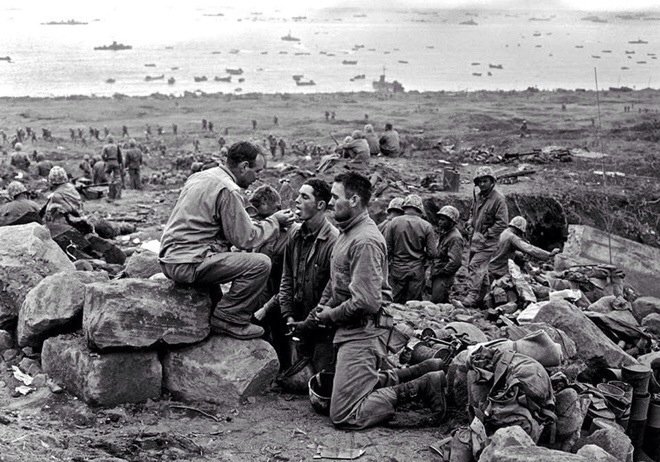
The Church, like its bishops and cathedrals, has become too comfortable in its trenches: confident in its statements, clear in its alignments, but afraid of the exposed, uncertain ground between. Yet that No Man’s Land, that space between the trenches of certainty, is not neutral, nor safe. It is where our certainties come undone and our defences are tested.
I’m not naïve to ignore or minimise the very real truth that each side bears wounds that run deep. Many have been hurt by exclusion and contempt; others by accusation and dismissal. Each can point to the pain they’ve suffered, and each, if we’re honest, has caused pain in return. That is what makes No Man’s Land so costly: it reveals that none of us are innocent.
Augustine called the Church a corpus permixtum. But so are we, individually. Each of us carries both faith and fear, both love and resentment. The divisions of the Communion reveal our own divided hearts. To step into No Man’s Land is not to abandon conviction, but to let grace reshape it.; to face the truth that the enemy we fear across the trench may look uncomfortably like ourselves.
Such a step does not mean silencing truth or tolerating harm. It means speaking truth from within relationship rather than against it. It is not fairness that calls us forward, but faith: the hope that God meets us not in our victory, but in our vulnerability. If Anglicanism still has a vocation (and I hold out the hope that it does) it must be this: to walk into No Man’s Land carrying neither flag nor weapon, but bread and wine as signs of a truth that feeds rather than wounds.
The Eucharist is not an equal table but a reconciling one: it gathers both sinners and the sinned-against, not to erase difference but to make forgiveness imaginable. Because it is not, finally, a question of who leads the Communion, but whether there will be a Communion to lead and whether we still believe that grace is stronger than grievance, and that Christ still meets us in the space between the trenches.
POSTSCRIPT
Since publishing this piece, I have been helpfully corrected that Archbishop-designate Sarah Mullally has undertaken further theological formation beyond the diploma mentioned above. I am grateful for the clarification, and apologise for the imprecision.
I also have no insight into how she herself understands the relationship between theological depth and administrative skill in episcopal leadership. If she brings the fruit of her study to bear visibly and courageously in the Church’s discernment, I will be overjoyed and thankful.
My concern in the post is not with her personally, nor with her gender. If a man were appointed with the same public emphasis on administrative achievement rather than theological depth, my critique would be identical. Indeed, the fact that some have assumed a hidden bias against women’s leadership only reveals how fragile trust has become: how quickly we presume ill motives, and how easily fractures deepen.
My argument is aimed at a wider cultural drift: the Church’s increasingly consistent elevation of managerial competence over theological wisdom. That concern stands, and it stands for the sake of the Church’s health, mission, and unity.
My commitment to supporting and praying for Archbishop Mullally remains unchanged. I hope and pray that her ministry will help renew the Church’s confidence in the depth and richness of its own faith.