For the past four months, a loom has stood at the west end of Bradford Cathedral as part of a National Lottery Heritage Fund project we are running. We have invited members of the public to choose a thread of wool and weave it into a growing community tapestry. Children and elders, visitors and locals, those who come by chance and those who come with the single intent to weave; all have added their own strands.
It is strikingly simple, even meditative. The warp holds steady, the weft brings colour and movement, and each addition strengthens the whole. And yet, not everything has gone smoothly. Some people have misunderstood the instructions. Others have pulled too hard or left their threads loose. Quietly, those of us guiding the project have had to adjust, repair, and improvise to make sure the final piece still holds together. But none of that undoes the gift of participation. The tapestry only exists because so many hands risked adding their own imperfect thread.
And perhaps that is fitting, because Bradford itself is, in its very identity, a woven city. Its history is textile. Its present is intercultural. Its future is being worked out in the tension between tradition and innovation, roots and improvisation, scars and creativity. In recent weeks, as I have been part of conversations across the city, in civic forums, in the Cathedral, in cultural planning meetings, I have heard the same challenge surface again and again: how do we hold the threads together? I’ve found myself asking myself could this social weaving be the distinctive vocation of Cathedrals in the 21st century?
When I think back over the conversations I have been part of this month, I hear echoes of the loom in each of them. Different threads, different textures, yet all of them asking in their own way how we might weave this city’s life into something more than fragments.
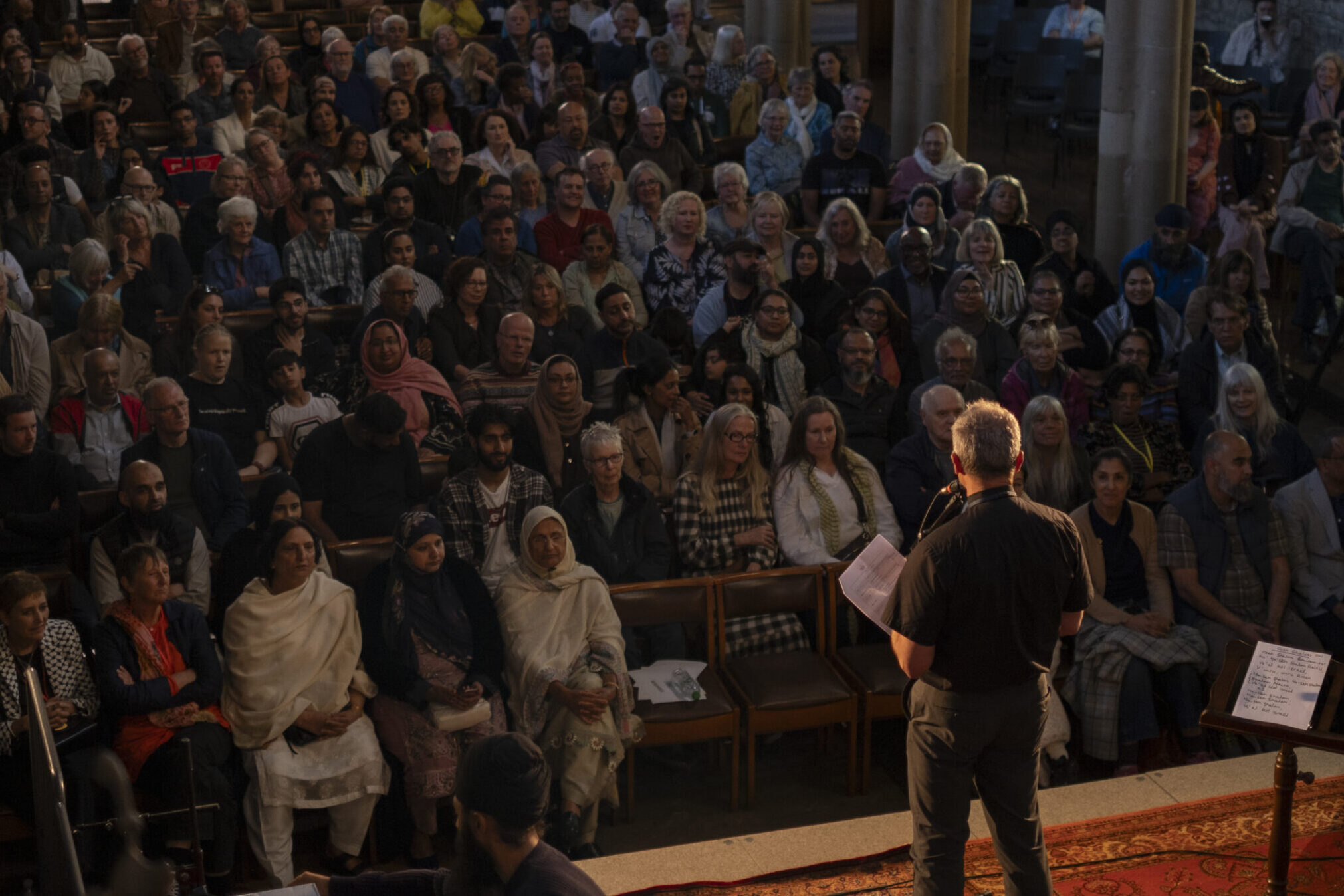
With civic partners, the longing has been for more meaningful conversation than our public life currently allows. Too often dialogue becomes either polarised or polite, either combative or choreographed. But hospitality, one of our Cathedral values, is not about curating polite coexistence. It is about creating the conditions where people feel able to risk honesty, to sit with tension, and to trust that they will be held (you can read my reflections on this by reading last month’s post, ‘Into Cultire: Platform to Presence’) This, I believe, is part of what a Cathedral can uniquely offer: a hospitable loom, where threads that might otherwise fray or remain apart are drawn into a fabric that is stronger than the sum of its parts.
Within the Cathedral itself, my colleagues and I have been asking how our own vision document can be more than a paper statement. That too is a question of the warp and the weft. Rootedness, another of our values, reminds us that this community stands in more than a millennium of Christian witness and daily prayer. These are the warp threads, stretched tight across time, holding the structure. But without the weft, the innovative, intercultural, hospitable life that crosses them, the warp alone cannot make a fabric. To make our vision live we must keep weaving: to take the ancient story seriously enough to risk letting it meet the colours and textures of the present.
A third thread has come from our work on a Visitor Engagement Plan. We have been supported by consultants whose experience with other cathedrals is invaluable, yet the process has sharpened something for me: Bradford is not just any cathedral city. To describe it simply as intercultural misses what makes it distinctive. Bradford’s culture is forged in mills and markets, in migration and labour, in scars and solidarities. This is not a polished pluralism but a lived reality, raw and hopeful, shaped by both welcome and struggle. Any plan for engaging visitors here must reflect that uniqueness, not a generic template, but an experience that helps people encounter the texture of Bradford itself. That is what our value of interculturality really asks of us: not just to reflect diversity, but to interpret and host the distinctive, sometimes difficult, gift that this city carries.
And then there are the conversations about Bradford’s cultural future after 2025. When the spotlight of UK City of Culture fades, what will remain? Here the Cathedral’s value of innovation comes to the fore. Innovation is not about novelty for its own sake, but about courage: the willingness to improvise, to create new forms of beauty and dialogue that might not yet exist. Bradford has always produced outsider voices with global resonance, artists, writers, and leaders who have turned the tensions of this city into creativity. If we as a Cathedral can nurture that spirit, not showcasing diversity as finished performance but weaving it into new, surprising patterns, then perhaps we can help ensure that 2025 is not an endpoint but a beginning.
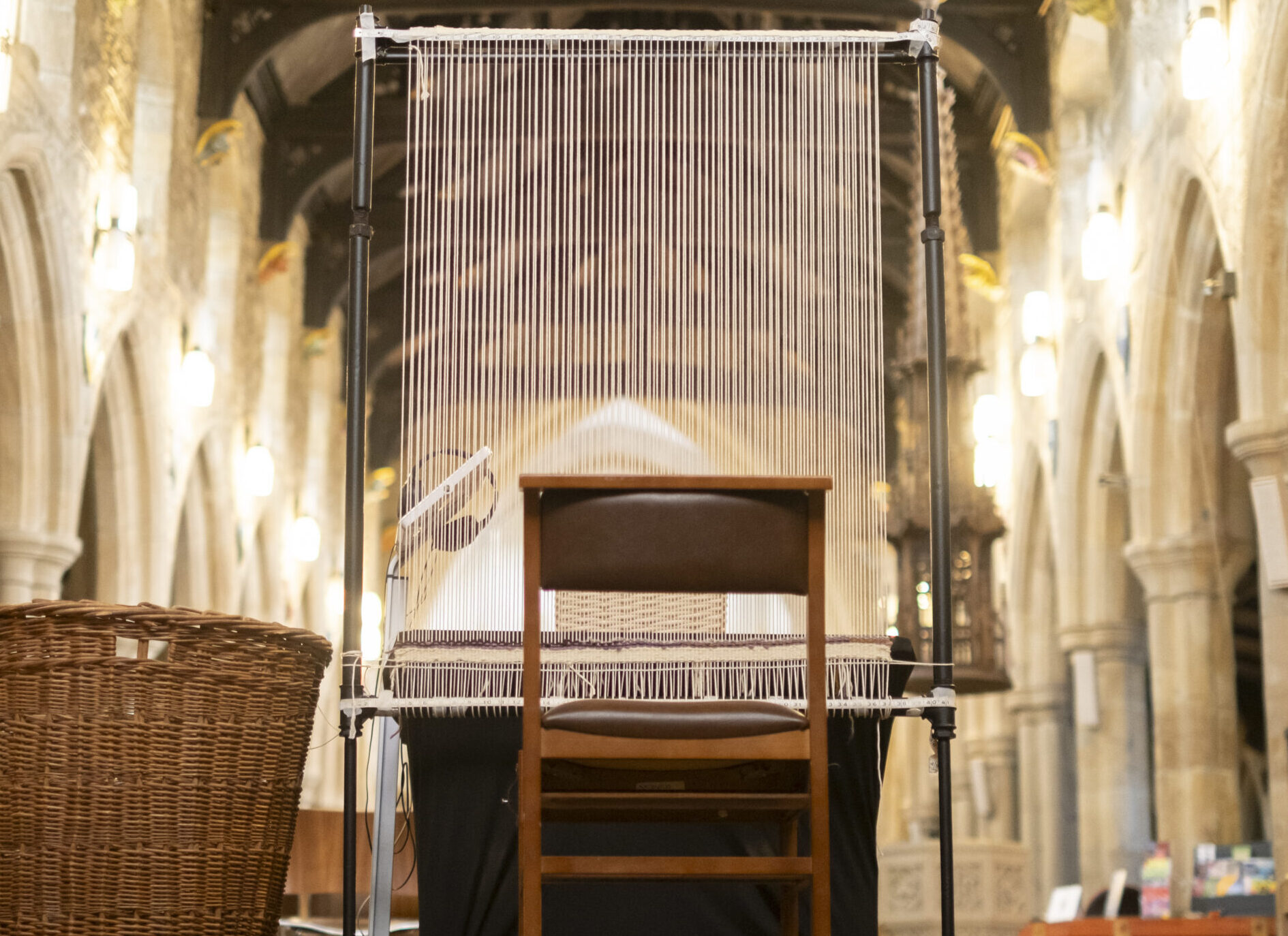
All these conversations, with civic partners, Cathedral colleagues, consultants, and cultural planners, are different threads. None of them by themselves make a fabric. But if the loom at the west end of the Cathedral has taught me anything, it is this: fabric only emerges when the threads are held in tension and patiently worked together, line by line.
On our loom there is no shuttle racing back and forth. The weaving happens slowly, by hand. That is significant; the tapestry only grows because people come, take hold of the yarn, and risk adding their part. Convening works the same way. A Cathedral cannot force unity or engineer neat patterns; what it can do is hold the frame steady, invite people forward, and create the conditions in which something larger than any one thread might take shape.
So what does this mean for the Cathedral’s future in Bradford? It means taking our vocation as loom seriously. It means curating conversations that do not stop at coexistence but risk honesty, vulnerability, and the possibility of change. It means rooting our life ever more deeply in prayer and worship so that the warp is strong enough to bear the tension. It means designing visitor experiences that reflect Bradford’s unique fabric, its scars as well as its solidarities, its particular story rather than a generic template. And it means using City of Culture 2025 as a beginning, not an endpoint, modelling intercultural creativity that continues long after the spotlight has moved on.
None of this will be straightforward. The tapestry will never be perfectly even; threads will be pulled too tightly or too loosely, and sometimes adjustments will be needed in the quiet. But perhaps that is the point. The work of weaving is never finished.
When the community tapestry on our physical loom is complete, it will hang as a piece of art. But its deeper value will not be the finished product; it will be the months of weaving, people meeting, hands moving, threads layered, mistakes amended, a fabric slowly emerging that no one could have made alone.
Too often our cathedrals are imagined in only two ways: either as monuments of the past, treasured for their heritage but disconnected from the present, or as venues for the present, hired out for franchised concerts and touring installations in order to keep the lights on. These roles may be necessary for survival, but they are not enough for vocation. If all we offer are relics or rentals, then we have missed the point.
What Bradford is beginning to show is that a Cathedral can be something else: not a museum, not a venue, but a loom. A place that holds tensions steady, invites difference into encounter, and patiently weaves new patterns of civic life. This is what our cities are crying out for; this is what our fractured societies desperately need.
The future of cathedrals will not be decided by balance sheets or by ticket sales, but by whether we dare to claim this vocation. We can continue as monuments and venues, but these will not last as long if we don’t primarily become looms for the future, weaving communities together, risk by risk, until something strong enough to hold begins to emerge.