Drive through many English towns recently and you will see a rise in popularity of flags. St George’s crosses painted across roundabouts. Union Jacks tied to lampposts. Flags in windows, on cars, in gardens or draped over flyovers on the motorways. This acceleration of flag-flying in particular towns and regions has been linked to grassroots campaigns like Raise the Colours, which frame the flag as a symbol of neglected communities reasserting pride. Others note that it clusters in areas hit hardest by economic decline or debates about immigration. Surveys even suggest that while many view the St George’s cross as unifying, for others it is bound up with hostility and exclusion. Flags, in other words, are never neutral. They are contested signs: comfort for some, confrontation for others.
For some, these are signs of pride. For others, they feel like warnings. Whatever they mean, their very proliferation speaks of anxiety, a people uncertain of their place, grasping for symbols to say, we are still here.
This is not a new story. I have written before about the fragility of Englishness and how it shows itself most clearly in absence, in the fear of being overlooked. I have also noted how English identity is rarely named positively in intercultural conversations. Add to this the deep changes of the last forty years: deindustrialisation, globalisation, austerity. We begin to see why flags are multiplying. They are signs of a wound, the feeling of being forgotten, left behind, excluded from the story of your own land.
This wound has been seized upon by populist politics. In Britain, in Europe, in the United States, whole movements have been built on the claim that ordinary people no longer belong, that the system is rigged, that elites welcome others at your expense. Flags become rallying points not just for belonging but for blame.
And yet, this is not only one group’s story. Migrants and asylum seekers know a parallel pain. They arrive in places that promise welcome only to be met with suspicion, rejection, or conditional acceptance. Their flags are invisible. Their belonging is fragile.
The result is a crisis of belonging that touches everyone. A gnawing sense that no one belongs, that home itself is slipping away. Which raises the question: is there a place where both can belong without erasing their differences? Or are we doomed to live in parallel, separated by suspicion?
“No man’s land” once named the blasted ground between enemy lines, uninhabitable, unclaimed, deadly. It has become for me a fertile metaphor for intercultural practice. It describes the in-between, not one side or the other, not settled, not safe.
Anthropologist Victor Turner spoke of ‘liminality’, the threshold stage in a rite of passage where one is no longer what they were but not yet what they will be. In that space, the old identity has been stripped away but the new one is not yet given. Liminality is disorienting but necessary. Transformation cannot happen without it.
Hakim Bey’s ‘Temporary Autonomous Zones’ describe moments when established orders loosen. For a time, people can imagine and act differently, outside the control of dominant powers. They rarely last, but their fleeting nature is part of the gift. They show that another world is possible.
Homi Bhabha’s ‘third space’ describes the unpredictable zone where cultures collide. It is neither one nor the other, but something new, created in the negotiation of difference. Identity, in Bhabha’s view, is always hybrid, always contested.
Each of these thinkers invites us to reimagine no man’s land not as waste ground but as generative. It is unsettling and risky, yet full of possibility.
The Church has long known this ground. Augustine fought the Donatists’ dream of purity with his vision of the corpus permixtum, a mixed body of saints and sinners, insiders and outsiders, wheat and tares. The Church on earth is never pure, never settled, always provisional. Belonging is always contested, always mixed, always awaiting God’s final gift.
Paul Ricoeur adds a further insight. We only know ourselves in relation to others. Identity is never sealed off. It is always shaped in recognition of the one who stands different from me. Belonging is not possession but encounter. Not fortress, but relation.
So how do we inhabit no man’s land? My answer is improvisation. Improvisation is not chaos. It is the practiced art of responsiveness. It listens, adapts, takes risks, co-creates meaning in real time. It allows us to act boldly yet provisionally, to commit without total control. Improvisation is how we live with difference without demanding its erasure.
And this is what I call inclusive othering. We do not deny difference. Nor do we let it harden into hostility. We acknowledge it, honour it, and still choose unity. It is not assimilation, not purity, not separation. It is life together in tension, trusting that something new can emerge in the contested ground of no man’s land.

Britain itself, I think, is living in a cultural no man’s land.
For white working-class communities, the disorientation is real. Industries gone. Neighbourhood rituals fading. Economic insecurity biting. The feeling that the nation’s story is moving on without them. In former mill towns, pubs stand empty and terraces crumble. In coastal villages, young people leave because there is no work to stay for. Hence the flags: “we are still here.” They are not only signs of pride but pleas for recognition.
In cities like Bradford, another flag has appeared with growing frequency: the Palestinian flag. Draped from windows, waved at marches, painted onto walls, it signals solidarity with a people perceived as oppressed and stateless. For some, it is a banner of justice and compassion. For others, it is unsettling, even threatening. Like the English flag, it carries multiple meanings, and like the English flag, its presence is contested. Together, they show how the struggle for recognition is being fought out through symbols. Flags are becoming the visible language of belonging and exclusion.
For migrants and asylum seekers, the challenge is different but parallel. Hopes for safety and belonging meet suspicion and hostility. Hotels are filled with people whose cases drag on. Families are scattered by bureaucracy. Headlines reduce them to numbers. They too live in no man’s land, neither fully welcomed nor fully at home.
Here zero-sum logic takes hold. A zero-sum game is one where one side’s gain is another’s loss. If migrants are welcomed, are working-class communities displaced? If the English flag is flown, are newcomers excluded? If the Palestinian flag is raised, does it signal recognition or division? Populism thrives on this frame, belonging as scarce, a prize to be fought over.
We can see this logic in national debates. Housing shortages are blamed on migrants rather than decades of underinvestment. Hospitals are said to be strained by asylum seekers rather than chronic underfunding. “Taking back control” becomes less about empowerment and more about exclusion. In each case, the flag is enlisted as a marker of “us” against “them.”
But belonging is not zero-sum. It is not a limited commodity. It is relational, dynamic, capable of expanding. The problem is not that one group belongs and another does not, but that both feel they do not. As I wrote in Into Culture: Patronage, whose stories are told and supported matters. When whole communities feel invisible, belonging collapses. Populism grows in the gaps.
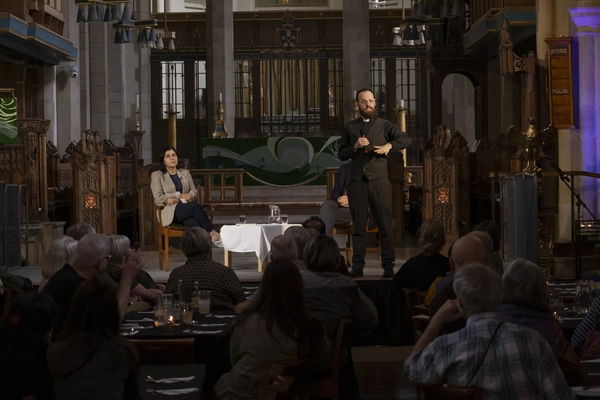
Where, then, can we model another way? Cathedrals have a unique vocation here.
Cathedrals are, by nature, no man’s lands. They sit at the crossroads of church, city, and nation. They belong to everyone and to no one. They are symbols of continuity, yet constantly pressed into new uses. They can be places where identities meet, unsettle, and reshape one another.
But there are blockages. Many cathedrals are perceived as elitist, grand buildings for “other people,” not for ordinary lives. Financial pressures push them to prioritise survival, hiring space, hosting events, protecting heritage, rather than risk inhabiting the raw edges of belonging. Governance often rewards caution rather than imagination. The tie to establishment power can blunt their ability to stand in contested ground.
Yet cathedrals, if they dare, could be laboratories of belonging. Spaces where multiple stories are heard without being collapsed into one. Places where worship is voiced in many accents, where art unsettles easy assumptions, where the overlooked find recognition. Not pure. Not settled. Not easy. But real.
For cathedrals to be a form of no man’s land is to risk the discomfort of contested space. It is to host conversation across suspicion, to embody recognition across difference. It is to resist populism’s fortress logic by opening space for belonging that is shared, provisional, larger than expected.
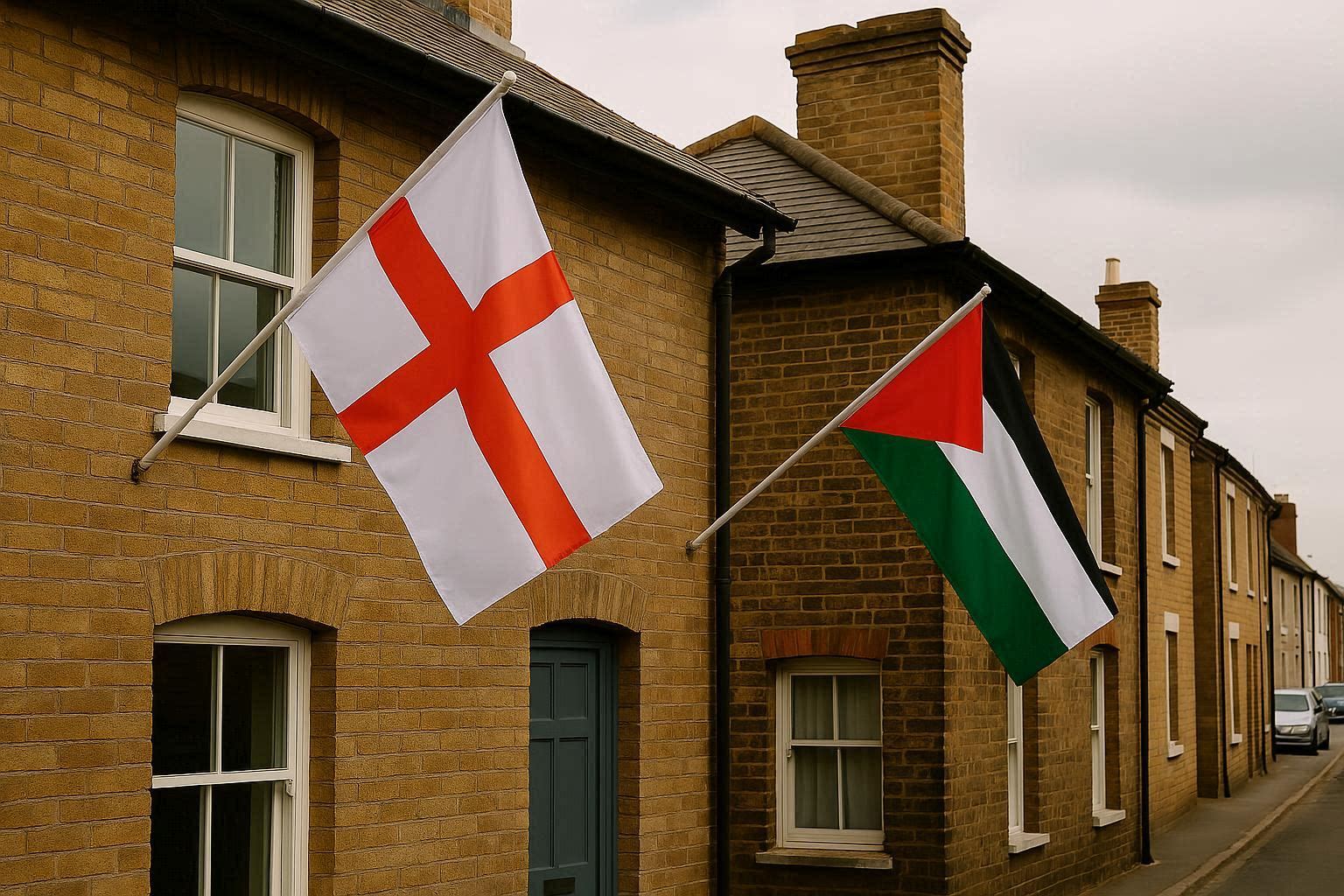
And so, the flags. The English flag, the Palestinian flag. They can be read as fortresses, lines drawn, territory claimed, belonging defended. Or they can be read as cries for recognition. “See us, do not forget us, we matter too.”
The challenge of our age is whether we will remain trapped in zero-sum suspicion, doomed to live in parallel, mistrusting neighbours across the street, or whether we will dare to step into no man’s land.
No man’s land is unsettling. It is unfinished. It strips away easy security. But it is also gift. It is the place where the deep work of belonging can be done. Where difference need not mean division. Where recognition can grow into relationship.
The health of our societies depends on this. Populism feeds on despair, on the sense that there is no shared home left to claim. If we cannot model a different kind of belonging, we leave the field open to fortress politics. Cathedrals, churches, communities; we all face the same choice.
So the question stands. Can we stop treating belonging as scarce? Can we risk inhabiting no man’s land, even when it hurts, in the hope that there we might find not the end of belonging but its renewal?