Tag Archives: augustine

Into Culture: Borrowed Portfolios

For the past nine months, amongst other things, I have been holding the traditional Canon Precentor’s portfolio; overseeing the liturgical logistics and the quiet choreography that, together, go into creating the invisible landscape that leads people into worship. As I sat, therefore, in a gathering of Canon Precentors from all the Cathedrals in England and Wales, I felt entirely capable of following the conversation, I could track the discussion, I could contribute and I could even anticipate where some of the pressure points would surface.

It had been a privilege to be invited to join my colleagues and friends. The invitation, in my current situation, however, carried a certain ambiguity, however, because during the introductions the Chair referred to me, kindly and casually, as “our non-Precentor canon.” It landed with a double sensation: recognition and dislocation arriving at the same time. For a moment, if I am honest, it felt faintly like an insult, but I know it wasn’t intended as such. I realised later, reflecting on that repeated sensation throughout the day, that competence and belonging are not always the same thing. I can learn the patterns of a role, I can carry its weight for a season, I can even begin to speak the language with some fluency, but that doesn’t mean the same thing as vocation.

What I felt in that moment was not exclusion. It was something more subtle and, if I am honest, more theologically interesting. I was both inside the conversation and slightly adjacent to it. Trusted to contribute but named as other. Which, as it turns out, is not a bad place from which to begin thinking about a larger question that has been quietly gathering weight over the past year for me at Bradford Cathedral: what happens when your ministry becomes defined by the things you are temporarily holding together? Or, perhaps more precisely, how do you remember what you feel called to when the institution quite genuinely needs you to be several other things first?


To understand the question properly, you should know something more of the current context I’m inhabiting at Bradford Cathedral.

This has been, by any reasonable measure, a stretched season: the inevitable frustrations as organisational cultural and strategic change is further embedded, staffing transitions and, on top of that, UK City of Culture year. All of this is the ordinary, unspectacular fragility that institutions can carry more visibly in some years than in others. Aside for the City of Culture, all of these pressures and strains are not unique to us and many cathedrals will recognise the pattern with perhaps more intense financial challenges than we have.

In the space of change, roles begin to behave differently. Over recent months I have found myself covering various significant aspects of leadership in the Cathedral. In addition to inhabiting much of the operational and liturgical responsibility of the Canon Precentor, I have been supporting parts of the events management space, working closely alongside vergers and operations to keep the daily life of the cathedral moving with some degree of grace, and in the last month or so, covering aspects of the Dean’s portfolio.

None of this has felt inappropriate. Still less has it felt unwelcome. There is something deeply proper about stepping into the gaps that inevitably appear in any living institution. Cathedrals, perhaps more than most ecclesial bodies, run on a kind of invisible elasticity. People stretch. Roles flex. Goodwill does a remarkable amount of heavy lifting. If you have spent any time in cathedral life, you will know this instinctively. Job descriptions are worked from, not to and the reality is a web of relationships and responsive adjustments, but elasticity, if sustained indefinitely, begins to carry its own cost. The real danger, in times like this is vocational amnesia.

There comes a point (and it rarely announces itself loudly) when the necessary act of holding things together begins quietly to reshape how you are perceived, and eventually how you perceive yourself. What began as provisional cover starts to solidify into assumed identity.

I have become increasingly aware that the inherited model of residentiary canon roles presumes a level of boundary clarity that contemporary cathedral life does not always permit. The assumption is that it is possible to have distinct portfolios, relatively stable domains of responsibility and a certain institutional tidiness. I have found that it is much more porous than that and porous leadership is not, in itself, a problem. In fact, there is something ecclesiologically healthy about a clergy team that can flex, respond, and redistribute energy where it is most needed. The Body of Christ is always spoken of organically and not in mechanistic terms; it was never meant to operate as a set of sealed compartments.

But…

Porous must not become formless. Without some intentional attentiveness, flexibility can slide into diffusion and responsiveness can become reactive drift. Individuals who are temperamentally inclined to say “yes”  (and I include myself in that category) can wake up to discover that their ministry has slowly reorganised itself around institutional necessity rather than a vocational centre.
Augustine, who has become a regular companion in my own thinking, is helpfully perceptive at precisely this point. One of his most enduring contributions to Christian moral theology is the idea often summarised as the ordo amoris (the ordering of loves). He developed this idea most clearly in his De Doctrina Christiana and within his vast argument of The City of God. The idea is deceptively simple. The problem with human beings, he suggests, is not usually that we love bad things outright. It is that we love good things in the wrong order, with the wrong weight and/or with an urgency that quietly displaces what should properly come first.

For Augustine, wisdom is not primarily about intensity of devotion but about proportion. We are created to love God above all and to love our neighbour rightly. Created goods are to be received gratefully, but not allowed to occupy the centre of our attention. Disorder creeps in not only through obvious vice but through subtle misalignment of what we prioritise.

It is disarmingly searching when I apply it to what I have been doing over the past nine months. Supporting colleagues, sustaining worship, ensuring the cathedral’s daily life continues to function with integrity; there is nothing here that Augustine would want to rebuke. In fact, much of it is, in itself, unquestionably good and yet the Augustinian question presses gently but persistently: what happens when everything becomes equally urgent, every portfolio feels temporarily necessary and when the immediate institutional need begins to flatten the hierarchy of attention?

Borrowed responsibility, if we are not careful, can begin subtly to dis-order calling. Not dramatically, and not through any obvious failure of faithfulness, but through a slow recalibration of where energy, imagination and identity are most consistently invested.

There is another layer here which intersects with what I have elsewhere called inclusive othering. In that moment in the Precentors’ Conference, I was inhabiting a curious vocational liminality. I was fully engaged in the work but not fully located within the identity being named around the table. I was both participant and, gently, an outsider. The temptation at such moments is usually to resolve the tension too quickly. Either to insist on full belonging or to withdraw into defensive distance. Neither move feels particularly right to me.

Cathedral life, it seems to me, increasingly requires the capacity to remain present within such tensions. Many of us residentiary canons are operating in spaces that are neither entirely ours nor entirely alien. The institutional map no longer corresponds neatly to the portfolio shaped assumption of previous generations. Which is where, again, provisionality becomes not just descriptive but theological.

Bradford, at present, is living through a genuinely provisional season (I have begun to argue that we will always be doing so). Decisions are being made with partial information and structures are being held lightly enough to adapt. There is, if we are honest, a fair amount of holy improvisation taking place, which, for me, is great. Improvisation, however, still requires a key signature.

The Church, at it’s best, has always known how to live provisionally. The danger comes when the provisional quietly hardens into the assumed, or when the temporary becomes so extended that we forget it was ever meant to be temporary at all.

It would be easier, at this point, to resolve the tension neatly. To say either, “this is simply the season we are in; get on with it,” or, “this drift must be corrected immediately; redraw the lines.” The truth, as usual, is less obligingly tidy.

I am deeply grateful for the trust that has been extended to me over this past year. There has been real joy in some of the work. Real satisfaction in helping to steady parts of the cathedral’s life during a time of transition. I have learned things I would not otherwise have learned. Seen the institution from angles that have sharpened rather than diminished my affection for it. None of that is to be forgotten or remain unsaid. Yet, alongside the gratitude there is a slowly growing awareness, not quite resentment but of gravitational drift. There is a quiet sense that the centre of my ministerial energy has shifted, almost imperceptibly over time, and will continue to do so if it is not occasionally re-examined.

The truth is, I can do many things, but competence is not vocation.

I have found myself recently returning to an idea from Jostein Gaarder’s The Christmas Mystery. He suggests ‘there are two ways of becoming wise.’

One way is to travel out into the world and to see as much as possible of God’s creation. The other is to put down roots in one spot and to study everything that happens there in as much detail as you can. The trouble is that it’s impossible to do both at the same time.

Jostein Gaarder, The Christmas Mystery (London: Phoenix, 2004) p.55

I suspect part of what I have been feeling at Bradford is not simply the pressure of workload but the quiet pull between these two wisdoms. Over the past nine months my ministry has necessarily leaned toward the second mode: staying, tending, stabilising, noticing the fine grain of how the cathedral’s daily life actually holds together. There is real grace in that work but, if I am honest, much of the energy that has historically animated my priesthood lives closer to Gaarder’s first path. I am most alive when I’m learning something new, finding new connections between ideas, mining different disciplines of thought for ‘the theory of everything’. Which is another way of saying: I can inhabit the rooted work for a season. I am less convinced I am called to live there indefinitely.

What has been slowly surfacing for me over these months is not the discovery of a new vocation but the reappearance of a very old one. Every few months it seems to return, usually when institutional life has required me to settle more fully into maintenance mode than I instinctively inhabit. At first it comes as a mild restlessness, then as a question I cannot quite silence and eventually, if I am paying attention, as a recognition.

I have been here before.

Over the years I have reached for different images to name that vocational nudge, each one catching part of the truth but never quite exhausting it. Sometimes it has felt like standing on the walls as a watchman, scanning the horizon not because danger is certain but because someone needs to pay attention to what is coming into view. This is the language of the prophet, not in any grand or dramatic sense, but in a quieter, more uncomfortable calling to notice what others might prefer to step around.

At other times the image is less dignified and more like a mountain goat picking its way across harsh and uncertain terrain while, somewhere below, the sheep graze contentedly in the lush fields. It is not that the fields are wrong, still less that the sheep are foolish. It’s only that I seem constitutionally drawn to the challenging environments where the air is thinner and the footing less secure.

Then there remains in my imagination something of the pioneer, repeatedly finding myself drawn toward spaces where something new is trying to emerge and where the path, if there is one, is not yet clearly marked. If that particular image risks sounding like a love affair with novelty, then that needs correcting. My instinct has never been toward the new simply because it is new. Nor am I interested in dismantling what is old in order to feel prophetic. The tension I experience is not between stability and adventure but between different forms of fidelity.

I find myself returning, again and again, to the words of Oscar Romero, who warned that unconditional attachment to what is old can hamper the Church’s progress and restrict its catholicity, while an unbounded spirit of novelty becomes an impudent exploration of what is uncertain and a betrayal of the Church’s rich inheritance. His conclusion was neither reactionary nor reckless: “think with the Church.”

That phrase has always mattered to me. To think with the Church is not to freeze it in time, nor drag it impatiently into whatever appears fashionable. It means to love it enough to help it renew itself from within. Which means that the watchman image is not about abandoning the city but guarding it. The mountain goat is not scorning the lush field below but navigating terrain the flock will one day need to cross. The pioneer, if that word is to be used at all, is not founding a rival settlement but clearing space so that the old settlement can breathe again.

This is why the tension in this season feels more complex than a simple pull towards adventure in opposition to staying put. My passion for the intellectual and strategic exploration has always been inseparable from a desire for institutional reformation and detailed correction.

It is not accidental that many of the Church’s reforming figures that I have been drawn to lived precisely at this intersection. Augustine did not set out to invent a new Christianity; he wrestled to recalibrate inherited faith in a moment of crisis. Martin Luther did not begin by founding a new ecclesial body; he began by calling the existing one to account. In different centuries and under very different pressures, both stood uncomfortably close to the centre while also refusing to ignore what they saw on the horizon. Reform is rarely born from detachment or abandonment but emerges from those who love the institution enough to risk standing at its fault lines.

If these reflections were simply about my personal internal bandwidth or external capacity it would not be worth a whole blog post. What I suspect may resonate beyond my own ministerial balance is the larger ecclesial as well as the nuanced vocational questions that sit underneath my current lived experience.

What if residentiary roles in cathedrals were shaped more explicitly around charism rather than merely function? What if cathedral chapters became more intentional about naming when elasticity is a short-term grace and when it is quietly becoming a long-term distortion?

None of this requires a retreat into rigid role protection. That would be neither realistic nor particularly faithful to the collaborative instincts of cathedral life at its best. It might, however, require a more deliberate attentiveness to the difference between the roles we can faithfully cover and the vocations we are actually called to inhabit over time.

The question before me, at least, is not whether I am called to the edge or to the centre, but how to inhabit the edge in order to serve the centre faithfully.

Bradford, for all its current pressures, has often shown a willingness to experiment in this kind of space. There is room here, I think, for some careful, hopeful reimagining of what residentiary life might look like in a more fluid ecclesial landscape. Perhaps something more consciously aligned with the particular gifts that each canon brings into the shared life of the cathedral.

I find myself returning, as I close, to that conference room moment and the phrase that has lingered longer than I expected: “our non-Precentor canon.” There was no need to resist the description; in a straightforward sense, it was true, but the more interesting question is not whether I am or am not a Precentor. It is whether, in this stretched and searching moment, we might learn again how to recognise the difference between the responsibilities we faithfully hold for a time and the vocations we are actually being called to remember.

Some priesthoods are shaped primarily in the centre of the field. Mine, it seems, keeps being led back to the edges of the hill not to abandon the flock, but to help the whole landscape breathe again.
Into Culture: The Tiber

Last month I wrote about some indirect criticisms I received following my appearance on the BBC Christmas service from Bradford Cathedral (here). Many have since felt the need to jump to my defence and, in doing so, have fallen foul of the very danger I was trying to name in that reflection. In navigating the conversation that followed, and in trying to attend carefully to the kind of posture I am attempting to cultivate in polarised public debate, I have found myself returning to an earlier, more controversial post on the Anglican Communion.

In that post I explored my sense that the Anglican Communion has lost sight of the need for theological rationale to its polity. That idea was entirely overlooked by some readers and critics due to my, admittedly, sloppy framing of the argument, with an under-researched statement about Archbishop Sarah Mullally. Debate became fixated on my perceived position on gender and cultural and political alignment, rather than on the question I was actually trying to raise.

What I still find interesting (and revealing) is not simply that the argument was missed, but why. Why was the conversation so quickly drawn toward identity, representation, and position, and so reluctant to engage the deeper claim? Might it be because there is already a widespread and often unexamined acceptance that the Church of England has, as several critics of my Christmas Day appearance put it, “lost its way”? And might it be that we are not yet ready to reflect on the theological anaemia that makes such loss possible?

These questions were reignited when I recently watched a video in which a General Synod member for the Diocese of London was strongly defending the view, ‘as an elected member of General Synod’ (as though that gives a person moral authority), that abortion is not the killing of a human being. When the interviewer asked the member of Synod whether they believed that Jesus was fully human in the womb and from the moment of conception, the responder faltered. There was a stutter and then silence.

The interviewer went on to outline, theologically, the argument against the Nestorian heresy, and why the moral position of the person defending abortion as not the killing of a human being might be problematic. The silence that followed was painful to watch. What struck me was the confidence with which election to General Synod was invoked, and the apparent belief that the political process to the privileged position in the conciliar life of the Church of England automatically granted them authority to shape its doctrine without any corresponding sense that theology might interrupt, challenge, or even judge what is being said.

It is this same lack of confidence in theological rigour among those discerning and debating the doctrine, faith, and order of the Church of England, and in a lesser way the Anglican Communion, that lay at the heart of the post that became more about the person of Sarah Mullally rather than about the deeper principle I was trying to name: theology is no longer even assumed to be a necessary consideration when appointing, or authorising, those who shape the life of the Church.


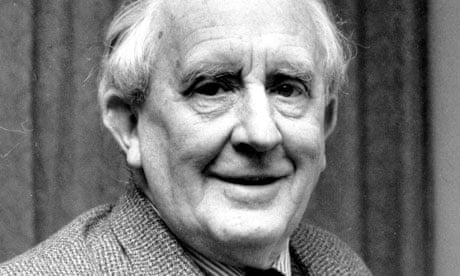
I have wanted to read Holly Ordway’s Tolkien’s Faith since listening to her podcast interview back in 2024. At the start of this month, I finally managed to get round to delving into this unique biography of a man whose literary output has inspired me in multiple ways. This biography is not a recitation of the chronology of his life nor a decoding of his fictional Middle Earth and its characters. It is, instead, a search for the spirituality of Tolkien and how that was expressed, yes, in his fictional writing, but more insistently in his letters, relationships and decisions.

Halfway through reading this 480-page book I began to feel a growing unease and dissatisfaction. Tolkien’s own approach, his seriousness, towards his Catholic faith and how that informed his academic work, as well as his literary writing, stirred something in me. It enlivened a deep, perhaps slightly romantic, longing for a form of academic life where theology is not an optional add on but is unapologetically a governing discipline. It was the people and saints that Tolkien lauded and was inspired by, however, that really touched a nerve. Figures such as John Henry Newman, in particular, whose theology and spirituality have long resonated with me. These were not simply historical influences for Tolkien; they were living interlocutors that shaped his moral imagination and intellectual posture. For someone who was once Catholic and later became Anglican, such figures have also given shape to my own ecumenical instincts

The unease began to formulate into a question to myself, “Why do so many Anglicans, ‘cross the Tiber’ and become Roman Catholic?”

Now there are lots of obvious reasons why, particularly in Tolkien’s time, this has been common: Anglican cultural dominance and Catholic social martyrdom that lead to a quiet heroism of dissent, etc. As someone who has travelled against the stream the other way, I did find myself wondering whether I had made a mistake. Which Anglican ancestors do I look too who made a similar choice to move away from the Magisterium and historic centre of gravity of the Church, towards the Anglican polity and (I do believe there is one) theology?

This is why, in part, I followed my reading of Tolkien’s Faith with Paul Avis’ The Identity of Anglicanism. I am thankful, as ever, for Avis’ writing and passion. This book grounded me back in the church I intentionally chose and continue to choose, despite the weakening of its self-confidence or self-understanding.

And yet, reading Avis alongside Ordway, I was still left with some troubling questions: does Anglicanism possesses theological depth and coherence? Does it have the resources to sustain seriousness of doctrine, faith, and order and why does it so often speak of itself as though it does not? Why is confidence in Anglican theology so fragile, so quickly displaced by process, representation, or political legitimacy? And why, when theological questions press most urgently, do we so often reach first for mechanisms of governance rather than habits of thought?

There is one piece of analysis that Avis offers that particularly chimed with me: Anglicans are prone to describe their own tradition as incoherent, provisional, or as a pragmatic result of history. Proponents of this view (some of which I hold in high regard, like Michael Ramsay) often offer this self-deprecation as a mark of humility, or even generosity. But, like Avis, I am not convinced that either is true.

In the preface of my book, Ash Water Oil, I wrote,

The curses spoken over the Bride of Christ have been so constant that it is rare to hear her speak positively of herself. She has become so self-critical that she has begun to talk only of a complete make-over akin to surgical enhancements and distortions.

Ned Lunn, Ash Water Oil: why the Church needs a new form of monasticism (Sheffield: Society of the Holy Trinity, 2020) p. xv)

This habitual tendency of the Church of England, in particular, reveals, to my mind, a lack of confidence in, and a reluctance to speak clearly about, doctrine. Avis reminds his reader that when the debate around the ordination of women was had in the 1980s, ‘the Doctrine Commission was not put to work on any doctrinal implications; the Faith and Order Advisory Group was not consulted about the ecclesiological and ecumenical aspects; and the General Synod did not take the opportunity to set up a commission of all the talents that could have examined the theological, ecumenical and pastoral arguments for and against.’  He then goes on to say that when it came to the debate on women’s ordination to the episcopate, on the other hand, there were theological resources produced, but the process and use of these resources was ‘half hearted’ (Paul Avis, The Identity of Anglicanism (London: T&T Clark, 2007) p.119).

This is why the video of the General Synod member begins to feel less like an isolated moment and more like a symptom of something larger. What was striking was not the position being defended, nor even the faltering silence that followed the interviewer’s Christological question. It was the apparent assumption that election itself conferred to them an authority to speak decisively on matters that are, at their heart, doctrinal. That a political process within the Church could grant moral standing without any corresponding obligation to theological coherence, was the question I was trying to raise in my poorly framed post on the Anglican Communion.

When theology as a guiding discipline is no longer trusted to carry authority, something else must inevitably takes its place. What we now seem to rely on are the mechanisms of governance: election, representation, process, public opinion and mandate. These are not wrong or unimportant; they are necessary to any social order, but they cannot bear the weight we are increasingly asking them to carry. When procedural legitimacy is allowed to stand in for theological judgement, the Church risks confusing how decisions are made with whether those decisions are right or true.

This helps me to understand why my earlier post was so readily reframed as a comment on gender or cultural and political alignment. Those are the categories we have learned to reach for; they are familiar and seemingly more intelligible. Theology, by contrast, is slower, more demanding, and far less easily mobilised. To engage it seriously would require us to admit that not all questions can be resolved by process alone, and that some forms of authority are not conferred but received.

I agree wholeheartedly with the view that a strength in Anglicanism is its provisionality. Where I disagree with those who use it to underplay the need for theology to become a governing discipline of our life together, is in what areas we can claim, with confidence, that provisionality. The disagreement is not, therefore, about whether Anglicanism is provisional, but about what provisionality is for.

They have described it as incomplete, temporary and destined to lose itself in a greater whole. This sounds rather noble and altruistic until we ask whether there are, in fact, any extant expressions of the Church that should not be regarded as provisional but as final and permanent.

Avis, The identity of Anglicanism, p.156

Augustine’s use of the concept of provisionality is different to the one outlined in Avis’ characterisation of his opponents. Provisionality, for Augustine, is not an excuse to fall into a state of impasse or uncertainty. Rather, it is the opposite. It is the reason to keep striving towards greater understanding and into deeper communion with the mystery at the heart of our faith.

I guess we all have a tendency to be selective as to what we want to resolve and what we’re happy to remain open and curious about. I acknowledge that I’m more ready to pursue the complexity and sit with it longer than most when it comes to philosophy and theology (as explored in Pursuing Mystery). At the same time, I also admit that when uncertainty touches more relationally or personally I push for definition and resolution.

What I felt reading Ordway’s description of the Tolkien’s faith and the wider Catholic Church in his day, was a deep and sustained seriousness about the primacy of coherent and historically rooted theology that can hold throughout the ebbs and flows of public opinion and cultural change. The reason, however, that I left the Roman Catholic Church was its tendency to be too inflexible to reason and ressourcement. Anglican theological methodology sings when it ‘tries neither to be centralized nor fragmented, neither authoritarian nor anarchic. It is comprehensive without being relativistic.’ (Avis, The identity of Anglicanism, p.169)

Our current social media-driven world demands quick certainty. Positions and statements are better than ongoing dialogue, relational discernment and deeper appreciation of the beauty of mystery. It is my hunger for a life centred on the experience of communal and ecclesial discovery that inspires me about Tolkien and his influences. What keeps me Anglican, however, is the conviction that its tradition still carries resources we have not finished using, questions we have not finished asking, and a seriousness we have not yet relearned how to inhabit. The question is not simply why some Anglicans leave, but whether those who remain are prepared to do the work that staying now requires.

To remain Anglican at this moment, then, is not an act of complacency but of labour. It requires resisting the temptation either to apologise for the tradition or to abandon it in search of firmer ground elsewhere. It asks something harder: the willingness to stay and to insist, gently but persistently, that theology matters: not as ornament, but as orientation.

That work will not be accomplished by louder processes or more efficient governance. It will require the slow recovery of theological confidence. Not certainty, not rigidity, but the confidence to allow doctrine to interrupt us, to judge us, and, at times, to leave us momentarily silent for the right reasons.

Into Culture: A Communion Between Trenches

When the announcement came that Rt Revd Sarah Mullally is to become the next Archbishop of Canterbury, I must admit, I felt deflated. Not because of her gender (I’ve long supported women in episcopal ministry) but because of her theological formation: a diploma. That was it. In a moment when the Church of England so desperately needs a leader who can think with depth, speak with nuance, and defend the faith in the public square, we appointed another administrator. Bring back Rowan Williams, I muttered, half in jest, half in longing.

My wife’s response? Disappointment. The reason for that? Her answer surprised me. She said.

Because she’s a woman.

My wife is ordained so that was obviously not out of opposition to women’s ministry! She explained that what she meant was what it (sadly) meant for the Anglican Communion. “It will lead to further division,” she said quietly.

Her instinct was relational; mine was theological. These two instincts named, together, the twin wounds of the Anglican Church: a loss of theological depth and a loss of relational trust. One names the mind, the other the heart; both reveal a body stretched thin, a Church caught between trenches, where administration has replaced contemplation and isolationism has replaced communion.

Joshua Penduck, in his critique of the Living in Love and Faith process, describes how the episcopate’s calling to hold the Church in unity was compromised by the demand to “show leadership.” Bishops, he argues, were drawn into activism or taking sides. Bishops, who should stand as a sign of unity across difference, were pressured into becoming campaigners within it, choosing visibility over presence, statement over symbol. It wasn’t personal failure so much as a symptom of our culture’s logic: we must be seen to stand somewhere.

And I recognise that same pull within cathedral life. We, too, live under our culture’s pressure to pick a side, to speak out, to declare our alignment. That’s just the air we breathe: a world that equates silence with complicity and visibility with virtue. We want to be known as good, relevant, righteous. And so, we raise our flags above the trenches, often before we have knelt to pray.

But cathedrals, like bishops, are called to something harder. We are meant to inhabit the space between the trenches: that costly, grace-filled No Man’s Land where relationship is risked and reconciliation remains possible. Yet our culture pulls us elsewhere. It rewards clarity over compassion, performance over presence.

This is not an accusation, but a confession. The temptation to posture rather than to pray, to curate identity rather than to cultivate encounter, touches us all. It is the logic of an anxious age that has forgotten how to wait, how to listen, how to hold.

So when the announcement of a new Archbishop came, our disappointment was not about Sarah, who has been called to take on an unenviable role, but about the Church’s captivity to trench-thinking. One of us lamented the loss of theological rigour, the other the loss of communion; but both named the same drift. We will honour her election, support her ministry, and pray for grace in the immense task she now shoulders. Our reactions were not rejections of her, not at all, but lament for a Church that has become adept at speaking from its dugouts and reluctant to step into the space between.


This is not a new situation for the Anglican Communion. We are not strangers to fracture and threats of fracture. This does feel, however, like a new threshold. The appointment of Sarah Mullally as Archbishop of Canterbury has accelerated what was already a painful unraveling.

The Nairobi–Cairo Proposals, published last Advent, were intended as a last attempt to hold the Communion together. They were meant to be a vision of differentiation-in-communion, where churches/provinces might disagree without disowning one another. It was a document written in the spirit of hope, but, more significantly, born from exhaustion.

Then, this October, GAFCON issued a statement declaring that Canterbury had “forfeited moral authority.” They would, they said, “walk apart for the sake of truth.” That phrase ‘for the sake of truth’ has an ancient ring to it. It is the same reasoning that tore Christ’s seamless robe into denominational rags. It sounds noble, but it so easily sanctifies separation rather than purifies community.

And yet, GAFCON’s protest reveals something genuine: a fear that the Church has lost confidence in her own faith. Their anger exposes an ecclesial malaise and the sense that what once bound us theologically has been replaced by managerial diplomacy. Beneath all of it though, lies a deeper disagreement: what kind of unity the Church is called to embody.

GAFCON’s theology is, in its own way, apophatic. It defines faithfulness by what it cannot affirm. Truth is drawn in negatives: not this, not that. Its lineage runs more through Cyprian than Augustine, through a vision of the Church as pure community, a moral body kept untainted by error. There is something admirable here: holiness matters; integrity matters; doctrine matters. Unity without truth is sentimentality.

But Cyprian’s purity is brittle. It risks equating separation with sanctity, mistaking clarity for charity. The Church becomes a fortress rather than a body. It can be a system built to exclude.

Augustine, by contrast, begins from grace. He saw the Church as a corpus permixtum, a mixed body of saints and sinners, wheat and tares, gathered and held by mercy. Unity, for him, was not an achievement but a gift: something received through patience and penance, not control. It is a humility that trusts grace to work through imperfection.

The weakness of Augustine’s approach, of course, is complacency and the danger that inclusion slides into indifference. Yet his vision recognises what Cyprian’s cannot: that the holiness of the Church is not ours to secure. It is Christ’s, and we live within it by grace.

Between Cyprian’s zeal for holiness and Augustine’s patience of grace, Anglicanism has always tried to live; sometimes awkwardly, sometimes beautifully. The tragedy of our current situation is that neither side seems capable of trusting the other’s virtue. Holiness fears that grace will excuse sin; grace fears that holiness will harden into judgment. That Anglican tension might still have been creative, redemptive even, were it not for something else: the Church of England’s turn towards management.

As Penduck points out, the Living in Love and Faith process became a case study in procedural religion, an attempt to heal deep theological wounds through structure and strategy. The bishops became facilitators rather than confessors, executives rather than symbols of unity.

It is a symptom of a wider disease as the Church increasingly feels structured for efficiency, not for holiness; for compliance, not communion. Theologians are replaced by facilitators, bishops by managers, discernment by data. When unity is treated as an administrative problem, communion becomes a brand, and faith a policy. We have inherited the structures of an ecclesial tradition without the spiritual imagination to inhabit them.

This is where GAFCON’s anger finds resonance, even among those who disagree with the cause. Beneath the rhetoric lies a yearning for a Church confident in its own faith: one animated by conviction rather than mere institutional survival. And yet, their solution of walking away betrays the same managerial impulse. Division is simply the inverse of bureaucracy: both seek to avoid relationship. One by enforcing procedure, the other by severing ties. Both are evasions of communion.

And this brings us to the uncomfortable truth: the very Instruments designed to hold the Anglican Communion together (the Archbishop of Canterbury, the Lambeth Conference, the Primates’ Meeting, and the Anglican Consultative Council) are largely bureaucratic scaffolding. They were built to administer an empire, not nurture a Church. Their purpose, inherited from colonial frameworks, was procedural coherence and maintaining correspondence between far-flung dioceses. But communion is not correspondence. It is prayer, shared faith, sacramental recognition, mutual dependence.

The Instruments rarely engage these theological depths. They call meetings, draft communiqués, and issue statements in the language of management, “good process,” “stakeholder engagement,” and “representative diversity.” Meanwhile, the real theological imagination of Anglicanism withers.

If the Communion is to survive, or more than that, to be reborn, its Instruments must become sites of theological formation rather than administrative coordination.

So what might that look like?

First, Canterbury must recover/adopt a kenotic vocation: to convene rather than control. The Archbishop’s authority should be theological, not jurisdictional. It should be grounded in wisdom, humility, and depth of thought. Imagine the Archbishop of Canterbury as an abbacy/exemplar of learning and prayer; a person who calls the whole Communion to wrestle with God, not with governance.

Second, the Lambeth Conference should be reformed into a genuine council of discernment: bishops gathered for theological study and prayer, not parliamentary resolution. The Church does not need more “calls”; it needs conversion.

Third, the Primates’ Meeting must rediscover collegiality: a college of shepherds, not executives. The goal is not coordination but care and mutual accountability, rooted in intercession for and with each other.

Fourth, newly focused Anglican Communion Synod (a renewed successor to the ACC) could become a global assembly where laity, clergy, and bishops discern the Spirit’s movement in mission and theology together: serving the Communion through theological discernment, not bureaucratic management. Its work would be Eucharistic in shape: receiving Christ together, listening for the Spirit’s voice together, and discerning how to live that faith together, not drafting policies apart from prayer.

These are not merely administrative reforms. They are acts of repentance. They signal that our identity as Anglicans is not procedural but sacramental; bound together by Word and Table, not custom and compromise.

That night, after the announcement, Philippa and I sat in quiet agreement. We had seen the same wound from different sides, one of us naming the loss of theology, the other the loss of relationship, but it was the same tear in the same fabric.

The Church, like its bishops and cathedrals, has become too comfortable in its trenches: confident in its statements, clear in its alignments, but afraid of the exposed, uncertain ground between. Yet that No Man’s Land, that space between the trenches of certainty, is not neutral, nor safe. It is where our certainties come undone and our defences are tested.

I’m not naïve to ignore or minimise the very real truth that each side bears wounds that run deep. Many have been hurt by exclusion and contempt; others by accusation and dismissal. Each can point to the pain they’ve suffered, and each, if we’re honest, has caused pain in return. That is what makes No Man’s Land so costly: it reveals that none of us are innocent.

Augustine called the Church a corpus permixtum. But so are we, individually. Each of us carries both faith and fear, both love and resentment. The divisions of the Communion reveal our own divided hearts. To step into No Man’s Land is not to abandon conviction, but to let grace reshape it.; to face the truth that the enemy we fear across the trench may look uncomfortably like ourselves.

Such a step does not mean silencing truth or tolerating harm. It means speaking truth from within relationship rather than against it. It is not fairness that calls us forward, but faith: the hope that God meets us not in our victory, but in our vulnerability. If Anglicanism still has a vocation (and I hold out the hope that it does) it must be this: to walk into No Man’s Land carrying neither flag nor weapon, but bread and wine as signs of a truth that feeds rather than wounds.

The Eucharist is not an equal table but a reconciling one: it gathers both sinners and the sinned-against, not to erase difference but to make forgiveness imaginable. Because it is not, finally, a question of who leads the Communion, but whether there will be a Communion to lead and whether we still believe that grace is stronger than grievance, and that Christ still meets us in the space between the trenches.

POSTSCRIPT

Since publishing this piece, I have been helpfully corrected that Archbishop-designate Sarah Mullally has undertaken further theological formation beyond the diploma mentioned above. I am grateful for the clarification, and apologise for the imprecision.

I also have no insight into how she herself understands the relationship between theological depth and administrative skill in episcopal leadership. If she brings the fruit of her study to bear visibly and courageously in the Church’s discernment, I will be overjoyed and thankful.

My concern in the post is not with her personally, nor with her gender. If a man were appointed with the same public emphasis on administrative achievement rather than theological depth, my critique would be identical. Indeed, the fact that some have assumed a hidden bias against women’s leadership only reveals how fragile trust has become: how quickly we presume ill motives, and how easily fractures deepen.

My argument is aimed at a wider cultural drift: the Church’s increasingly consistent elevation of managerial competence over theological wisdom. That concern stands, and it stands for the sake of the Church’s health, mission, and unity.

My commitment to supporting and praying for Archbishop Mullally remains unchanged. I hope and pray that her ministry will help renew the Church’s confidence in the depth and richness of its own faith.

Into Culture: A Self Apart

I was on retreat: a gathered community of leaders with disabilities and neurodivergence, drawn together to reflect, to rest, and to listen. During one of the sessions, ‘Leading From Who You Are’ the facilitator posed a deceptively simple question:

Who are you, apart from your team, your organisation, your context?

It was meant to help us excavate our identity, to reach below our roles and responsibilities to the self beneath. But I couldn’t answer it. In fact, I couldn’t even understand what was being asked.

What does it mean to imagine the self apart from the people, patterns, and places that shape it? I didn’t just struggle for an answer. I struggled to comprehend the very premise of the question. The rest of the room began to engage in conversation and I listened in to attempt to discern what I was missing. Others were talking about self; their understanding of who they felt they were but none were acknowledging how that self has come into being. It was as if they believed they ‘sprang from the mind of God’ (Peer Gynt, Act 5 Scene 3), fully formed. That’s a common assumption about the self, but I don’t think it’s true.

I was baffled, in part, because when I usually experience a dissonance between my own understanding and that of those around me, I instinctively blame my neurodiversity/autism. In this context, however, I felt restricted in doing that. For a fleeting moment, I feared there was something wrong with me beyond what I could safely attribute to autism.

I’ve come to see that what unsettled me on that retreat wasn’t a lack of self-awareness but a different way of being a self altogether.


At first, it might seem contradictory to say that autistic people experience selfhood as fundamentally relational. The stereotype is that autistic people struggle with social connection and interpersonal understanding. Surely, then, autistic people would feel themselves as more isolated, not less. This assumption collapses, however, when we explore how autistic relationality actually works. Autistic people often experience difficulty with certain social performances: small talk, fluid group dynamics, decoding unspoken social rules. This does not mean we are less relational; it just means we connect differently.

Autistic researcher Damian Milton challenges the typical narrative with his theory of the ‘double empathy problem’, which proposes that autistic social difficulties arise not from inherent deficits but from ‘mutual misattunement’ between autistic and neurotypical people. I am not less social; I simply socialise differently. Neurotypical society tends to privilege social ambiguity, implicit communication, and high-context interactions and these modes are exhausting or bewildering to us autistics. This doesn’t mean that we are not interested in relationships but we tend to find fulfilment in these connections through shared activities, clear structures, predictable rituals, and deep focused interests. We flourish in communal spaces that are stable, ordered, and trustworthy; places where the unspoken social rules are replaced by liturgies, patterns, and shared rhythms.

Beyond this, many autistic people experience a form of ‘ecological selfhood’ which is a sense of self that is intrinsically tied to our environment, sensory world, routines, and the people and objects that anchor us. The boundaries between self and context, therefore, are often blurred.

Naoki Higashida captures this in his remarkable book:

It’s as if my body belongs to someone else and I have zero control over it… I can’t just think about things in isolation—my thoughts are all linked to other things.

Naoki Higashida, The Reason I Jump: The Inner Voice of a Thirteen-Year-Old Boy with Autism, trans. KA Yoshida and David Mitchell (New York: Random House, 2013), 36.

I don’t perceive myself as something separable from my context. I experience selfhood as something that emerges within forms of social, as well as ecclesial liturgies, shared spaces, and communal belonging. When people ask me to strip that away to find some ‘pure self’ underneath I get lost, not because I am avoiding myself but because I have never known myself apart from the places and people around me.

Grant Macaskill, in his theological reflection on autism, puts it bluntly:

Autistic people often embody modes of relationality that resist the individualism of Western culture. Their difficulties are less about absence of sociality and more about divergence from normative expectations of social behaviour.

Grant Macaskill, Autism and the Church: Bible, Theology, and Community (Waco, TX: Baylor University Press, 2019), 73.

What I struggled with on that retreat was not self-awareness. I was struggling with the premise that my truest self could somehow be detached from my community. That model of selfhood just doesn’t fit, but more than that, I am beginning to wonder whether it doesn’t fit anyone.

Perhaps autistic relationality doesn’t simply offer an alternative way of connecting but offers the Church a prophetic reorientation. If the dominant leadership cultures centres on the autonomous, performative self, maybe it is those cultures, not autistic people, that are out of step with the Body of Christ. Perhaps autistic ways of being illuminate what our theology has always said but our practice has too often forgotten: that the self is made in relation, that difference is not a problem to be managed, but the very ground where communion takes root.

What if autistic relationality is not a deficit to be overcome but a gift to be received: a sign that we lead most faithfully not by extracting ourselves from others, but by remaining deeply, dependently, unmistakably embedded in the life of the community?

Richard Giblett, Mycelium Rhizome, 2006-2009

Our culture tells us that identity is something we must cultivate independently. The self is seen as a solitary project: find yourself, be yourself, lead from your authentic self. This story of selfhood assumes that the truest ‘you’ exists somewhere prior to or beneath your context.

This story of selfhood is deeply rooted in the modern, Western imagination, shaped by Enlightenment ideals of autonomy, rationality, and the self as an isolated, self-determining agent. This is not just a cultural whim; it is a historically located worldview that has shaped leadership, spirituality, and even Christian discipleship in the West, and I believe this modern ideal is a myth.

The Christian tradition, particularly through the voices of Augustine, Rowan Williams, and Yves Congar, calls this into question. The self, they suggest, is not a fortress. It is not a self-contained treasure waiting to be uncovered through introspection. Thomas Merton offers a sharper vision:

The true self is not a private, isolated self… It is found in the act of self-forgetfulness, in love.

Thomas Merton, New Seeds of Contemplation (New York: New Directions, 2007), 42.

Love, relation, community; these are not optional extensions of selfhood. They are the very ground of it.

My recent reading of Yves Congar and Henri de Lubac gave this instinct theological clarity. Both rejected the idea that the Church is simply a collection of individuals. They insisted the Church is a communion: a people bound together by the Spirit, by shared life, by mutual dependence.

The Church is not the sum of individuals. It is the common life of grace and truth, a communion in Christ through the Spirit.

Yves Congar, Lay People in the Church: A Study for a Theology of the Laity, trans. Donald Attwater (Westminster, MD: Newman Press, 1957), 16.

Congar’s vision resonates deeply with this idea of autistic relationality. You cannot understand the Church, or the self, by pulling it apart into isolated units. The Church is a living body, not a loose assembly of separate selves and, perhaps, autistic relationality teaches us this in its own particular, embodied way. It shows us what I am calling ‘inclusive othering’, where difference is seen, honoured, and held together in the unity of shared life. It refuses to collapse our distinctiveness into a bland sameness but insists that we are bound together precisely as different. Autistic relationality is not about dissolving difference to find connection, but about finding connection through difference.

It is not only Christian theology that challenges the Western fixation on the individual. Many cultures across the world understand the self as fundamentally communal. The Zulu concept of ubuntu (“I am because we are”) expresses this beautifully. In ubuntu thinking, your identity is not forged first and then added to community. Rather, “You are summoned into your identity by others.” (Rowan Williams, The Edge of Words: God and the Habits of Language (London: Bloomsbury, 2014), 105).

The self is not a solitary treasure to be excavated. It is a calling, a voice that is spoken into being by the community that loves, challenges, and shapes us. Perhaps, then, the question is not, “Who are you apart from your context?” Perhaps the more faithful question is, “Who are you within your context? What unique voice, gift, and way of leading do you offer precisely because you are embedded in your community?”

I do not lead from some self distilled and extracted from others. I lead from a self that is deeply, inescapably connected to the Church, to the Body, to the patterns that sustain me. Augustine, too, knew this:

Let your heart be more closely bound to the Church than to your own heartbeat.

Augustine, Sermon 265D, in Essential Sermons, ed. Boniface Ramsey, trans. Edmund Hill (Hyde Park, NY: New City Press, 2007), 326

When I return to the question of who I am, apart from my context, I realise I still have no answer… but perhaps that’s not a failing. Perhaps it’s a faithful refusal to sever what God has joined together.