
Tag Archives: Anglican

Into Culture: The Tiber

Last month I wrote about some indirect criticisms I received following my appearance on the BBC Christmas service from Bradford Cathedral (here). Many have since felt the need to jump to my defence and, in doing so, have fallen foul of the very danger I was trying to name in that reflection. In navigating the conversation that followed, and in trying to attend carefully to the kind of posture I am attempting to cultivate in polarised public debate, I have found myself returning to an earlier, more controversial post on the Anglican Communion.

In that post I explored my sense that the Anglican Communion has lost sight of the need for theological rationale to its polity. That idea was entirely overlooked by some readers and critics due to my, admittedly, sloppy framing of the argument, with an under-researched statement about Archbishop Sarah Mullally. Debate became fixated on my perceived position on gender and cultural and political alignment, rather than on the question I was actually trying to raise.

What I still find interesting (and revealing) is not simply that the argument was missed, but why. Why was the conversation so quickly drawn toward identity, representation, and position, and so reluctant to engage the deeper claim? Might it be because there is already a widespread and often unexamined acceptance that the Church of England has, as several critics of my Christmas Day appearance put it, “lost its way”? And might it be that we are not yet ready to reflect on the theological anaemia that makes such loss possible?

These questions were reignited when I recently watched a video in which a General Synod member for the Diocese of London was strongly defending the view, ‘as an elected member of General Synod’ (as though that gives a person moral authority), that abortion is not the killing of a human being. When the interviewer asked the member of Synod whether they believed that Jesus was fully human in the womb and from the moment of conception, the responder faltered. There was a stutter and then silence.

The interviewer went on to outline, theologically, the argument against the Nestorian heresy, and why the moral position of the person defending abortion as not the killing of a human being might be problematic. The silence that followed was painful to watch. What struck me was the confidence with which election to General Synod was invoked, and the apparent belief that the political process to the privileged position in the conciliar life of the Church of England automatically granted them authority to shape its doctrine without any corresponding sense that theology might interrupt, challenge, or even judge what is being said.

It is this same lack of confidence in theological rigour among those discerning and debating the doctrine, faith, and order of the Church of England, and in a lesser way the Anglican Communion, that lay at the heart of the post that became more about the person of Sarah Mullally rather than about the deeper principle I was trying to name: theology is no longer even assumed to be a necessary consideration when appointing, or authorising, those who shape the life of the Church.


I have wanted to read Holly Ordway’s Tolkien’s Faith since listening to her podcast interview back in 2024. At the start of this month, I finally managed to get round to delving into this unique biography of a man whose literary output has inspired me in multiple ways. This biography is not a recitation of the chronology of his life nor a decoding of his fictional Middle Earth and its characters. It is, instead, a search for the spirituality of Tolkien and how that was expressed, yes, in his fictional writing, but more insistently in his letters, relationships and decisions.

Halfway through reading this 480-page book I began to feel a growing unease and dissatisfaction. Tolkien’s own approach, his seriousness, towards his Catholic faith and how that informed his academic work, as well as his literary writing, stirred something in me. It enlivened a deep, perhaps slightly romantic, longing for a form of academic life where theology is not an optional add on but is unapologetically a governing discipline. It was the people and saints that Tolkien lauded and was inspired by, however, that really touched a nerve. Figures such as John Henry Newman, in particular, whose theology and spirituality have long resonated with me. These were not simply historical influences for Tolkien; they were living interlocutors that shaped his moral imagination and intellectual posture. For someone who was once Catholic and later became Anglican, such figures have also given shape to my own ecumenical instincts

The unease began to formulate into a question to myself, “Why do so many Anglicans, ‘cross the Tiber’ and become Roman Catholic?”

Now there are lots of obvious reasons why, particularly in Tolkien’s time, this has been common: Anglican cultural dominance and Catholic social martyrdom that lead to a quiet heroism of dissent, etc. As someone who has travelled against the stream the other way, I did find myself wondering whether I had made a mistake. Which Anglican ancestors do I look too who made a similar choice to move away from the Magisterium and historic centre of gravity of the Church, towards the Anglican polity and (I do believe there is one) theology?

This is why, in part, I followed my reading of Tolkien’s Faith with Paul Avis’ The Identity of Anglicanism. I am thankful, as ever, for Avis’ writing and passion. This book grounded me back in the church I intentionally chose and continue to choose, despite the weakening of its self-confidence or self-understanding.

And yet, reading Avis alongside Ordway, I was still left with some troubling questions: does Anglicanism possesses theological depth and coherence? Does it have the resources to sustain seriousness of doctrine, faith, and order and why does it so often speak of itself as though it does not? Why is confidence in Anglican theology so fragile, so quickly displaced by process, representation, or political legitimacy? And why, when theological questions press most urgently, do we so often reach first for mechanisms of governance rather than habits of thought?
There is one piece of analysis that Avis offers that particularly chimed with me: Anglicans are prone to describe their own tradition as incoherent, provisional, or as a pragmatic result of history. Proponents of this view (some of which I hold in high regard, like Michael Ramsay) often offer this self-deprecation as a mark of humility, or even generosity. But, like Avis, I am not convinced that either is true.

In the preface of my book, Ash Water Oil, I wrote,

The curses spoken over the Bride of Christ have been so constant that it is rare to hear her speak positively of herself. She has become so self-critical that she has begun to talk only of a complete make-over akin to surgical enhancements and distortions.

Ned Lunn, Ash Water Oil: why the Church needs a new form of monasticism (Sheffield: Society of the Holy Trinity, 2020) p. xv)

This habitual tendency of the Church of England, in particular, reveals, to my mind, a lack of confidence in, and a reluctance to speak clearly about, doctrine. Avis reminds his reader that when the debate around the ordination of women was had in the 1980s, ‘the Doctrine Commission was not put to work on any doctrinal implications; the Faith and Order Advisory Group was not consulted about the ecclesiological and ecumenical aspects; and the General Synod did not take the opportunity to set up a commission of all the talents that could have examined the theological, ecumenical and pastoral arguments for and against.’  He then goes on to say that when it came to the debate on women’s ordination to the episcopate, on the other hand, there were theological resources produced, but the process and use of these resources was ‘half hearted’ (Paul Avis, The Identity of Anglicanism (London: T&T Clark, 2007) p.119).

This is why the video of the General Synod member begins to feel less like an isolated moment and more like a symptom of something larger. What was striking was not the position being defended, nor even the faltering silence that followed the interviewer’s Christological question. It was the apparent assumption that election itself conferred to them an authority to speak decisively on matters that are, at their heart, doctrinal. That a political process within the Church could grant moral standing without any corresponding obligation to theological coherence, was the question I was trying to raise in my poorly framed post on the Anglican Communion.

When theology as a guiding discipline is no longer trusted to carry authority, something else must inevitably takes its place. What we now seem to rely on are the mechanisms of governance: election, representation, process, public opinion and mandate. These are not wrong or unimportant; they are necessary to any social order, but they cannot bear the weight we are increasingly asking them to carry. When procedural legitimacy is allowed to stand in for theological judgement, the Church risks confusing how decisions are made with whether those decisions are right or true.

This helps me to understand why my earlier post was so readily reframed as a comment on gender or cultural and political alignment. Those are the categories we have learned to reach for; they are familiar and seemingly more intelligible. Theology, by contrast, is slower, more demanding, and far less easily mobilised. To engage it seriously would require us to admit that not all questions can be resolved by process alone, and that some forms of authority are not conferred but received.
I agree wholeheartedly with the view that a strength in Anglicanism is its provisionality. Where I disagree with those who use it to underplay the need for theology to become a governing discipline of our life together, is in what areas we can claim, with confidence, that provisionality. The disagreement is not, therefore, about whether Anglicanism is provisional, but about what provisionality is for.

They have described it as incomplete, temporary and destined to lose itself in a greater whole. This sounds rather noble and altruistic until we ask whether there are, in fact, any extant expressions of the Church that should not be regarded as provisional but as final and permanent.

Avis, The identity of Anglicanism, p.156

Augustine’s use of the concept of provisionality is different to the one outlined in Avis’ characterisation of his opponents. Provisionality, for Augustine, is not an excuse to fall into a state of impasse or uncertainty. Rather, it is the opposite. It is the reason to keep striving towards greater understanding and into deeper communion with the mystery at the heart of our faith.

I guess we all have a tendency to be selective as to what we want to resolve and what we’re happy to remain open and curious about. I acknowledge that I’m more ready to pursue the complexity and sit with it longer than most when it comes to philosophy and theology (as explored in Pursuing Mystery). At the same time, I also admit that when uncertainty touches more relationally or personally I push for definition and resolution.

What I felt reading Ordway’s description of the Tolkien’s faith and the wider Catholic Church in his day, was a deep and sustained seriousness about the primacy of coherent and historically rooted theology that can hold throughout the ebbs and flows of public opinion and cultural change. The reason, however, that I left the Roman Catholic Church was its tendency to be too inflexible to reason and ressourcement. Anglican theological methodology sings when it ‘tries neither to be centralized nor fragmented, neither authoritarian nor anarchic. It is comprehensive without being relativistic.’ (Avis, The identity of Anglicanism, p.169)

Our current social media-driven world demands quick certainty. Positions and statements are better than ongoing dialogue, relational discernment and deeper appreciation of the beauty of mystery. It is my hunger for a life centred on the experience of communal and ecclesial discovery that inspires me about Tolkien and his influences. What keeps me Anglican, however, is the conviction that its tradition still carries resources we have not finished using, questions we have not finished asking, and a seriousness we have not yet relearned how to inhabit. The question is not simply why some Anglicans leave, but whether those who remain are prepared to do the work that staying now requires.

To remain Anglican at this moment, then, is not an act of complacency but of labour. It requires resisting the temptation either to apologise for the tradition or to abandon it in search of firmer ground elsewhere. It asks something harder: the willingness to stay and to insist, gently but persistently, that theology matters: not as ornament, but as orientation.

That work will not be accomplished by louder processes or more efficient governance. It will require the slow recovery of theological confidence. Not certainty, not rigidity, but the confidence to allow doctrine to interrupt us, to judge us, and, at times, to leave us momentarily silent for the right reasons.

Into Culture: A Communion Between Trenches

When the announcement came that Rt Revd Sarah Mullally is to become the next Archbishop of Canterbury, I must admit, I felt deflated. Not because of her gender (I’ve long supported women in episcopal ministry) but because of her theological formation: a diploma. That was it. In a moment when the Church of England so desperately needs a leader who can think with depth, speak with nuance, and defend the faith in the public square, we appointed another administrator. Bring back Rowan Williams, I muttered, half in jest, half in longing.

My wife’s response? Disappointment. The reason for that? Her answer surprised me. She said.

Because she’s a woman.

My wife is ordained so that was obviously not out of opposition to women’s ministry! She explained that what she meant was what it (sadly) meant for the Anglican Communion. “It will lead to further division,” she said quietly.

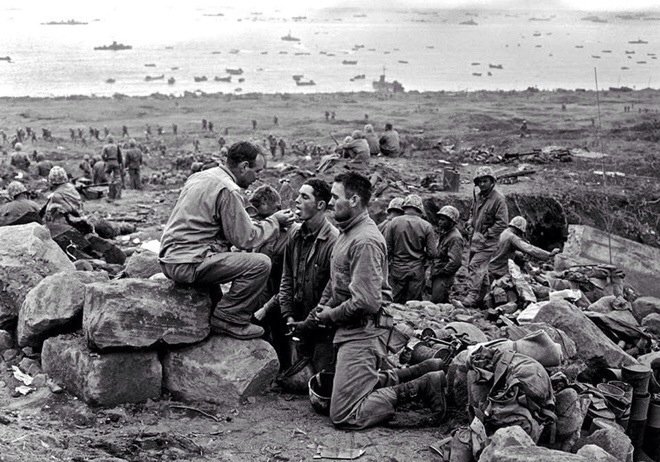
Her instinct was relational; mine was theological. These two instincts named, together, the twin wounds of the Anglican Church: a loss of theological depth and a loss of relational trust. One names the mind, the other the heart; both reveal a body stretched thin, a Church caught between trenches, where administration has replaced contemplation and isolationism has replaced communion.

Joshua Penduck, in his critique of the Living in Love and Faith process, describes how the episcopate’s calling to hold the Church in unity was compromised by the demand to “show leadership.” Bishops, he argues, were drawn into activism or taking sides. Bishops, who should stand as a sign of unity across difference, were pressured into becoming campaigners within it, choosing visibility over presence, statement over symbol. It wasn’t personal failure so much as a symptom of our culture’s logic: we must be seen to stand somewhere.

And I recognise that same pull within cathedral life. We, too, live under our culture’s pressure to pick a side, to speak out, to declare our alignment. That’s just the air we breathe: a world that equates silence with complicity and visibility with virtue. We want to be known as good, relevant, righteous. And so, we raise our flags above the trenches, often before we have knelt to pray.

But cathedrals, like bishops, are called to something harder. We are meant to inhabit the space between the trenches: that costly, grace-filled No Man’s Land where relationship is risked and reconciliation remains possible. Yet our culture pulls us elsewhere. It rewards clarity over compassion, performance over presence.

This is not an accusation, but a confession. The temptation to posture rather than to pray, to curate identity rather than to cultivate encounter, touches us all. It is the logic of an anxious age that has forgotten how to wait, how to listen, how to hold.

So when the announcement of a new Archbishop came, our disappointment was not about Sarah, who has been called to take on an unenviable role, but about the Church’s captivity to trench-thinking. One of us lamented the loss of theological rigour, the other the loss of communion; but both named the same drift. We will honour her election, support her ministry, and pray for grace in the immense task she now shoulders. Our reactions were not rejections of her, not at all, but lament for a Church that has become adept at speaking from its dugouts and reluctant to step into the space between.


This is not a new situation for the Anglican Communion. We are not strangers to fracture and threats of fracture. This does feel, however, like a new threshold. The appointment of Sarah Mullally as Archbishop of Canterbury has accelerated what was already a painful unraveling.

The Nairobi–Cairo Proposals, published last Advent, were intended as a last attempt to hold the Communion together. They were meant to be a vision of differentiation-in-communion, where churches/provinces might disagree without disowning one another. It was a document written in the spirit of hope, but, more significantly, born from exhaustion.

Then, this October, GAFCON issued a statement declaring that Canterbury had “forfeited moral authority.” They would, they said, “walk apart for the sake of truth.” That phrase ‘for the sake of truth’ has an ancient ring to it. It is the same reasoning that tore Christ’s seamless robe into denominational rags. It sounds noble, but it so easily sanctifies separation rather than purifies community.

And yet, GAFCON’s protest reveals something genuine: a fear that the Church has lost confidence in her own faith. Their anger exposes an ecclesial malaise and the sense that what once bound us theologically has been replaced by managerial diplomacy. Beneath all of it though, lies a deeper disagreement: what kind of unity the Church is called to embody.

GAFCON’s theology is, in its own way, apophatic. It defines faithfulness by what it cannot affirm. Truth is drawn in negatives: not this, not that. Its lineage runs more through Cyprian than Augustine, through a vision of the Church as pure community, a moral body kept untainted by error. There is something admirable here: holiness matters; integrity matters; doctrine matters. Unity without truth is sentimentality.

But Cyprian’s purity is brittle. It risks equating separation with sanctity, mistaking clarity for charity. The Church becomes a fortress rather than a body. It can be a system built to exclude.

Augustine, by contrast, begins from grace. He saw the Church as a corpus permixtum, a mixed body of saints and sinners, wheat and tares, gathered and held by mercy. Unity, for him, was not an achievement but a gift: something received through patience and penance, not control. It is a humility that trusts grace to work through imperfection.

The weakness of Augustine’s approach, of course, is complacency and the danger that inclusion slides into indifference. Yet his vision recognises what Cyprian’s cannot: that the holiness of the Church is not ours to secure. It is Christ’s, and we live within it by grace.

Between Cyprian’s zeal for holiness and Augustine’s patience of grace, Anglicanism has always tried to live; sometimes awkwardly, sometimes beautifully. The tragedy of our current situation is that neither side seems capable of trusting the other’s virtue. Holiness fears that grace will excuse sin; grace fears that holiness will harden into judgment. That Anglican tension might still have been creative, redemptive even, were it not for something else: the Church of England’s turn towards management.

As Penduck points out, the Living in Love and Faith process became a case study in procedural religion, an attempt to heal deep theological wounds through structure and strategy. The bishops became facilitators rather than confessors, executives rather than symbols of unity.

It is a symptom of a wider disease as the Church increasingly feels structured for efficiency, not for holiness; for compliance, not communion. Theologians are replaced by facilitators, bishops by managers, discernment by data. When unity is treated as an administrative problem, communion becomes a brand, and faith a policy. We have inherited the structures of an ecclesial tradition without the spiritual imagination to inhabit them.

This is where GAFCON’s anger finds resonance, even among those who disagree with the cause. Beneath the rhetoric lies a yearning for a Church confident in its own faith: one animated by conviction rather than mere institutional survival. And yet, their solution of walking away betrays the same managerial impulse. Division is simply the inverse of bureaucracy: both seek to avoid relationship. One by enforcing procedure, the other by severing ties. Both are evasions of communion.

And this brings us to the uncomfortable truth: the very Instruments designed to hold the Anglican Communion together (the Archbishop of Canterbury, the Lambeth Conference, the Primates’ Meeting, and the Anglican Consultative Council) are largely bureaucratic scaffolding. They were built to administer an empire, not nurture a Church. Their purpose, inherited from colonial frameworks, was procedural coherence and maintaining correspondence between far-flung dioceses. But communion is not correspondence. It is prayer, shared faith, sacramental recognition, mutual dependence.

The Instruments rarely engage these theological depths. They call meetings, draft communiqués, and issue statements in the language of management, “good process,” “stakeholder engagement,” and “representative diversity.” Meanwhile, the real theological imagination of Anglicanism withers.

If the Communion is to survive, or more than that, to be reborn, its Instruments must become sites of theological formation rather than administrative coordination.

So what might that look like?

First, Canterbury must recover/adopt a kenotic vocation: to convene rather than control. The Archbishop’s authority should be theological, not jurisdictional. It should be grounded in wisdom, humility, and depth of thought. Imagine the Archbishop of Canterbury as an abbacy/exemplar of learning and prayer; a person who calls the whole Communion to wrestle with God, not with governance.

Second, the Lambeth Conference should be reformed into a genuine council of discernment: bishops gathered for theological study and prayer, not parliamentary resolution. The Church does not need more “calls”; it needs conversion.

Third, the Primates’ Meeting must rediscover collegiality: a college of shepherds, not executives. The goal is not coordination but care and mutual accountability, rooted in intercession for and with each other.

Fourth, newly focused Anglican Communion Synod (a renewed successor to the ACC) could become a global assembly where laity, clergy, and bishops discern the Spirit’s movement in mission and theology together: serving the Communion through theological discernment, not bureaucratic management. Its work would be Eucharistic in shape: receiving Christ together, listening for the Spirit’s voice together, and discerning how to live that faith together, not drafting policies apart from prayer.

These are not merely administrative reforms. They are acts of repentance. They signal that our identity as Anglicans is not procedural but sacramental; bound together by Word and Table, not custom and compromise.

That night, after the announcement, Philippa and I sat in quiet agreement. We had seen the same wound from different sides, one of us naming the loss of theology, the other the loss of relationship, but it was the same tear in the same fabric.

The Church, like its bishops and cathedrals, has become too comfortable in its trenches: confident in its statements, clear in its alignments, but afraid of the exposed, uncertain ground between. Yet that No Man’s Land, that space between the trenches of certainty, is not neutral, nor safe. It is where our certainties come undone and our defences are tested.

I’m not naïve to ignore or minimise the very real truth that each side bears wounds that run deep. Many have been hurt by exclusion and contempt; others by accusation and dismissal. Each can point to the pain they’ve suffered, and each, if we’re honest, has caused pain in return. That is what makes No Man’s Land so costly: it reveals that none of us are innocent.

Augustine called the Church a corpus permixtum. But so are we, individually. Each of us carries both faith and fear, both love and resentment. The divisions of the Communion reveal our own divided hearts. To step into No Man’s Land is not to abandon conviction, but to let grace reshape it.; to face the truth that the enemy we fear across the trench may look uncomfortably like ourselves.

Such a step does not mean silencing truth or tolerating harm. It means speaking truth from within relationship rather than against it. It is not fairness that calls us forward, but faith: the hope that God meets us not in our victory, but in our vulnerability. If Anglicanism still has a vocation (and I hold out the hope that it does) it must be this: to walk into No Man’s Land carrying neither flag nor weapon, but bread and wine as signs of a truth that feeds rather than wounds.

The Eucharist is not an equal table but a reconciling one: it gathers both sinners and the sinned-against, not to erase difference but to make forgiveness imaginable. Because it is not, finally, a question of who leads the Communion, but whether there will be a Communion to lead and whether we still believe that grace is stronger than grievance, and that Christ still meets us in the space between the trenches.

POSTSCRIPT

Since publishing this piece, I have been helpfully corrected that Archbishop-designate Sarah Mullally has undertaken further theological formation beyond the diploma mentioned above. I am grateful for the clarification, and apologise for the imprecision.

I also have no insight into how she herself understands the relationship between theological depth and administrative skill in episcopal leadership. If she brings the fruit of her study to bear visibly and courageously in the Church’s discernment, I will be overjoyed and thankful.

My concern in the post is not with her personally, nor with her gender. If a man were appointed with the same public emphasis on administrative achievement rather than theological depth, my critique would be identical. Indeed, the fact that some have assumed a hidden bias against women’s leadership only reveals how fragile trust has become: how quickly we presume ill motives, and how easily fractures deepen.

My argument is aimed at a wider cultural drift: the Church’s increasingly consistent elevation of managerial competence over theological wisdom. That concern stands, and it stands for the sake of the Church’s health, mission, and unity.

My commitment to supporting and praying for Archbishop Mullally remains unchanged. I hope and pray that her ministry will help renew the Church’s confidence in the depth and richness of its own faith.

Obedience

cropped-color-calgary-header-3

Suscipiendus autem in oratorio coram omnibus promittat de stabilitate sua et conversatione morum suorum et oboedientia.

Upon admission, in the oratory, before all, he is to make a promise to stability, conversion (of behaviour/morals/life) and obedience,

Obedience

I have been rather tarry on my writing for the blog this week due to the topic of today’s post. As part of a Lenten discipline I’ve decided to take up writing for 20 minutes a day again. A project which started me on this blog some two years ago! Instead of just writing a diary which led me to overly introspective and unhealthy depressive cycles of thought, I have decided to set myself outward focussed writing tasks. I have been writing fairytale versions of gospel narrative which I started for Burning Fences and I have been gathering material from this blog to put into a book (I know another book project which will probably not get finished and I’ll move on!)

One of the chapters I have tried to collate this week has been the chapter on ‘obedience’. This has meant I have looked through my blog on Parish Monasticism and picked out any material which touches on or has guided my reflections on the theme of obedience. The problem is: the whole of the Rule of St. Benedict is about obedience!

Most of the chapters have been me wrestling with what obedience looks like in 21st century western culture. I have returned again and again to issues of authority, leadership and individualism. In fact, if I were to sum up what I’ve been learning about through my reading and meditating on St. Benedict it has been the need for clear authorities in our modern day society.

At this point I’d direct you to a link on a previous blog post to highlight the salient point but, I can’t choose from so many. Type authority into the search bar at the top of the page and you’ll find the wealth of material there. Type obedience in and you’ll have more… enjoy!

The challenge of evangelism in our current age is the call to submit to an authority which is not the self. Life within the character of our Triune God demands that we relinquish power of our lives to someone/thing else, otherwise it bears no fruit. Anglican pews are used to the bottoms of the lukewarm non-committed, in fact they are pews because no one has felt the need to sit on them for a long enough time for them to be painful! (I’m being deliberately provocative, I’m sorry!) The challenge for the Church is to be bold in living out the life of obedience in a way that shows its fruit.

Let me be clear, this obedience is difficult and painful. We can easily romanticise, as with the whole religious life, what it means to commit to a life of obedience. I have only lived out ‘diet obedience’ or ‘obedience lite’ and that’s tough but I long for the environment to delve deeper into it.

True obedience requires stability and the intentional conversion of opinion, thought, behaviour and life. Obedience can only be experienced within the relationship of the other two vows that we’ve explored just as each of the other vows require the balancing of the rest in order to be fully experienced.

Brian C. Taylor helpfully writes,

We tend to think a balanced life means one in which there is no tension – a perfectly placid existence. But, in fact, it is quite the opposite. A truly balanced life, if it is to embrace the paradox of truth, is one which is in tension: not destructive and stressful but healthy and dynamic.

Approaching the vow of obedience after reflecting on ‘stability’ and ‘conversion’ it can seem that these first two vows are in unhealthy tension and the vow to ‘obedience’ brings about a dynamic tension and frames them harmoniously. This would be too limiting. In fact if you approach any of the three vows through the other two vows you’ll come to the same conclusion: Trying to live within the tension created by a vow to obedience to a particular person or Rule and the vow to conversion creates an antagonistic relationship of discernment and interpretation. When discovering stability as a third point of reference eases that battle and brings an extra dimension to the life lived within these vows. The same is true with discovering the power of conversion via the tension of stability and obedience.

In this way the trinitarian model of life asserts itself in practice.

Authority is abused; that’s a fact of life. We can all reel out stories of how someone in authority has abused that position to meet their own needs. No area of life has been immune to this experience and that needs to be said and heard. This does not mean, however, that authority is, in itself bad or negative. I have had problems with authority personally but I have found it helpful to put a face to those problems and rather than dismiss ‘authority’ because it hurt me name the person in that position who hurt me (on a side note, the Church doesn’t hurt people, people hurt people!)

Life without authority is actually just as painful and difficult and it is in the vacuum of authority that extremist views step in. As human beings we hunger and thirst for an authoritative voice to get behind and we’ll find it wherever it may be found. Charismatic leaders, like Donald Trump, Nigel Farage, Boris Johnson, Russell Brand, etc. can sound authoritative when their opponents lack depth and experience. Sadder still is those amongst us who’s only authority is themselves and their own egos and desires. With these as sole authorities no learning or change can occur, cynicism and skepticism hinders any depth of relationship and all of life becomes precarious and unstable.

Authority is needed to teach and grow us beyond our immediate beliefs and opinions. Authority, ironically it seems, gives people freedom to explore and exist. Culture and Societies only develop and deepen when there is a shared narrative; to prove this I point you to the current character of public discussion and the temperature of the exchanges. Our examples of philosophical discourse is loud, abusive, fear centric, cyclical and, above all, non-sequential (the great example of this is David Cameron at Prime Minister’s Question Time when in response to a question he’ll change the subject as his answer!)

Obedience is other focussed. Obedience is about placing your life, your choices, your future, however difficult it is, into the hands of another. This is risky; there’s no escaping that fact. Obedience is about inviting someone to act in freedom upon you and you to take on the consequences of their decision. This is so alien to us that it will take the Church to start to live it out to be an example that will save our world.

I want to finish this short romp through potential vows around which many new monastic communities may gather to explore briefly how our culture desperately needs to participate in a triune life. What I mean by this is a life which is beyond polarised, extreme binary terms of reference into a dynamic dance of ideas and discovery.

We are increasingly finding combative language and views as we’re forced into extreme, entrenched political, social and religious viewpoints. Our debates have become antagonistic fought between two sides; political right and political left with the centre being an attempt at mixing the two in different concoctions, liberal and conservative wings of the church with the ‘middle of the road’ churches being different grey mix of the two at the whim of that particular people. I have quoted Oscar Romero recently,

The Church, then, is in an hour of aggiornamento, that is, of crisis in its history. And as in all aggiornamenti, two antagonistic forces emerge: on the one hand, a boundless desire for novelty, which Paul VI described as “arbitrary dreams of artificial renewals”; and on the other hand, an attachment to the changelessness of the forms with which the Church has clothed itself over the centuries and a rejection of the character of modern times. Both extremes sin by exaggeration. Unconditional attachment to what is old hampers the Church’s progress and restricts its “catholicity”… The boundless spirit of novelty is an impudent exploration of what is uncertain, and at the same time unjustly betrays the rich heritage of past experiences… So as not to fall into either the ridiculous position of uncritical affection for what is old, or the ridiculous position of becoming adventurers pursuing “artifical dreams” about novelties, the best thing is to live today more than ever according to the classic axiom: think with the Church. (Oscar Romero quoted in Morrozzo Della Rocca, Roberto, Oscar Romero: prophet of hope (London: Dalton, Longman and Todd, 2015) p.22-23)

Romero’s call to ‘think with the church’ has haunted my thoughts for the last few weeks. I have come to discover that what he might have meant is to think Trinitarianly (that’s a new word I’ve just made up!) not in binary on a flat spectrum but in a three dimensional balance. We don’t fit on a continuum between two points but a matrix within three.

I am a vocal supporter on the Anglican approach to authority and it is Richard Hooker’s balance that finally convinced me of my Anglican calling. We do not limit ourselves to Sola Scriptura (scripture alone) nor to Sola Traditio or even to Sola Spiritus but a beautiful balance between them all. Univocal authority tends to lead to oppression of those under it. With only one authority power becomes unbalanced and blind loyalty is required. Bivocal authority creates stand offs, the likes we have seen within both political and ecclesial debates. It is once you reach three or more that power is released and shared. This is what I have discovered within the Rule of St. Benedict and what I am keen to press into more within an umbrella construct to feed new monastic communities across the Church of England and beyond.

Practical

So what might the call to obedience look like for the different forms of community? For most of these broad categories it will come down to the individuals involved, to what/who they are obedient may need to be fleshed out in the context.

Sodal
For more intentional gathered communities, obedience will look very different depending on the individuals who participate within it or, rather, will be more or less of an issue depending those within the community. Taking on a vow of obedience would need to be done within a multi-authoritative framework. Obedience to a particular role of authority whose job it is to interpret a communal narrative which is another authority and, finally, a community of people who live out said narrative who are an accountable authority to the others.

Obedience will need to centre on accountability frameworks which will be contextual but the practice of obedience will be the same. These communities will need to figure out to what they are obedient and how they encourage the living out of the vow.

Modal
The parish church has authority structures in place but encouragement and teaching on obedience is somewhat lax amongst us. Synod and Bishops are not always agreed with and local expressions tend to follow differing practices depending on conscience; such as it naturally is within a place like the Church of England. This challenge to obedience has led to some difficult and painful discussions but the challenge has come from a perceived abuse of authority.

How do we ensure power is not abused within a large, established institution? I think a detailed exploration of the understanding of leadership is vital in this discussion. When leadership is seen as ‘driving forces’ then we are in difficulty as it is a force to be reckoned with and is unhelpful in relationship. If leadership is seen more as one who is under authority, a first amongst equals then we’re on our way to a healthier tension. That is why a model like that proposed for sodal communities can also be adopted in the modal.

Obedience within the monastic/mendicant form is to a particular tradition and so naming those things, be they, General Synod, Articles of Religion, Canon Law, a Bishop, a Rule of Life within the parish context is key to encourage the practice.

Nodal
For networks of autonomous groups, obedience becomes very tricky as we have seen in the Anglican Communion recently. Establishing, early on, not only what are the authorities but also how they relate with one another is absolutely essential. If we neglect the long process of exploring together the details of how authorities relate and hold that important balance then disagreements will become increasingly difficult. This is where the Rule of St. Benedict becomes an example in the same way as the Sermon on the Mount is. St. Benedict explores, in many areas of life, how to discern the way forward, how the authorities of the Scriptures, the Holy Spirit and tradition interplay to develop a community which deepens the individual as well as communal character.

It is also important to have shared authorities, particularly so in nodal communities. It could seem as though I’m suggesting just having lots of authorities to defend against dictatorial forms of dominance but actually too many conflicting authorities and the balance is lost also. The authorities need to interact in a creative and dynamic way rather than creating a new kind of destruction.